Galvanized steel roofing is widely promoted for its heat-reflective benefits—yet real-world performance often falls short of marketing claims. For procurement teams, project managers, and technical evaluators assessing steel roofing cost, durability, and compliance, understanding the actual thermal behavior of hot dip galvanized steel is critical. As a trusted structural steel manufacturer and exporter from China, Hongteng Fengda supplies high-quality galvanized steel roofing, structural steel beams, galvanized steel sheet, and ASTM standards-compliant products—including stainless steel pipe, seamless pipe, and carbon steel pipe—to global buyers across North America, Europe, and Southeast Asia.
How Much Heat Does Galvanized Steel Roofing Really Reflect?
Galvanized steel roofing reflects approximately 30–45% of solar radiation—significantly less than advertised “cool roof” coatings (65–85%) or white-painted metal panels (70–90%). This discrepancy arises because standard hot-dip galvanizing adds only a thin zinc layer (typically 45–100 µm), which provides corrosion resistance—not optimized optical reflectance.
Thermal emissivity remains high (~0.6–0.7), meaning the surface readily re-radiates absorbed heat. In field tests across Southeast Asian industrial zones, galvanized roofs reached surface temperatures 12–18°C higher than equivalent cool-coated alternatives under identical midday sun (ambient 32°C, solar irradiance >850 W/m²). That gap directly impacts HVAC load, internal ambient stability, and long-term coating degradation rates.
For project managers and technical evaluators, this means galvanized roofing should be selected primarily for corrosion protection—not as a standalone thermal management solution. Its true value emerges when integrated with insulation layers (e.g., 50–100 mm PIR or mineral wool) and ventilated air gaps (minimum 50 mm clearance).
Where Does Galvanized Steel Roofing Deliver Real Value?
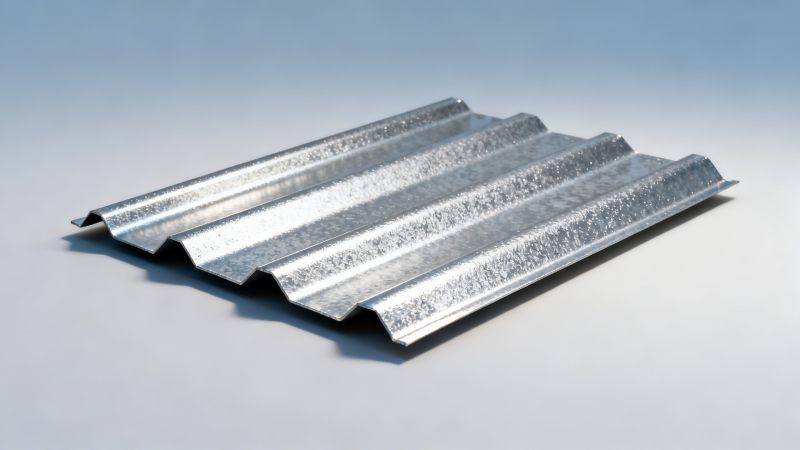
The core strength of galvanized steel roofing lies in environments where durability, lifecycle cost, and structural integrity outweigh peak thermal reflectivity. It excels in industrial facilities, warehouses, and agricultural buildings across North America, the Middle East, and coastal Southeast Asia—regions with high humidity, salt exposure, or chemical fumes.
Hongteng Fengda’s galvanized roofing systems meet ASTM A653/A653M (Zinc Coating Mass: G90/G140), EN 10346, and GB/T 2518 standards—ensuring minimum coating weight, adhesion, and uniformity. Our cold-formed profiles are engineered for wind uplift resistance (up to 120 psf), snow load capacity (3–5 kN/m²), and seismic compatibility (ASCE 7-22 Zone 2/3).
For procurement personnel evaluating total cost of ownership, galvanized steel delivers strong ROI over 25–35 years—especially when compared to painted alternatives requiring recoating every 7–10 years. Maintenance intervals extend to 15+ years with proper drainage design and edge protection.
Key Technical Parameters vs. Common Alternatives
Selecting the right roofing material requires balancing thermal performance, mechanical strength, service life, and compliance. The table below compares galvanized steel roofing against three widely used alternatives across six procurement-critical dimensions:
Note: All values assume base steel grade Q355 with standard thicknesses (0.5–1.2 mm). Galvanized steel offers the best balance of strength, corrosion resistance, and affordability for large-scale commercial projects—especially when paired with Steel Cold Rolled Coil substrates that provide enhanced toughness and consistent flatness for precision roll-forming.
Procurement Checklist: What to Verify Before Sourcing
For procurement, finance, and quality assurance teams, verifying these five criteria prevents costly delays, non-compliance, and field failures:
- Coating mass verification via MTC (Mill Test Certificate) — confirm ≥ Z275 (275 g/m²) for harsh environments;
- Flatness tolerance: ≤ ±0.3 mm/m for seamless panel interlocking and leak prevention;
- Weldability validation per AWS D1.3 — especially for custom flashing and attachment points;
- Bending radius test report (min. 2× thickness) to avoid zinc cracking during fabrication;
- Third-party certification: SGS or BV audit reports confirming adherence to ASTM A653, EN 10346, and ISO 9001.
Hongteng Fengda provides full documentation packages—including dimensional inspection reports, coating thickness mapping (per ASTM B499), and batch-specific MTCs—for every shipment. Lead time for standard orders is 15–25 days; OEM configurations require 30–45 days with engineering sign-off.
Why Partner With Hongteng Fengda for Structural Steel Solutions?
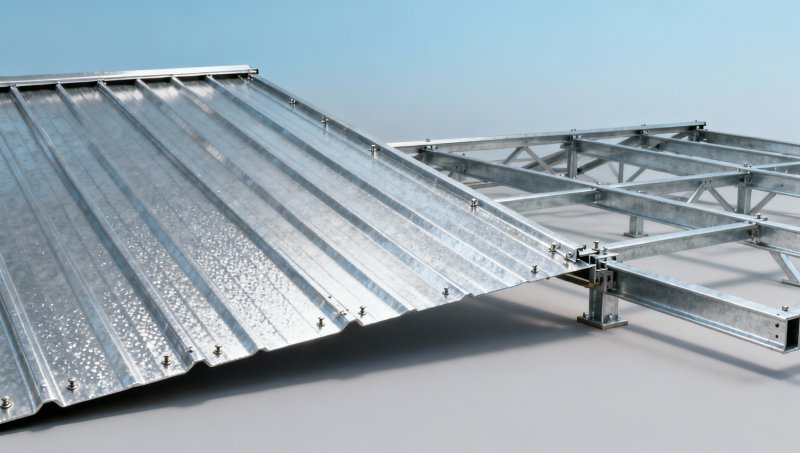
As a certified structural steel manufacturer and exporter from China, Hongteng Fengda bridges global sourcing needs with localized engineering support. We supply not just galvanized roofing—but the full ecosystem: angle steel, channel steel, steel beams, cold-formed profiles, and customized components—all compliant with ASTM, EN, JIS, and GB standards.
Our production capacity supports orders from 5-ton spot shipments to 500+ ton monthly volumes. Every coil—whether Steel Cold Rolled Coil or pre-galvanized substrate—undergoes 4-stage quality control: raw material testing, rolling process monitoring, final dimension & coating checks, and packaging verification.
We help procurement teams reduce risk through stable lead times (98.7% on-time delivery over last 12 months), transparent cost structures, and responsive engineering collaboration—from initial CAD review to installation guidance. Contact us today to request technical datasheets, sample kits, or a tailored quote based on your project’s exact specifications, delivery schedule, and certification requirements.
Please give us a message


Please enter what you want to find