As 2026 approaches, galvanized steel price expectations are becoming a key concern for business evaluators managing sourcing budgets, project margins, and supply chain risks. From raw material costs and zinc fluctuations to global demand and trade policies, several factors may shape the market. Understanding these trends early can help buyers compare suppliers, control procurement costs, and make more confident steel purchasing decisions.
What Is the Most Likely Direction of Galvanized Steel Price in 2026?
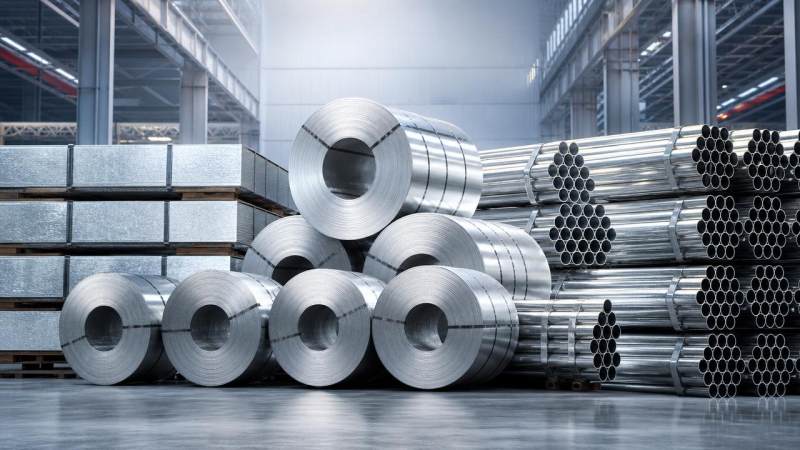
The core search intent behind galvanized steel price forecasts for 2026 is practical, not academic. Business evaluators want to know whether prices will rise, soften, or stay volatile.
They are usually not looking for abstract industry commentary. They need a working market view that helps with budgeting, supplier comparison, tender pricing, and procurement timing.
The most realistic expectation for 2026 is moderate volatility rather than a simple one-way trend. In many markets, galvanized steel price levels will remain sensitive to zinc costs, steel substrate pricing, and regional demand recovery.
For buyers, this means 2026 may not deliver uniformly low prices, even if some steel categories face temporary oversupply. Galvanized products carry coating-related cost exposure that can keep quotations firm.
If your role includes project evaluation or sourcing approval, the key issue is not only the average market price. It is how much pricing can move during your purchasing window.
Why Are Business Evaluators Watching This Market So Closely?
Target readers such as commercial analysts, procurement reviewers, and project controllers care about financial impact first. Galvanized steel often affects total installed cost, inventory value, and risk exposure.
Even a modest price movement can influence margins on construction, infrastructure, industrial equipment, and export orders. This is especially true when galvanized material is specified for corrosion resistance and cannot be easily substituted.
They also care about quotation validity, supplier stability, and landed cost transparency. A low offer can lose its advantage if delivery slips, coating quality varies, or shipping charges increase unexpectedly.
That is why the best content for this audience should focus on judgment tools. They need a way to interpret market signals and convert them into sourcing decisions.
What Factors Will Shape Galvanized Steel Price Trends in 2026?
The first major driver is hot rolled or cold rolled base steel cost. Galvanized steel pricing begins with substrate steel, so mill production policy and raw material input trends matter directly.
The second key factor is zinc. Because galvanizing depends on zinc coating, any meaningful movement in zinc prices can quickly change supplier offers, especially on large-volume or customized orders.
Energy costs will also remain important. Steel production, processing, and galvanizing all consume significant power, so electricity and fuel prices may continue to affect conversion cost.
Demand patterns by region are another major variable. If construction and manufacturing activity improves in North America, the Middle East, or Southeast Asia, export-oriented mills may gain stronger pricing power.
Trade policy can further distort normal pricing. Anti-dumping rules, tariffs, origin requirements, and compliance costs may widen the gap between ex-works price and final procurement cost.
Freight and logistics should not be underestimated either. Ocean shipping may be calmer than during peak disruption years, but route instability and port costs can still influence landed galvanized steel price.
Will Prices Go Up Because of Zinc, or Stay Competitive Because of Supply?
This is one of the most important questions for buyers. The answer is that both forces may operate at the same time, creating uneven market behavior across regions and product types.
If zinc prices strengthen while steel demand remains only moderate, suppliers may resist deep discounts but still compete aggressively for export orders. That can create a narrow negotiation range instead of a sharp rally.
On the other hand, if construction demand improves more quickly than expected, galvanized steel price may rise faster than general structural steel because coating cost and capacity become more valuable.
Business evaluators should therefore avoid relying on a single price assumption for all quarters. A scenario-based model is more useful than a fixed annual estimate.
How Should Buyers Build a Practical 2026 Price Expectation?
A useful pricing outlook should separate three layers: base steel price, galvanizing or coating cost, and logistics or compliance cost. This helps buyers see where negotiation is possible and where it is limited.
Start with a baseline assumption for normal market conditions. Then create an upside case if zinc rises, freight tightens, or local demand improves. Finally, create a downside case if mills chase volume.
For budget planning, many evaluators use a tolerance band rather than a single target number. This is often more accurate for project approvals and internal financial review.
It also helps to compare short-cycle and long-cycle purchases. Spot buying may capture temporary softness, while contract buying can reduce timing risk if your project schedule is fixed.
Which Supplier Signals Matter More Than the Lowest Quote?
Price matters, but evaluators should pay equal attention to quote structure. Ask whether the supplier clearly defines steel grade, coating specification, tolerance, test standards, packaging, and delivery terms.
A quotation that looks cheaper may exclude technical details that later create variation claims. In galvanized materials, unclear coating assumptions can lead to quality disputes and hidden replacement cost.
Production stability is another critical signal. Suppliers with modern manufacturing systems and disciplined quality control are usually better positioned to keep delivery consistent during price fluctuations.
For global buyers, standards compliance is especially important. Products aligned with ASTM, EN, JIS, and GB specifications often reduce approval delays and lower downstream project risk.
How Does Product Type Affect Galvanized Steel Price Evaluation?
Not all galvanized products behave the same way in the market. Sheets, coils, structural sections, tubes, and conduit products can have different demand cycles and processing premiums.
That means your 2026 forecast should reflect the actual application, not just the broad category of galvanized steel. Technical requirements often determine the real purchasing cost more than headline market prices.
For example, buyers evaluating conduit or pipe applications should review corrosion resistance, dimensional tolerance, coating consistency, and transport packaging along with the unit price.
In this context, Galvanized Steel Electrical Conduit is a useful example of how product specification influences value assessment.
Made from galvanized steel and available in DX52D, it is used across construction, light industry, automotive, agriculture, transport, energy, and general low-pressure fluid applications.
Its technical indicators include tensile strength of at least 520MPa, thickness tolerance of ±0.15mm, and compliance with standards such as AISI, ASTM, DIN, JIS, GB, SUS, and EN.
It can be supplied in customized dimensions, including lengths from 1 to 12 meters, widths from 0.6 to 3 meters, and thickness from 0.1mm to 300mm as required.
For evaluators, this matters because a product with reliable anti-corrosion performance, export packaging, and standard compliance can reduce lifecycle cost even if its purchase price is not the lowest.
What Risks Could Distort the 2026 Outlook?
One common risk is assuming that international benchmark prices automatically reflect your final buying cost. In reality, destination duties, inland freight, payment terms, and lead time risk can change the result.
Another risk is evaluating galvanized steel price without checking coating type and process. Hot-dipped and electroplated products may differ significantly in corrosion performance and commercial suitability.
There is also timing risk. If a buyer delays too long while waiting for a perfect market bottom, project urgency may later force acceptance of a higher spot price or longer delivery schedule.
Quality inconsistency is a further concern. A lower price loses value quickly if dimensional variation, weak coating adhesion, or poor packaging causes installation delays or claims.
How Can Business Evaluators Make Better Purchasing Decisions in 2026?
First, use a total cost view instead of focusing only on unit price. Include coating specification, testing, packaging, freight, customs, delivery reliability, and possible rework risk.
Second, request comparable quotations from suppliers using the same technical basis. This makes price comparison meaningful and avoids false savings created by incomplete specifications.
Third, monitor zinc and base steel trends monthly, especially if your project schedule allows phased buying. Even small timing improvements can create meaningful savings on large tonnage purchases.
Fourth, segment purchases by urgency. Lock in critical quantities early, and leave flexible quantities open if market softness appears likely. This can balance security and opportunity.
Fifth, choose suppliers that can support customization and stable exports. For many global buyers, predictable lead time and compliance support are as valuable as a lower initial quotation.
What Should You Expect from Chinese Suppliers in This Market?
China will likely remain an important source for galvanized and structural steel in 2026 because of manufacturing scale, broad product range, and export experience.
For buyers, the advantage is not only price competitiveness. Strong Chinese suppliers can also offer customized specifications, stable output, and familiarity with international standards for different destination markets.
Companies such as Hongteng Fengda position themselves around this value model. As a structural steel manufacturer and exporter from China, the company serves global construction, industrial, and manufacturing projects.
Its capabilities in angle steel, channel steel, steel beams, cold formed steel profiles, and customized structural components matter for buyers seeking both standard and OEM solutions.
For business evaluators, this broader capability can reduce sourcing risk. When one supplier supports multiple steel categories with quality control and dependable lead times, coordination becomes easier.
Final Outlook: Is 2026 a Good Year to Buy Galvanized Steel?
Yes, but only for buyers who prepare with realistic expectations. The 2026 galvanized steel price environment is likely to be manageable, though not free from volatility.
Most purchasers should expect continued sensitivity to zinc, substrate steel, regional demand, and trade conditions. The market may offer negotiation opportunities, but not without timing and specification discipline.
The smartest approach is to build a range-based budget, compare suppliers on total value, and align purchasing timing with project urgency. That is more effective than chasing the lowest visible quote.
In short, galvanized steel price in 2026 will be shaped by both cost pressure and supply competition. Buyers who evaluate full commercial risk, not just headline price, will make the strongest decisions.
Please give us a message


Please enter what you want to find