Understanding galvanized steel price is essential for business evaluators comparing suppliers, project budgets, and long-term procurement risks.
Prices are shaped not only by base steel costs, but also by zinc coating thickness, production standards, order volume, and global market fluctuations.
For steel sourced from China, evaluating these factors helps balance cost, durability, and compliance across construction, industrial, and manufacturing applications.
Why Galvanized Steel Price Needs a Checklist Approach
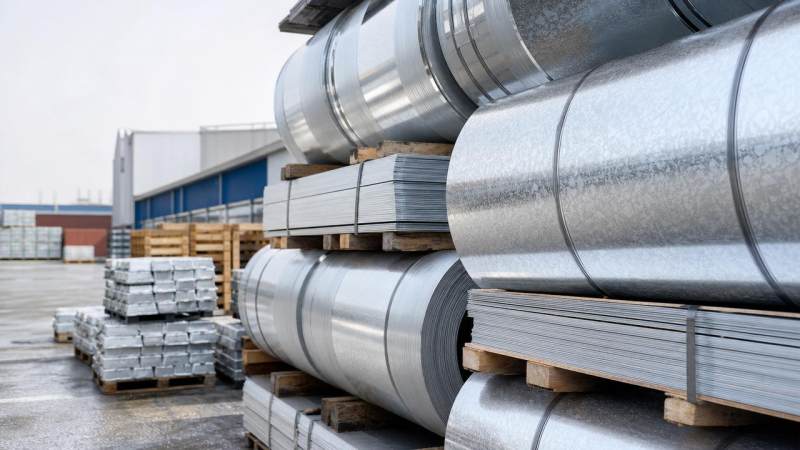
Galvanized steel price can look simple on a quotation sheet, yet the real cost depends on technical and commercial details.
A lower unit price may hide thinner coating, looser tolerances, limited inspection, or unstable delivery terms.
A checklist helps compare offers by the same basis, instead of judging only by price per ton.
It also reduces procurement risk when galvanized steel is used in structural frameworks, roof supports, purlins, brackets, and outdoor components.
The key is to confirm coating, grade, standard, size tolerance, packing, and market timing before accepting any galvanized steel price.
Core Checklist for Evaluating Galvanized Steel Price
Use the following checklist to compare galvanized steel price across suppliers, specifications, and delivery conditions.
- Confirm the base steel grade first, because Q235, Q355, ASTM A36, S355, and other grades carry different rolling costs and strength values.
- Check zinc coating mass or thickness, since higher coating levels improve corrosion resistance but directly increase galvanized steel price.
- Verify whether the quotation follows ASTM, EN, JIS, or GB standards, because compliance requirements affect testing, documentation, and production control.
- Compare hot-dip galvanizing with electro-galvanizing, as each method creates different coating performance, surface appearance, and cost structure.
- Review thickness, width, length, and tolerance ranges, because tighter dimensional requirements may increase processing cost and rejection risk.
- Ask whether prices include cutting, drilling, punching, bending, painting, blasting, bundling, or special marking for project identification.
- Clarify packing requirements, especially for sea freight, because waterproof wrapping, edge protection, and wooden supports affect total landed cost.
- Compare Incoterms carefully, since FOB, CFR, CIF, and DDP quotations place freight, insurance, and port charges in different cost positions.
- Request the validity period, because galvanized steel price may change quickly when zinc ingot, iron ore, or freight markets move sharply.
- Confirm inspection documents, including mill test certificates, coating reports, dimensional records, and third-party inspection options when required.
Coating Factors That Change Galvanized Steel Price
Zinc Coating Weight
Zinc is a major cost component in galvanized steel price.
Common coating designations may include Z80, Z120, Z180, Z275, or project-specific coating levels.
Higher zinc coating improves service life in outdoor, humid, marine, or industrial environments.
However, extra coating increases zinc consumption, production time, and quality control requirements.
The best galvanized steel price is not always the lowest coating choice.
It should match the expected exposure, maintenance cycle, and design life of the structure.
Surface Quality and Spangle
Surface requirements also affect galvanized steel price.
Regular spangle, minimized spangle, smooth surface, passivation, oiling, or chromate-free treatment may change processing cost.
Visible architectural parts often require more consistent appearance than hidden structural supports.
For concealed steel members, coating performance may matter more than visual uniformity.
Hot-Dip Process Control
Hot-dip galvanizing requires surface cleaning, fluxing, zinc bath control, cooling, and inspection.
Stable bath temperature and proper pretreatment improve adhesion and reduce defects.
These controls may raise the quoted galvanized steel price, but they lower failure risk during installation and service.
Market Factors Behind Galvanized Steel Price
Galvanized steel price follows several market signals at the same time.
Base coil price, zinc ingot price, energy cost, exchange rate, freight, and regional demand all matter.
- Track hot rolled coil and cold rolled coil movements, because galvanized products are priced from base steel input costs.
- Monitor zinc market trends, since rapid zinc price increases can push coating-related surcharges into new quotations.
- Review ocean freight and container availability, as shipping volatility can change landed galvanized steel price more than mill price.
- Check currency movement between USD, RMB, EUR, and local currencies, especially for long quotation validity periods.
- Watch seasonal construction demand, because peak building periods may tighten supply and reduce negotiation space.
A reliable quotation should separate technical specification from market assumptions.
This makes galvanized steel price easier to update when raw material or freight conditions change.
Material Selection and Product Fit
Some projects compare galvanized products with coated, painted, or uncoated steel alternatives.
In structural applications, material strength and forming accuracy are as important as corrosion protection.
For projects requiring stable dimensional control and broad steel grade options, Cold Rolled Steel Coil can support construction and steel structure fabrication.
Available grades include Q355, Q345B, Q390, Q420, Q460, Q550, Q690, Q890, 16Mo3, and related specifications.
Typical dimensions can cover length from 4m to 12m, width from 0.6m to 3m, and customized thickness ranges.
Standards may include AISI, ASTM, DIN, JIS, GB, SUS, and EN, depending on project requirements.
Its advantages include balanced mechanical properties, moderate strength, cost-effectiveness, reduced steel consumption, and lower structural self-weight.
When comparing galvanized steel price, such material data helps confirm whether coating, strength, and fabrication needs are aligned.
Application Scenarios and Pricing Priorities
Building Frames and Steel Structures
For factory frameworks, roof supports, and load-bearing components, strength grade and coating durability are both critical.
Galvanized steel price should be assessed against structural safety, corrosion exposure, and expected maintenance cost.
A slightly higher coating specification may reduce repainting, shutdown, and replacement costs over time.
Outdoor Infrastructure
Outdoor guardrails, brackets, towers, fences, and support frames face rain, pollution, and temperature changes.
In these environments, galvanized steel price should include coating inspection and adhesion performance.
Low coating weight can reduce initial cost but shorten service life under aggressive exposure.
Manufacturing and OEM Components
OEM parts often require accurate punching, bending, welding, and surface consistency.
Galvanized steel price should include processing yield, forming performance, and packaging protection.
Poor flatness or unstable coating can increase scrap during downstream fabrication.
Common Overlooked Risks in Galvanized Steel Price
Unclear Coating Basis
Always confirm whether coating is stated as grams per square meter, microns, or another measurement.
Without a clear basis, galvanized steel price comparisons may be inaccurate.
Missing Standard Reference
A quotation without ASTM, EN, JIS, or GB reference leaves too much room for interpretation.
Standards define mechanical properties, coating tests, tolerances, and acceptable quality levels.
Ignoring Total Landed Cost
Mill price is only one part of galvanized steel price.
Freight, insurance, duty, port handling, inspection, storage, and inland transport can change the final cost.
Accepting Long Lead Times Without Protection
Long production cycles expose orders to raw material and freight movement.
Use clear validity terms, delivery schedules, and price adjustment rules when market conditions are unstable.
Practical Steps Before Confirming an Order
- Define the steel grade, coating level, dimensions, tolerance, surface finish, and applicable standard before requesting prices.
- Request quotations with the same Incoterm, currency, validity period, packaging method, and delivery port.
- Ask for recent test reports, sample photos, production capability, and quality control procedures.
- Compare galvanized steel price by total landed cost, not only by FOB or ex-works unit price.
- Confirm lead time, shipment plan, marking details, and inspection arrangements before payment or contract approval.
A structured comparison prevents hidden specification changes after negotiation.
It also supports more accurate budgeting when multiple shipments or long-term supply agreements are involved.
Working With a Structural Steel Supplier From China
Hongteng Fengda manufactures and exports structural steel products for construction, industrial, and manufacturing projects worldwide.
The product range includes angle steel, channel steel, steel beams, cold formed profiles, and customized structural components.
Production can follow major international standards, including ASTM, EN, JIS, and GB.
Stable capacity, quality control, and dependable lead times help reduce sourcing risks.
When reviewing galvanized steel price, technical consultation can help match coating, grade, and processing requirements to project conditions.
Summary and Next Action
Galvanized steel price depends on coating weight, steel grade, standard, surface treatment, processing, order size, and market movement.
The most reliable evaluation method is to compare offers through a clear checklist.
Confirm technical details first, then review freight, currency, validity, packaging, and documentation.
For new projects, prepare drawings, standards, coating requirements, quantities, and destination port before requesting a quotation.
This approach makes galvanized steel price easier to control and improves long-term procurement reliability.
Please give us a message


Please enter what you want to find