Galv steel pipe pricing in 2026 is no longer shaped by steel alone. For cross-border sourcing, the final quote reflects a moving combination of base material, zinc cost, freight pressure, and supply reliability.
That matters because small changes in coating weight, grade, or shipment terms can shift landed cost more than many buyers expect. In steel trading, a low unit price often hides a higher risk profile.
For projects involving construction, fabrication, utilities, or industrial distribution, understanding how galv steel pipe is priced helps compare offers on a like-for-like basis and avoid costly quotation gaps.
Why 2026 pricing deserves closer attention
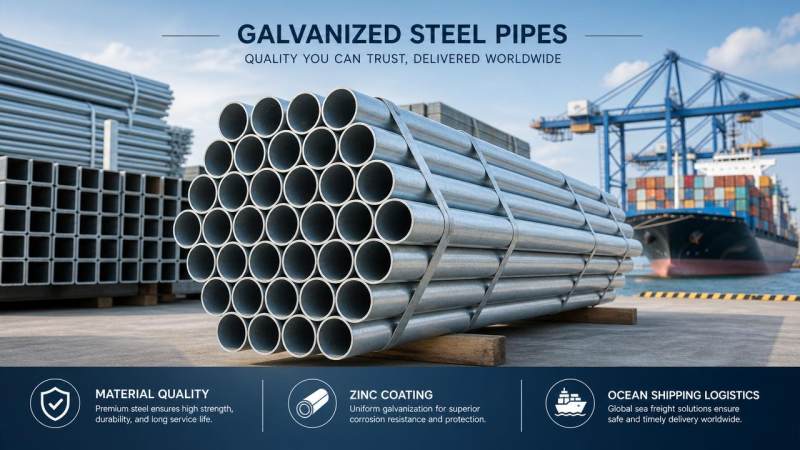
The steel market in 2026 is expected to remain sensitive to raw material volatility, energy costs, and ocean logistics. Galv steel pipe sits at the center of these pressures because it depends on both steel substrate and zinc coating.
In practical terms, a quotation for galv steel pipe includes more than pipe size and tonnage. It also reflects coating method, tolerance control, production route, inspection level, packaging method, and delivery destination.
When freight rates rise or zinc prices jump, suppliers with weaker planning often pass costs on abruptly. Stable exporters usually manage this better through production scheduling, inventory discipline, and broader shipping coordination.
This is one reason long-term sourcing partners matter. A manufacturer with steady output, quality control, and export experience can reduce uncertainty even when headline steel prices appear similar.
What actually makes up a galv steel pipe quote
At the most basic level, galv steel pipe cost is built from three core layers: the pipe material, the zinc coating, and the cost of moving finished goods to the required market.
Each layer has sub-factors. That is why two offers for what appears to be the same product can still differ by a meaningful margin.
Base steel material
The substrate determines a large part of the quotation. Grade selection, chemistry, wall thickness, outside diameter, and manufacturing route all affect cost.
A pipe produced to ASTM, EN, JIS, or GB requirements may require tighter process control or additional testing. That increases manufacturing cost, but also improves consistency and traceability.
Zinc consumption
Galvanizing is not a fixed add-on. Zinc usage changes with coating thickness, surface preparation, pipe dimensions, and the selected process, such as hot-dip galvanizing or pre-galvanized production.
When zinc markets tighten, the impact on galv steel pipe can be immediate. Heavier coating requirements improve corrosion protection, but they also raise direct material cost.
Freight and delivery terms
The same galv steel pipe can look economical on an FOB basis and much less competitive on a CIF or DDP basis. Port congestion, container availability, inland trucking, and destination duties all matter.
For bulky steel products, freight efficiency often depends on bundle design, loading density, and shipping route. These details affect landed cost more than many first-pass comparisons show.
Material grade affects more than strength
In commercial evaluation, material grade is often treated as a technical box to tick. In reality, it drives production cost, inspection needs, scrap rate, and downstream suitability.
For example, higher strength or more specialized grades may require stricter control during rolling, welding, or finishing. That typically results in a firmer price, but it may reduce fabrication issues later.
It also helps to review whether the requested specification is truly necessary. Over-specifying galv steel pipe can lock in cost without adding practical project value.
This same logic applies across steel categories. In mixed sourcing programs, buyers often compare pipe with related carbon steel inputs used in structures or fabrication assemblies.
Where support components are needed, items such as Hot rolled Carbon Steel Round Bar may enter the same budgeting discussion, especially for construction, water supplying, railing, or general manufacturing use.
Products in this category are commonly available in multiple standards, lengths from 2m to 12m, and diameters from 5mm to 2500mm, which shows how specification detail directly influences price comparison.
Zinc is a cost item and a performance decision
Zinc cost is often discussed as a commodity issue, but for galv steel pipe it is also a service-life decision. Lighter coating may reduce price today, while heavier coating may lower maintenance exposure later.
That trade-off becomes more important in outdoor, humid, coastal, or industrial environments. In those settings, coating quality should be reviewed alongside steel chemistry and processing consistency.
Not all galvanized finishes perform equally. Surface preparation, passivation, sealing, and handling after galvanizing can influence appearance, storage behavior, and corrosion resistance.
When a quotation seems unusually low, it is worth confirming the actual coating standard, coating weight, and inspection method. These are common areas where nominally similar galv steel pipe offers diverge.
Questions that clarify zinc-related pricing
- Is the coating requirement defined by standard, project need, or seller assumption?
- Is the pipe hot-dip galvanized after forming or supplied from pre-galvanized strip?
- Are passivation or protective surface treatments included in the price?
- Does the inspection document confirm coating thickness and adhesion?
Freight can change the ranking of suppliers
In 2026, freight remains one of the most underestimated galv steel pipe price factors. Steel is dense, but pipe also occupies volume, which means packing efficiency and route planning matter.
Ocean freight for China exports can vary significantly by destination, season, and vessel availability. Inland delivery after discharge may add another layer of cost and timing risk.
A supplier with export experience usually helps by aligning bundle size, seaworthy packaging, and document accuracy. That reduces avoidable rework, delays, and claim exposure.
Hongteng Fengda operates as a structural steel manufacturer and exporter from China, supporting global projects with standard and customized steel solutions. That background is relevant because pricing discipline often comes from manufacturing control, not trading alone.
With products aligned to ASTM, EN, JIS, and GB standards, and shipments moving to North America, Europe, the Middle East, and Southeast Asia, stable delivery planning becomes part of cost control, not just a logistics detail.
How to compare galv steel pipe offers more accurately
A useful comparison starts by separating visible price from total procurement cost. The lower quote is not automatically the better value if it introduces compliance gaps, delayed shipment, or coating uncertainty.
In actual evaluation work, a structured checklist improves decision quality.
- Confirm the exact grade, dimensions, and applicable standards.
- Check zinc coating method, thickness, and test documentation.
- Review Incoterms, port basis, and freight validity period.
- Compare packaging, loading plan, and shipment lead time.
- Assess whether MOQ affects price breaks or production scheduling.
- Verify consistency across samples, mill certificates, and final lots.
This approach is especially useful when galv steel pipe is part of a broader steel package. The same supplier may also provide structural sections, cold formed profiles, or carbon steel bars with similar documentation standards.
For instance, if a project includes railings, fabrication supports, or shipment frames, the commercial logic behind pipe pricing can be reviewed alongside related materials rather than in isolation.
What to watch in the next buying cycle
The next round of galv steel pipe sourcing should focus on three signals: zinc market direction, freight stability, and supplier execution quality.
If zinc prices rise while freight softens, coating-heavy products may see more pressure than standard black steel. If freight tightens again, regional delivery differences may outweigh small factory price advantages.
Execution quality is harder to measure, but often more valuable. Reliable lead times, clear inspection records, and consistent export packaging reduce hidden costs across the entire order cycle.
A sensible next step is to build a side-by-side cost sheet for galv steel pipe that separates steel value, zinc value, and logistics value. That makes quotations easier to test and easier to negotiate.
From there, it becomes practical to compare suppliers not only on price, but on specification accuracy, freight readiness, and long-term sourcing stability.
Please give us a message


Please enter what you want to find