Future Demand Trends for Galvanized Steel in Green Buildings
The demand for galvanized steel in green buildings is undergoing a structural shift, driven by the transition from evaluating initial capital expenditure to assessing the Total Cost of Ownership (TCO). For enterprise decision-makers, understanding these evolving market trends is crucial for optimizing supply chains and ensuring long-term structural integrity. The core driver is not merely the material cost, but the comprehensive lifecycle performance that aligns with stringent environmental and economic targets.
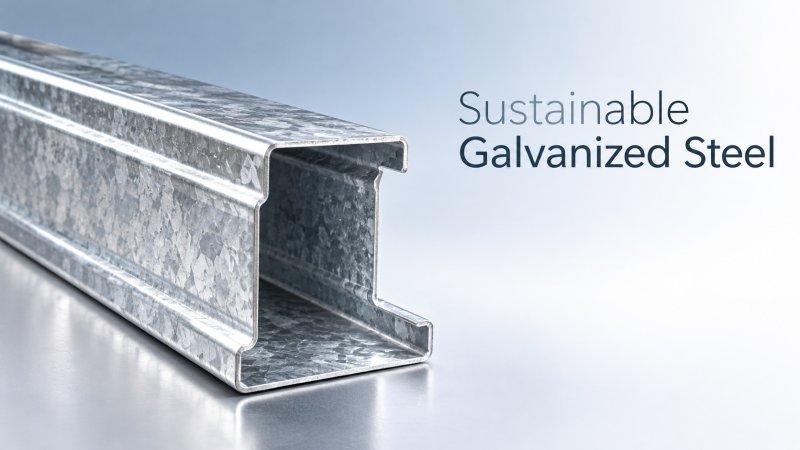
The fundamental shift in green building philosophy requires a rigorous assessment of long-term asset value. In this context, galvanized steel presents a compelling economic and environmental argument. The hot-dip galvanizing process metallurgically bonds zinc to the steel substrate, creating a barrier that provides both physical protection and sacrificial cathodic defense. When the zinc coating is scratched, it continues to protect the underlying steel. This mechanism translates into decades of maintenance-free performance in most atmospheric environments. For project financiers and facility managers, this eliminates the recurring costs, operational disruptions, and additional material consumption associated with repainting or repairing corroded structural elements. The predictability of the corrosion rate allows engineers to specify the exact coating thickness required for the design life of the structure, preventing both under-protection and unnecessary material over-specification.
Understanding the technical nuances of corrosion protection is critical for accurate procurement. International standards classify atmospheric corrosivity into categories, ranging from C1 (very low) to CX (extreme). Enterprise decision-makers must ensure that their structural steel suppliers can provide galvanized coatings that meet the specific requirements of the project's environmental category. For instance, a green building located in a coastal area or an industrial zone with high chemical exposure will require a heavier zinc coating or a duplex system compared to a standard inland commercial facility. Failing to align the coating specification with the actual environmental conditions is a common error that leads to premature degradation, undermining the sustainability goals of the project and resulting in unexpected maintenance liabilities.
Beyond durability, the alignment with circular economy principles is a major demand driver. Modern green building frameworks heavily weight materials that can be recovered and reused without degradation. Both steel and zinc are 100% recyclable. Unlike organic coatings that must be stripped or burned off during the steel recycling process—generating emissions and consuming energy—the zinc coating vaporizes in the electric arc furnace and is safely recovered in the EAF dust, which is subsequently recycled into zinc products. This closed-loop characteristic ensures that galvanized steel components retain their material value at the end of a building's lifecycle. Furthermore, when evaluating the embodied carbon of building materials, the long service life of galvanized steel significantly amortizes its initial carbon footprint over a 50 to 100-year period, resulting in a lower annualized carbon emission compared to materials that require frequent replacement.
 The application scope of galvanized steel in green buildings is expanding beyond traditional hidden structural frameworks. As architectural designs increasingly incorporate exposed structural elements to reduce material usage and highlight industrial aesthetics, the demand for high-quality surface finishes grows. Furthermore, sustainable infrastructure projects require robust exterior components. For instance, in green transit hubs or eco-friendly bridges, exposed structural profiles and safety barriers require exceptional corrosion resistance to withstand harsh environmental exposure. Utilizing a heavy-duty galvanized Rail for edge protection or pedestrian walkways exemplifies this trend, where the zinc finish ensures longevity while maintaining the structural capacity to bear dynamic loads. The ability to form these components into precise shapes without compromising the protective zinc-iron alloy layers is a testament to the material's versatility in complex architectural applications.
Green buildings are also characterized by their integration with on-site renewable energy generation. The structural support systems for rooftop solar photovoltaic arrays, building-integrated wind turbines, and rainwater harvesting networks are constantly exposed to moisture and varying thermal cycles. Galvanized steel is the default specification for these mounting structures because it offers the optimal balance of structural strength, formability, and long-term corrosion resistance. The ability to fabricate complex cold-formed profiles from galvanized coil allows for lightweight, highly efficient support structures that minimize the dead load on the building's primary roof system. This integration is vital for achieving the energy performance targets mandated by modern green building codes.
For enterprise decision-makers, this rising demand necessitates a strategic adjustment in procurement practices. The focus is shifting from purely price-based selection to evaluating the comprehensive environmental and operational footprint of the supply chain. Procurement teams are increasingly requiring suppliers to provide Environmental Product Declarations (EPDs) and third-party certifications that verify compliance with international standards such as ASTM, EN, and ISO. This ensures that the galvanized coatings meet the specific thickness and adhesion requirements necessary for the intended design life of the green building. The presence of ISO9001 for quality management and ISO14001 for environmental management in a supplier's operational framework provides a baseline assurance of consistent production and responsible manufacturing practices.
Effective risk management at the procurement stage requires rigorous quality control protocols. Decision-makers should mandate clear inspection procedures upon delivery. This includes non-destructive coating thickness measurements using magnetic or eddy current gauges to verify compliance with the specified standard, as well as visual inspections for surface defects such as bare spots, dross inclusions, or excessive roughness. Establishing these verification steps before the materials are incorporated into the building structure prevents costly rework and delays. It also shifts the quality burden to the manufacturer, encouraging them to maintain strict control over the galvanizing bath chemistry and the withdrawal speed of the steel components.
In the context of market trends, decision-makers are occasionally presented with alternative corrosion protection technologies, such as thermal spray zinc, advanced paint systems, or stainless steel. While these alternatives have specific niche applications, hot-dip galvanized steel remains the baseline for the majority of green building structural components due to its superior cost-to-performance ratio. Thermal spray systems require extensive surface preparation and highly skilled labor, making them less economical for standard structural sections. Advanced paint systems, while offering aesthetic flexibility, are susceptible to mechanical damage during transport and installation, which can lead to localized corrosion if not meticulously repaired on-site. Galvanized steel's metallurgical bond provides a level of mechanical robustness that organic coatings cannot match, ensuring the integrity of the protection system throughout the construction phase and beyond.
Navigating this market also requires an awareness of underlying variables, particularly raw material price volatility. The cost of zinc is subject to global commodity market fluctuations, influenced by mining output, energy costs for smelting, and macroeconomic demand. To mitigate this risk, forward-thinking enterprises are moving towards long-term supply agreements and collaborative forecasting with their steel partners. By sharing project pipelines and delivery schedules, buyers can help manufacturers optimize their production planning, which in the long run stabilizes costs and secures allocation during periods of high market demand. This collaborative approach transforms the buyer-supplier relationship from a transactional interaction into a strategic partnership capable of weathering market fluctuations.
The trajectory for galvanized steel in the green building sector is defined by a clear demand for materials that deliver verifiable, long-term sustainability outcomes. The decision to specify galvanized components is no longer just a technical choice for corrosion protection; it is a strategic business decision that influences lifecycle economics, regulatory compliance, and overall project viability. As environmental standards continue to tighten and the true cost of building maintenance becomes more apparent, the integration of high-quality galvanized steel will remain a foundational element in the development of resilient, sustainable infrastructure. Enterprise decision-makers who align their procurement strategies with these technical and market realities will be best positioned to deliver projects that are both economically sound and environmentally responsible.
Previous page: Already the first one
Next page: Already the last one
Please give us a message


Please enter what you want to find