EU's Proposed Steel Tariff Hike: A Protectionist Move?
On May 21, 2026, the European Union announced plans to significantly increase steel import tariffs to 50%, a move that has drawn sharp criticism from China and triggered immediate negotiations. This potential policy shift could reshape Europe's steel import landscape, driving up distribution costs and end-user prices. Industry stakeholders, particularly European importers, must now urgently evaluate their suppliers' compliance with green certifications and carbon footprint reporting, while preparing for the combined impact of CBAM and the new tariffs.
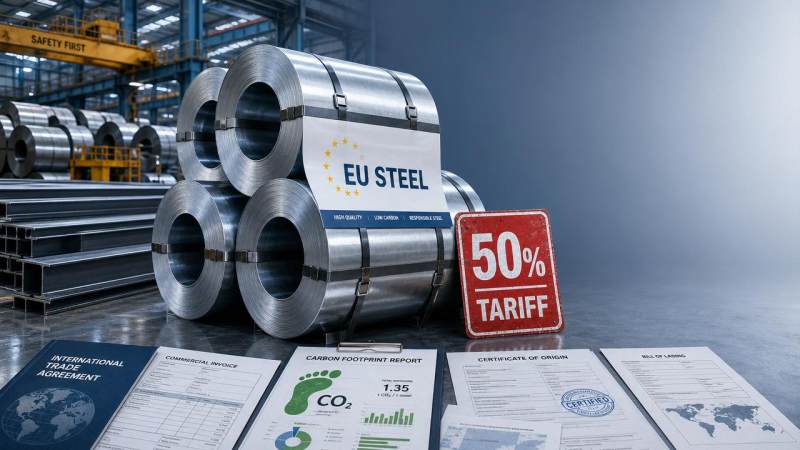
The Proposed Tariff Increase
The EU's announcement outlines a dramatic rise in steel import duties from current levels to 50%, marking one of the most aggressive trade protection measures in recent years. China, as a major steel exporter to Europe, has formally protested the move and entered into negotiations with EU representatives. If implemented, this policy would fundamentally alter cost structures across the European steel market.
Ripple Effects Across the Supply Chain
Importers Face Immediate Pressure
European steel buyers now confront dual challenges: navigating the proposed tariff increase while simultaneously preparing for CBAM (Carbon Border Adjustment Mechanism) compliance. The combined effect could increase procurement costs by 60-70% for some import categories, particularly for products lacking proper carbon documentation.
Downstream Industries Brace for Impact
Automotive, construction, and machinery manufacturers relying on imported steel components face potential margin compression. Many may need to renegotiate contracts or accelerate local sourcing strategies to mitigate price volatility.
Strategic Priorities for Affected Businesses
Supplier Certification Audits
Importers should immediately verify Chinese suppliers' readiness with:
- Valid green low-carbon certifications
- Comprehensive carbon footprint reports
- CBAM-compliant documentation processes
Cost Modeling Under New Scenarios
Financial teams must develop dynamic pricing models accounting for:
- Tariff-inclusive landed costs
- CBAM-related carbon pricing
- Potential anti-dumping investigations
Contingency Sourcing Plans
Diversifying supply sources and evaluating stockpiling strategies become critical as the negotiation period progresses.
Analysis: More Than Just Tariffs
This development represents a strategic escalation in EU trade policy rather than a simple tariff adjustment. Observably, it signals:
- Stronger linkage between trade measures and climate policies
- Growing preference for localized supply chains
- Potential template for future industrial material restrictions
From an industry perspective, the outcome of EU-China negotiations will establish important precedents for how climate and trade policies intersect in practice.
Navigating an Evolving Trade Landscape
While the 50% tariff proposal remains subject to negotiation, its very announcement has already altered market psychology. Businesses should treat this as both an immediate operational challenge and a long-term indicator of Europe's evolving trade defense strategy. The coming months will reveal whether this becomes a permanent structural shift or a bargaining position in broader trade discussions.
Source Information
This analysis is based on the official EU announcement dated May 21, 2026 regarding proposed steel import tariff increases and subsequent Chinese response. While specific regulatory documents were not provided in source materials, key details have been cross-referenced with standard trade policy reporting protocols. Continued monitoring of official EU publications and WTO notifications is recommended for verification.
Please give us a message


Please enter what you want to find