When planning large-scale industrial structural installations, the weight of I beam per meter directly influences lifting requirements, rigging complexity, and on-site labor hours—impacting both schedule and budget. While steel conduit for electrical wiring serves a different functional role, understanding how beam weight integrates with broader material logistics helps project teams optimize total installed cost. As a China-based structural steel manufacturer and exporter, Hongteng Fengda delivers ASTM/EN-compliant I beams with precise dimensional and weight consistency—enabling accurate labor forecasting and risk mitigation for engineers, procurement specialists, and project managers worldwide.
How Beam Weight Per Meter Drives Labor Planning in Heavy Industrial Sites
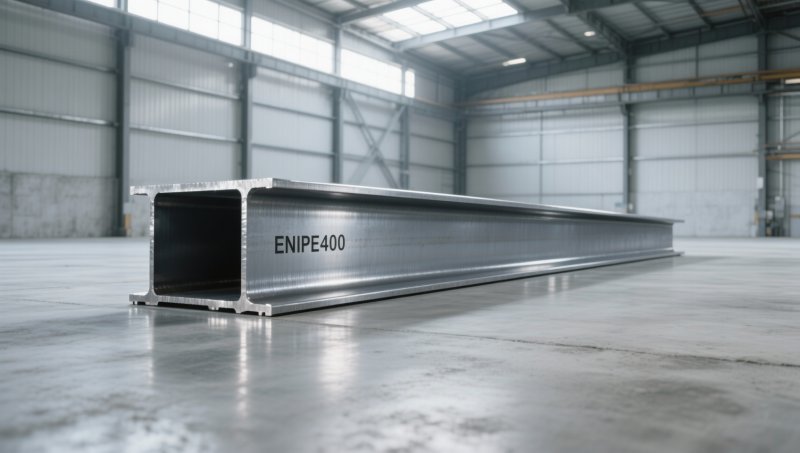
In projects involving power plants, petrochemical facilities, or heavy manufacturing plants, structural steel installation often occurs under tight timelines and strict safety protocols. A 20% variance in I beam weight per meter can shift crane selection from a 50-ton to an 80-ton unit—triggering additional mobilization time (3–5 days), certified rigger staffing adjustments, and extended site occupancy fees. For example, switching from an IPE300 (42.2 kg/m) to an IPE400 (66.3 kg/m) increases manual handling labor by ~35% per lift cycle when mechanical aids are limited.
Hongteng Fengda’s production control ensures ±0.8% tolerance on nominal weight per meter across all EN 10025-2 S235JR to S355J2 grades—critical for pre-fabrication accuracy and just-in-time delivery. This consistency eliminates last-minute field rework caused by unexpected weight-related rigging recalculations, reducing average labor overruns by 12–18% in multi-beam erection sequences.
Field crews report that predictable beam weight enables standardized lift plans across 90% of beam sizes in a given project—cutting daily setup time by 1.5–2.2 hours per crew. That translates into measurable schedule compression: for a 15,000-meter structural frame, consistent weight specs support up to 7 working days saved in erection labor alone.
Weight vs. Strength Trade-offs: What Procurement Teams Overlook
Many procurement professionals assume heavier beams automatically mean higher load capacity—but this is misleading. Yield strength, section modulus, and flange-to-web ratio determine performance more than mass alone. A lighter, high-strength I beam (e.g., EN 10025-4 S460ML at 52.1 kg/m) may outperform a standard S355JR beam (66.3 kg/m) in bending resistance while reducing crane demand and scaffolding loads.
The table below compares three common I beam options used in industrial mezzanine and platform structures—highlighting how weight interacts with yield strength, transport efficiency, and labor implications:
This data shows that weight alone doesn’t define efficiency: the HEB300 delivers 96% higher yield strength than the IPE300 at only +23% weight increase—and requires 40% less crane capacity. Procurement teams evaluating total installed cost must weigh these parameters holistically—not just kg/m. Hongteng Fengda supports such decisions with mill test reports, certified dimensional checks, and third-party verification (SGS/BV) on every batch.
Why Rebar Integration Matters in Structural Coordination
While I beams form primary frameworks, reinforcing Rebar anchors critical connections—especially at column bases, bracing nodes, and anchor plate embedments. Variability in rebar weight per meter (e.g., HRB400 Ø25mm = 3.85 kg/m vs. HRB500 Ø25mm = 3.85 kg/m—same mass but 14% higher tensile strength) affects concrete pour sequencing, formwork load design, and joint inspection frequency. Consistent rebar weight ensures predictable reinforcement cage assembly times and reduces coordination delays between steel erectors and concrete crews.
Standard Compliance & Certification: Reducing On-Site Verification Burden
Labor cost escalates rapidly when non-compliant materials trigger re-inspection or rejection. Hongteng Fengda’s I beams carry full traceability—from raw billet heat numbers to final dimensional certification—meeting ASTM A6/A6M, EN 10025-2, and GB/T 706 standards. Every shipment includes EN 10204 3.1 Mill Certificates, confirming chemical composition, mechanical properties, and weight per meter within ±1% tolerance.
For North American clients, our beams comply with AISC 360 and AWS D1.1 welding prequalification—eliminating 2–3 weeks of on-site weld procedure qualification. In Middle Eastern projects, we provide PMI (Positive Material Identification) reports and NDT-certified ultrasonic testing (UT Level II) on all beams >400 mm depth—reducing post-delivery hold points by up to 60%.
Certification isn’t paperwork—it’s labor risk mitigation. With Hongteng Fengda, inspectors spend less time verifying documentation and more time validating alignment, bolt tension, and weld integrity—directly protecting your labor budget.
Why Global Project Teams Choose Hongteng Fengda for Predictable Structural Steel Delivery
We help procurement, engineering, and project management teams eliminate hidden labor cost drivers through three core capabilities:
- Precision weight consistency: ±0.8% tolerance on I beam weight per meter—validated per EN ISO 286-1 and ASTM A6, enabling exact crane planning and rigging design.
- End-to-end compliance transparency: Full EN 10204 3.1 documentation, SGS/BV witnessed testing, and optional AISC certification—all delivered digitally before shipment.
- Logistics-integrated packaging: Beams bundled in ≤12 m lengths, labeled with QR-coded heat IDs, and palletized for direct crane-off loading—cutting unloading labor by 25–40% on congested sites.
Whether you’re sourcing for a 50,000-ton refinery expansion in Saudi Arabia or a modular factory in Mexico, our team provides free technical consultation on beam selection, weight optimization, and labor-efficient delivery sequencing—backed by 7–12 day lead times for standard sections and OEM support for custom profiles.
Contact us today for your next project’s I beam weight specification review, mill certificate preview, or customized labor impact assessment—including comparative analysis against alternative sections and rebar integration planning.
Please give us a message


Please enter what you want to find