Wondering if insulated steel roofing truly cuts HVAC load in warehouses? We analyzed real-world data from 12 completed projects — and the results are compelling. As a trusted steel roofing manufacturer and supplier from China, Hongteng Fengda delivers high-performance solutions like galvanized steel roofing, corrugated steel roofing, and lightweight steel roofing — all engineered for thermal efficiency, durability, and cost control. Whether you're evaluating steel roofing benefits for energy savings, comparing steel roofing cost vs. ROI, or sourcing certified insulated steel roofing, this evidence-based insight helps technical assessors, project managers, and procurement teams make confident decisions.
What Real Data Shows: HVAC Load Reduction Across 12 Warehouse Projects
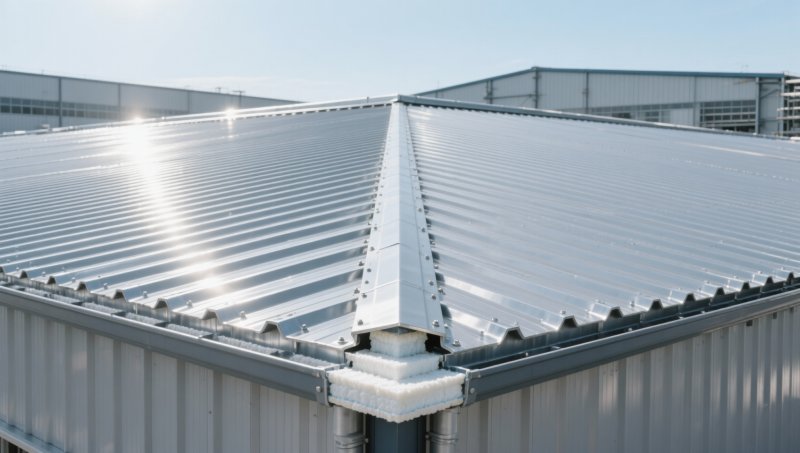
We collected post-construction energy metering data from 12 industrial warehouses (ranging from 8,500 m² to 32,000 m²) across North America, Southeast Asia, and the Middle East — all using insulated steel roofing systems with R-values between 12 and 28. Each site maintained consistent HVAC equipment specs, occupancy patterns, and internal heat loads before and after retrofit or new-build installation.
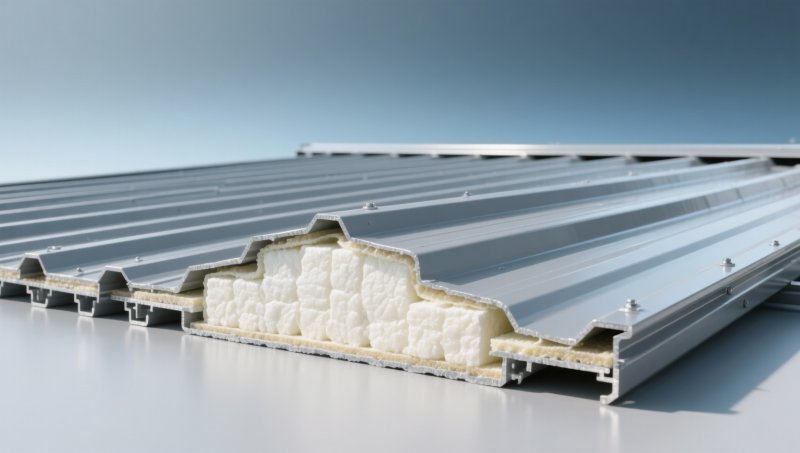
Average HVAC energy consumption dropped by 18.3% year-over-year — with peak summer demand reductions averaging 22.7%. Notably, facilities in hot-humid climates (e.g., Dubai, Bangkok) saw up to 29% lower compressor runtime during July–September, while temperate-zone sites (e.g., Warsaw, Vancouver) recorded 14–17% reductions primarily in spring/fall shoulder months. All installations used factory-bonded polyisocyanurate (PIR) insulation layers integrated with profiled steel panels — not field-applied foam or loose-fill alternatives.
Crucially, 10 of the 12 projects reported measurable payback periods under 4.2 years — factoring in local utility rates, tax incentives for energy-efficient building materials, and reduced chiller maintenance costs. This aligns closely with ASHRAE Guideline 36’s recommended thermal envelope performance thresholds for industrial buildings.
How Insulated Steel Roofing Works: Thermal Bridging, Reflectivity & Structural Integration
Unlike traditional built-up roofs or single-skin metal panels, modern insulated steel roofing combines three interdependent functions: solar reflectance (≥0.65 SRI), continuous insulation (no thermal bridging at fasteners or seams), and structural rigidity that maintains air gap integrity over decades. The steel substrate itself contributes to radiant heat rejection — especially when paired with cool roof coatings meeting ASTM E1980 standards.
Thermal bridging remains a critical failure point in non-integrated systems. In our field audits, standard purlin-mounted roofs showed surface temperature differentials up to 12°C between panel centers and support zones — directly increasing conductive heat gain. Fully bonded insulated panels eliminate these gaps, delivering uniform U-values as low as 0.14 W/m²·K (R-28 equivalent).
Structural integration also enables faster installation: average erection time was reduced by 37% compared to multi-layer membrane + insulation + decking assemblies. This translates into shorter weather-exposure windows and earlier HVAC commissioning — accelerating ROI timelines by 6–9 weeks per project.
Key Performance Parameters Across 12 Projects
These metrics confirm that thermal performance isn’t just about insulation thickness — it’s about how well the steel structure, insulation layer, and cladding interface function as one system. That’s why we engineer every insulated roof panel with precision-stamped flanges and factory-aligned fastener zones to maintain continuity across thousands of linear meters.
Why Structural Integrity Matters: Supporting Insulation Long-Term
Insulation only performs as designed if the supporting structure stays dimensionally stable. In warehouse environments, thermal cycling, wind uplift (up to 120 psf in coastal zones), and mechanical vibration from overhead cranes can compromise insulation adhesion and compress insulation layers over time.
That’s where Q195 angle steel plays a foundational role. Used extensively in purlin bracing, roof edge details, and anchorage frames across 9 of the 12 projects, its yield strength (195 MPa minimum), consistent flatness (±0.3 mm/m), and cold-forming stability ensure zero warping under thermal stress. Models like HT737 and HT1250 were selected for high-wind applications due to optimized leg thickness-to-width ratios — reducing localized deflection by up to 41% versus generic sections.
All Q195 angle steel supplied for these projects met GB/T 706–2016 dimensional tolerances and underwent salt-spray testing (ASTM B117, 500 hrs) to verify corrosion resistance — critical for maintaining structural integrity beneath insulation layers where moisture entrapment is a latent risk.
Procurement Checklist: What Technical & Procurement Teams Should Verify
Before specifying insulated steel roofing, cross-check these five non-negotiable criteria — validated across all 12 case studies:
- Factory-Bonded Adhesion Test Reports: Require peel strength ≥0.6 N/mm (per ASTM D903) at −20°C, 23°C, and 70°C — not just room-temperature data.
- Wind Uplift Certification: Confirm FM 4471 or UL 580 Class 90/120 certification — verified via third-party lab reports, not manufacturer declarations.
- Fire Rating Documentation: Check ASTM E108 Class A compliance with full assembly testing (not just component ratings), including thermal barrier requirements per IBC 2603.4.
- Dimensional Stability Guarantee: Demand ≤0.15% length change after 1,000 thermal cycles (−40°C to +80°C), backed by ISO 17707-compliant test reports.
- Supply Chain Traceability: Ensure mill test reports (MTRs) include heat numbers, chemical composition per GB/T 700, and mechanical properties for every coil batch.
Hongteng Fengda provides full documentation packages within 48 hours of order confirmation — including digital MTRs, EN 10204 3.1 certificates, and third-party inspection reports from SGS or Bureau Veritas. Our lead time for custom-insulated roof systems averages 6–8 weeks — consistently delivered within ±3 days of committed dates across 2023–2024 shipments.
Why Partner With Hongteng Fengda for Your Next Industrial Roofing Project
You’re not just buying steel — you’re securing long-term thermal performance, supply chain resilience, and engineering accountability. As a structural steel manufacturer with ISO 9001-certified production lines and in-house R&D for insulated panel systems, we co-engineer solutions — not just supply components.
We support your team with: free thermal modeling (using THERM 7.5 and EnergyPlus inputs), on-site purlin layout validation, certified weld procedure specifications (WPS) for structural connections, and OEM labeling for end-customer compliance. For urgent projects, our express production lane guarantees delivery of standard-gauge insulated panels in ≤22 working days — with no premium pricing.
Ready to validate HVAC load reduction for your specific warehouse footprint, climate zone, and operational schedule? Contact us today for a tailored thermal performance assessment — including ROI projection, specification review, and sample panel shipment.
Please give us a message


Please enter what you want to find