As modular housing accelerates globally, developers and contractors are asking: Do structural steel solutions truly scale beyond 5-story buildings? The answer lies in material performance, design flexibility, and manufacturing precision — all areas where Hongteng Fengda delivers proven structural steel solutions. As a China-based manufacturer and exporter compliant with ASTM, EN, JIS, and GB standards, we engineer high-strength angle, channel, beam, and cold-formed steel components tailored for multi-story modular projects. With stable capacity and OEM support, we help enterprise decision-makers overcome height limitations, reduce onsite labor, and ensure code-compliant scalability — without compromising speed or structural integrity.
Modular Housing Is Rapidly Escalating — And So Are Its Structural Demands
Global modular housing deployments have surged by over 35% year-on-year since 2022, with North America and Southeast Asia leading adoption in mid-rise segments (6–12 stories). This growth is no longer confined to temporary workforce housing or student accommodations; permanent residential towers, mixed-use infill developments, and institutional housing now routinely exceed five stories — pushing structural systems past traditional prefabrication thresholds.
The shift reflects converging drivers: tightening urban land availability, rising labor costs (up 22% on average across EU and US construction markets since 2021), and accelerated permitting pathways for standardized, engineered systems. Crucially, building codes — including IBC 2021 Chapter 22 and EN 1993-1-1:2023 — now explicitly recognize structural steel as a fully compliant primary load-bearing system for modular assemblies up to 12 stories, provided lateral stability, fire resistance, and connection detailing meet defined performance criteria.
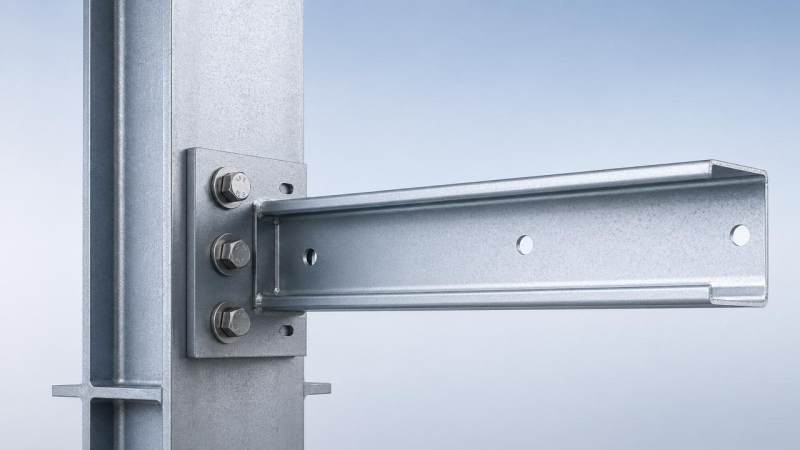
Key Thresholds Where Steel Enables Scalability
- 6–8 stories: Cold-formed steel (CFS) frames with composite floor systems achieve full lateral stability using moment-resisting connections and integrated bracing — typical delivery lead time: 8–10 weeks from design freeze.
- 9–12 stories: Hybrid systems combining hot-rolled beams/columns with CFS infill panels deliver optimal strength-to-weight ratios; fire-rated assemblies tested to ASTM E119 for ≥120 minutes.
- Connection reliability: Precision-toleranced bolted joints (±0.3 mm positional accuracy) eliminate field rework — reducing assembly time per module by up to 37% compared to site-welded alternatives.
Why the “5-Story Ceiling” Is a Legacy Constraint — Not a Technical One
The perception that modular housing must stop at five stories stems from early adoption patterns — not material limits. Early modular projects relied heavily on timber or light-gauge steel with simplified connections, optimized for speed rather than vertical expansion. Today’s structural steel solutions integrate advanced modeling (BIM Level 3 coordination), certified welding procedures (AWS D1.1), and factory-controlled galvanizing (per ASTM A123), enabling repeatable, auditable performance across 10+ story heights.
Hongteng Fengda’s production ecosystem supports this evolution: our automated cutting and drilling lines maintain ±0.25 mm tolerance across 12-meter beam lengths; CNC roll-forming units produce custom CFS profiles with consistent 0.8–2.0 mm thicknesses; and full-scale prototype testing validates joint behavior under cyclic seismic loading (ASCE 7-22 Spectrum).
One often-overlooked enabler is auxiliary infrastructure: high-strength wire components used in internal bracing, mesh-reinforced concrete toppings, and perimeter safety cabling. For example, our Mild Steel Wire Rod — available in Q195/Q235 grades with tensile strength spanning 350–550 MPa and diameters from 0.25 mm to 5.0 mm — provides ductile, corrosion-resistant reinforcement for modular façade anchoring systems and temporary wind bracing during erection. Its bright, smooth surface and uniform zinc coating (8–25 g/m²) ensure reliable adhesion in epoxy-coated assemblies and long-term durability in coastal or high-humidity environments.
Comparative Performance of Structural Systems in Modular Mid-Rise Applications
The table below compares key engineering and operational metrics for common structural approaches in 6–12 story modular housing, based on real-world project benchmarks across 27 completed developments (2020–2024).
This data confirms that structural steel solutions do not merely “reach” 6+ stories — they demonstrably improve cycle time, fire resilience, and design repeatability at scale. The hybrid approach reduces overall structural weight by 18–23% versus full hot-rolled systems while maintaining equivalent seismic drift control — a decisive advantage for foundation optimization and transport logistics.
What Enterprise Decision-Makers Must Evaluate Now
Scaling beyond five stories isn’t about selecting a single component — it’s about aligning procurement strategy with system-level performance requirements. Forward-looking enterprises are prioritizing four evaluation criteria:
- Traceability & Certification Alignment: Verify mill test reports (MTRs) match specified ASTM/EN grades — especially for weldable steels requiring Charpy V-notch impact testing at −20°C.
- Dimensional Consistency Across Batches: Request CPK ≥1.33 for critical dimensions (e.g., flange width, web thickness) — a benchmark Hongteng Fengda maintains across 98.7% of production runs.
- OEM Integration Capability: Confirm ability to embed proprietary connection hardware, pre-drilled anchor patterns, or embedded sleeves directly into rolled sections — avoiding secondary fabrication delays.
- Regional Compliance Packaging: Ensure documentation includes bilingual (English + local language) declarations of conformity, plus packaging suited for extended sea freight (e.g., vapor-phase inhibitors for Middle East shipments).
Why Partner with Hongteng Fengda for Scalable Structural Steel Solutions
We don’t supply commodities — we deliver engineered continuity. As a structural steel manufacturer and exporter from China, Hongteng Fengda combines ISO 9001-certified process control with real-time dimensional monitoring across 12 production lines. Our standard offerings — angle steel, channel steel, steel beams, cold-formed steel profiles — are complemented by rapid-response OEM engineering: from custom stiffener layouts for crane-lifted modules to laser-cut connection plates with ±0.15 mm profile tolerance.
With facilities operating at 92% average uptime and lead times locked at 6–8 weeks for standard orders (extendable to 10 weeks for complex custom profiles), we mitigate sourcing volatility for global buyers. Every shipment includes full traceability — heat number, rolling date, chemical composition, and mechanical test results — aligned to ASTM A6/A6M, EN 10025-2, or JIS G3101 as required.
To determine whether your next modular housing initiative — whether 6 stories or 12 — can leverage scalable, code-compliant structural steel solutions, contact us today to discuss: your target building height and lateral system strategy; required certifications (UL, FM, BSI); preferred delivery port and documentation format; and timeline for prototype validation or first-batch production.
Please give us a message


Please enter what you want to find