As global construction budgets tighten and project timelines become more demanding, business decision-makers need smarter ways to source reliable structural steel. Steel structure construction cost-effective solutions in 2026 will depend on stable supply, certified quality, and flexible customization. As a China-based structural steel manufacturer and exporter, Hongteng Fengda helps global buyers reduce procurement risks, control costs, and secure dependable steel products for construction, industrial, and manufacturing projects.
Cost-Effective Steel Structure Solutions for 2026: What Is Changing
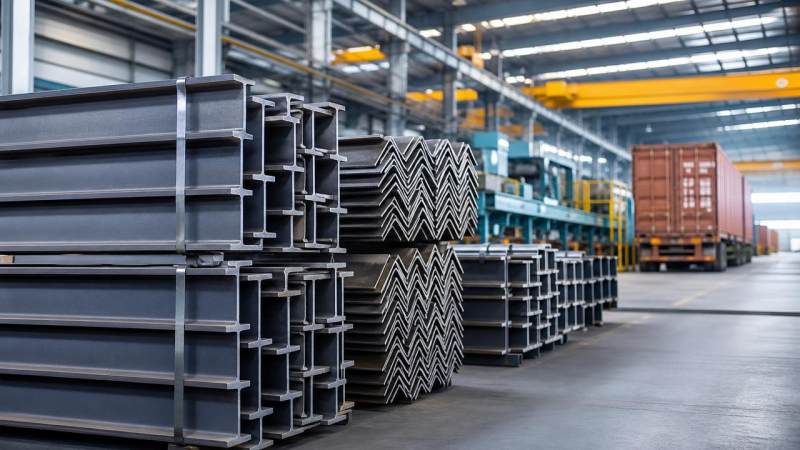
The steel construction market is entering a more disciplined cycle in 2026.
Material cost, lead time, compliance, and design flexibility now influence project value together.
Steel structure construction cost-effective solutions are no longer based only on the lowest unit price.
They depend on predictable delivery, accurate specifications, and reduced waste across the supply chain.
For global projects, structural steel sourcing must also handle standards, documentation, packaging, and export coordination.
This makes experienced manufacturers more important in total cost control.
Trend Signals Behind Steel Structure Construction Cost-Effective Solutions
Several signals show why 2026 planning needs a more integrated steel sourcing strategy.
- Construction schedules are shorter, leaving less tolerance for delayed steel deliveries.
- More projects require ASTM, EN, JIS, or GB compliance before shipment approval.
- Modular construction increases demand for precise profiles and stable dimensions.
- Industrial upgrades need steel components that balance strength, weight, and installation speed.
- Global logistics costs make packaging efficiency and consolidated shipments more valuable.
These signals point toward steel structure construction cost-effective solutions built around lifecycle efficiency.
A cheaper profile may become expensive if rework, rejection, or storage problems appear later.
Why Cost Pressure Is Becoming a Structural Steel Strategy Issue
Cost pressure is not only caused by steel price movement.
It also comes from engineering changes, incomplete drawings, supplier instability, and inconsistent quality inspection.
Steel structure construction cost-effective solutions therefore require early coordination between design, production, inspection, and shipment.
How Structural Steel Choices Affect Project Economics
The right steel section can reduce installation time and improve load performance.
Angle steel, channel steel, beams, and cold formed profiles each influence labor and assembly differently.
For example, accurate angle steel dimensions help reduce site trimming and connection adjustment.
Reliable channel steel can support frames, platforms, racks, and mechanical structures with repeatable alignment.
Steel beams remain essential where strength, span, and safety margins are central project concerns.
Steel structure construction cost-effective solutions start when each profile is matched to actual structural demand.
Mid-Project Product Fit: Angle Steel for Practical Cost Control
In many steel structures, angle steel works as a stress component and connector between components.
A relevant option is Q195 angle steel, supplied for standard and customized structural applications.
Available specifications include equal and unequal angles, with thickness from 3mm to 24mm.
Common widths range from 20mm to 200mm, supporting both light and heavier structures.
Lengths can include 3–9m, 4–12m, 4–19m, 6–19m, or customized requirements.
Materials may include A36, A53, Q235, and Q345, depending on design and project standards.
Surface options include pickled, black, bright, polishing, and blasting finishes.
It is widely used in building structures, bridges, transmission towers, warehouse shelves, and container racks.
Other uses include cable trench supports, power piping supports, industrial furnaces, ships, and reaction towers.
For 2026 planning, this profile supports steel structure construction cost-effective solutions through standardization and flexible sizing.
Impacts Across Construction, Industrial, and Manufacturing Projects
Different project types experience cost pressure in different ways.
Building structures often focus on fast erection, stable dimensions, and consistent batch quality.
Engineering structures need reliable strength, documented standards, and traceable materials.
Industrial projects may require steel components that fit machinery, piping, platforms, and support frames.
Manufacturing projects often value repeat ordering, OEM flexibility, and predictable lead times.
- Construction sites benefit from accurate lengths and reduced installation correction.
- Fabrication workshops benefit from stable profile geometry and clean surfaces.
- Export projects benefit from compliant documentation and shipment-ready packaging.
- Long-term programs benefit from repeatable specifications across multiple orders.
These impacts explain why steel structure construction cost-effective solutions should be reviewed by application, not price alone.
Key Priorities for 2026 Structural Steel Sourcing
A practical sourcing plan should focus on measurable risk reduction.
The most useful priorities are clear specifications, certified production, and responsive technical communication.
- Standards alignment: Confirm ASTM, AISI, EN, DIN, JIS, or GB requirements early.
- Dimensional accuracy: Match section size, length, and theoretical weight with project drawings.
- Material selection: Choose grades such as A36, Q235, or Q345 based on engineering loads.
- Customization: Use OEM profiles when standard products create excess cutting waste.
- Lead time control: Evaluate production capacity before confirming critical schedules.
- Export reliability: Review packing, labeling, documents, and loading coordination.
These priorities strengthen steel structure construction cost-effective solutions by reducing hidden procurement and construction losses.
How Hongteng Fengda Supports Cost-Effective Structural Steel Programs
Hongteng Fengda manufactures and exports structural steel products from China.
The product range includes angle steel, channel steel, steel beams, cold formed profiles, and customized components.
Modern facilities and strict quality control help maintain consistent production output.
Products are supplied according to major international standards, including ASTM, EN, JIS, and GB.
Stable capacity supports projects across North America, Europe, the Middle East, and Southeast Asia.
This capability helps steel structure construction cost-effective solutions become practical for cross-border projects.
Instead of treating steel as a single purchase, Hongteng Fengda supports specification review and supply planning.
2026 Response Framework for Better Steel Cost Control
The following framework can guide steel planning before orders are placed.
This approach turns steel structure construction cost-effective solutions into repeatable operating decisions.
What to Watch Before Confirming 2026 Steel Orders
Several warning signs should be checked before procurement commitments are finalized.
- Specifications are incomplete or inconsistent across drawings and quotation documents.
- Only unit price is compared, while tolerance and documentation are ignored.
- Required standards are mentioned but not linked to inspection records.
- Delivery schedules are accepted without production capacity confirmation.
- Packaging requirements are unclear for ocean freight or long-distance transport.
Avoiding these risks improves steel structure construction cost-effective solutions before problems reach the jobsite.
Action Steps for More Reliable Steel Structure Construction Cost-Effective Solutions
The next step is to convert project requirements into clear steel purchasing data.
Prepare drawings, material grades, section sizes, lengths, surface requirements, standards, and delivery expectations.
Then compare not only prices, but also production stability, certification, customization ability, and export experience.
Hongteng Fengda can support structural steel sourcing with reliable products and customized solutions.
For 2026 projects, early communication can reduce uncertainty and improve total cost control.
Steel structure construction cost-effective solutions are strongest when quality, timing, and specification accuracy work together.
Please give us a message


Please enter what you want to find