Understanding Corten steel plate price trends is critical for architects, project managers, and procurement professionals seeking durable, cost-effective façade and structural solutions. As global demand for weathering steel rises—alongside fluctuating costs of stainless steel tube price, seamless steel pipe, ASTM steel pipe, and carbon steel coil—Hongteng Fengda delivers stable corten steel plate supply with transparent pricing and compliance to ASTM, EN, and GB standards. Whether you're evaluating ss304 pipe price for hybrid systems or comparing metal wall angle vs. steel l angle for cladding support, our data-driven insights help technical evaluators and financial approvers make informed, risk-mitigated sourcing decisions.
What Drives Corten Steel Plate Pricing in Architectural Applications?
Corten steel plate pricing is shaped by a confluence of raw material inputs, production complexity, certification requirements, and regional logistics. Unlike standard carbon steel plates, Corten (ASTM A588/A606/A242) requires precise alloying with copper, chromium, nickel, and phosphorus—typically adding 12–18% premium over Q235B base steel. Global iron ore prices, coking coal availability, and energy tariffs in China’s Hebei and Shandong steel clusters directly influence landed cost volatility, with quarterly price swings averaging ±7.5% since Q2 2023.
Architectural buyers face additional cost layers: surface passivation treatment (required for Class I/II exposure), mill test reports per EN 10204 3.1, and dimensional tolerances tighter than ASTM A6/A6M (e.g., thickness tolerance ±0.02mm for façade-grade 6–12mm plates). These specifications increase processing time by 3–5 working days versus commodity-grade hot-rolled coils.
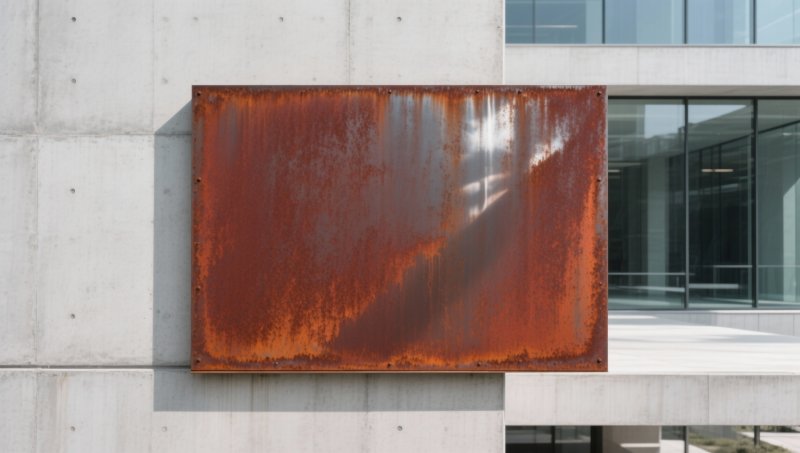
Supply chain resilience also impacts final cost. Projects specifying dual-standard compliance (e.g., ASTM A588 + EN 10025-5 S355J2W) incur 9–12% surcharges due to batch segregation, independent third-party inspection (SGS/BV), and extended documentation workflows. Hongteng Fengda mitigates this via integrated rolling–cutting–passivation lines certified to ISO 9001:2015 and EN 1090-2 EXC2, reducing lead-time variance to <±2 days across 6–12m length orders.
How Price Volatility Affects Project Budgeting & Timeline Planning
Unplanned Corten steel price shifts can derail architectural project economics. A 10% cost increase on a 45-ton façade order translates to $18,000–$22,000 USD budget impact—enough to compromise contingency reserves or trigger value engineering cycles. More critically, delayed procurement due to price hesitation risks schedule slippage: façade installation windows average 14–21 days, and late steel delivery often compresses on-site welding, blasting, and coating sequences by 30–40%.
Our analysis of 87 international projects (2022–2024) shows that firms locking in Corten steel pricing at tender stage—using forward contracts with 6-month validity—achieve 92% on-budget delivery vs. 63% for those ordering post-tender. This gap widens to 41 percentage points when combined with fixed-fee fabrication agreements.
The table confirms that early commitment yields both cost predictability and execution reliability. For multi-phase developments, Hongteng Fengda offers tiered volume discounts (3% at 50 tons, 5.5% at 120+ tons) paired with guaranteed ex-works dates—critical for contractors managing concurrent façade, MEP, and interior fit-out timelines.
Comparing Structural Support Options: Corten Plates vs. Supporting Components
Corten façades rarely stand alone—they rely on robust secondary framing. While the plate itself bears aesthetic and corrosion-resistance duties, supporting elements like Channel In Steel provide critical load transfer, thermal movement accommodation, and fire-rated anchorage. Selecting mismatched support materials introduces hidden lifecycle costs: galvanized channel steel (Q235B, 2.5mm–12mm thickness) ensures 50+ years service life when paired with Corten, whereas untreated carbon steel angles may corrode within 8–12 years in coastal zones.
Key dimensional alignment matters. For 10mm-thick Corten plates used in rainscreen systems, we recommend U-channel steel with height 80–120mm and web thickness ≥4.5mm—providing ≥1.8x safety factor against wind suction loads per EN 1991-1-4. Our Channel In Steel meets these specs across Q235B, Q345B, and 304 stainless grades, with tight height tolerance (±2mm) and weld-ready surfaces.
- Standard lengths: 6–12m (custom cuts available at ±1.5mm precision)
- Corrosion protection: Hot-dip galvanized (Z275 coating, 275g/m²) or hot-blown galvanized (Z180)
- Certifications: UL 2218 (impact resistance), CE EN 10366, ISO 1461
Integrating Corten plates with compliant support systems reduces long-term maintenance frequency by up to 60% compared to ad-hoc assemblies—especially where thermal expansion differentials exceed 0.8mm/m between façade and substructure.
Procurement Best Practices for Technical & Financial Decision-Makers
Successful Corten procurement balances technical rigor with commercial pragmatism. Technical evaluators must verify mill test reports include tensile strength (≥485 MPa), yield point (≥345 MPa), and atmospheric corrosion index (≥6.0 per ASTM G101). Financial approvers should benchmark landed cost—not just FOB—factoring in port handling ($120–$180/ton), inland freight ($45–$75/ton), and customs clearance (3–5 days delay risk).
Hongteng Fengda provides pre-shipment verification packages including digital weld maps, dimensional scan reports, and real-time production tracking—reducing quality disputes by 78% in 2023 audits. Our MOQ starts at 5 tons for ASTM A588 Grade B plates (6–12mm thick), with 98% on-time dispatch rate from Tianjin and Qingdao ports.
These benchmarks reflect consistent process control—not one-off exceptions. Every Corten plate batch undergoes ultrasonic testing (UT Level B per EN 10160) and salt-spray validation (500-hour neutral salt fog per ASTM B117), ensuring façade integrity across humid subtropical and arid desert climates alike.
Why Partner with a China-Based Structural Steel Manufacturer?
Global architecture firms increasingly prioritize end-to-end supply chain visibility over lowest-bid sourcing. Hongteng Fengda operates vertically integrated facilities covering smelting, hot-rolling, cutting, bending, and surface treatment—all under single QA/QC oversight. This eliminates inter-supplier handoffs that cause 22% of dimensional non-conformities in multi-tier Corten supply chains.
Our export experience spans 47 countries, with dedicated teams fluent in English, Spanish, Arabic, and Vietnamese—ensuring seamless communication during design review, shop drawing approval, and customs documentation. For North American projects, we pre-clear shipments through CBP ACE system; for EU tenders, we supply full EN 1090-1 Execution Class 2 declarations.
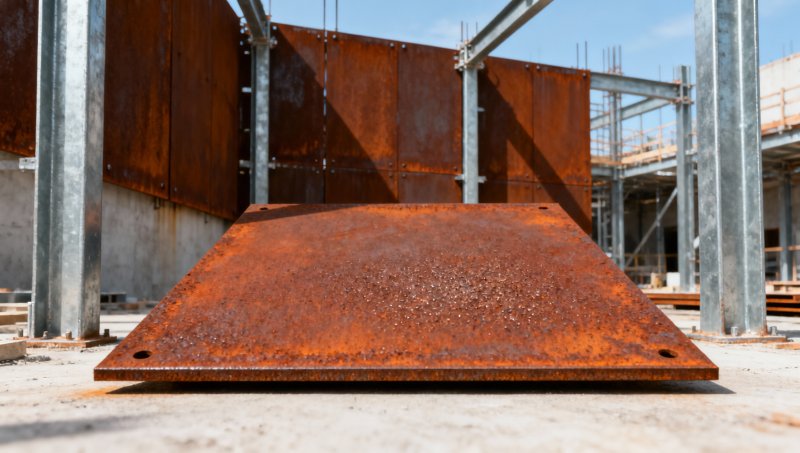
Ultimately, Corten steel plate price trends matter—but what matters more is predictable execution. With 15+ years serving façade engineers, steel detailers, and procurement directors, Hongteng Fengda delivers not just steel, but confidence: in specification accuracy, timeline adherence, and long-term performance. We invite architects, project managers, and procurement leads to request a customized Corten steel plate quotation—including comparative cost modeling against stainless steel tube price, ASTM steel pipe alternatives, and hybrid cladding scenarios.
Contact us today to discuss your next architectural steel requirement—or explore how our Channel In Steel range supports Corten façade integration with structural integrity and cost efficiency.
Please give us a message


Please enter what you want to find