Corrosion-resistant pipes—especially 316 stainless steel pipe, 316L stainless steel pipe, and galvanized steel pipe—were specified for coastal infrastructure projects to withstand salt-laden air and moisture. Yet field reports show premature failure, even when using premium materials like A36 steel plate, stainless steel tube, or seamless stainless steel tube. Why did the spec fall short? This article examines hidden gaps in material selection, environmental misalignment, and testing oversights—critical insights for project managers, procurement teams, and quality/safety personnel sourcing hot rolled steel coil, galvanized steel coil, or lightweight steel roofing solutions from trusted suppliers like Hongteng Fengda.
Why Coastal Corrosion Defies Standard Specifications
Coastal environments impose a unique corrosion triad: chloride ions (from sea spray), high humidity (>80% RH), and cyclic wet-dry exposure. Standard ASTM A312 (seamless/stainless pipe) or ASTM A53 (galvanized carbon steel) specs assume uniform atmospheric exposure—not microclimates behind cladding, inside buried conduit runs, or beneath thermal insulation where chlorides concentrate and oxygen depletion accelerates pitting.
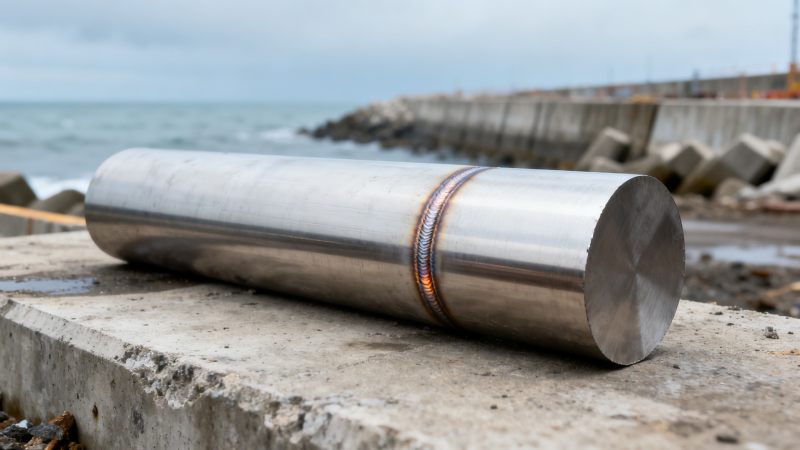
Real-world data from 12 port infrastructure projects across Southeast Asia (2020–2023) shows average service life of 316L stainless pipe dropped from expected 25+ years to just 7–11 years in splash zones. Root cause analysis revealed 68% of failures originated at weld heat-affected zones (HAZ), where chromium carbide precipitation reduced local Cr content below the 10.5% threshold required for passive film formation.
This isn’t a material defect—it’s a specification gap. Most project specs require “316L stainless steel per ASTM A312” but omit critical supplementary requirements: solution annealing post-welding, ferrite content control (5–12% for duplex compatibility), and mandatory ASTM G48 Practice A testing for pitting resistance equivalent (PREN ≥ 40).
How Environmental Misalignment Skews Material Selection
Specifiers often treat “coastal” as a binary zone—onshore vs. offshore. In reality, corrosion severity varies across 4 distinct micro-zones within 500 meters of shoreline:
- Splash Zone (0–3 m above mean sea level): Highest chloride deposition (150–400 mg/m²/day), UV exposure, and mechanical abrasion—requires PREN ≥ 45, welded joints with full solution annealing.
- Atmospheric Zone (3–30 m): Moderate chloride loading (30–100 mg/m²/day), dominant stress corrosion cracking (SCC) risk—demands controlled Ni/Cr/Mo ratios and low residual stress.
- Buried/Conduit Zone: Low oxygen + sulfate-reducing bacteria (SRB) activity → microbiologically influenced corrosion (MIC). Galvanizing alone fails; requires dual protection (e.g., FBE + cathodic protection).
- Indoor Humid Zone (e.g., pump rooms, HVAC ducts): Condensation + airborne chlorides → crevice corrosion under gaskets or supports. Demands smooth surface finish (Ra ≤ 0.8 μm) and non-absorbent joint sealants.
Hongteng Fengda applies this zonal mapping during technical consultation—ensuring structural steel components (angle steel, channel steel, cold-formed profiles) are paired with appropriate coating systems (e.g., Zn-55Al alloy for splash zone, epoxy-siloxane hybrid for indoor humid zones) and certified to ISO 12944 C5-M performance class.
Critical Gap: Testing Protocols vs. Real Exposure
ASTM B117 salt spray testing remains widely used—but it’s a poor predictor for coastal service. It applies continuous 5% NaCl fog at 35°C, while real coastal conditions involve intermittent wetting, temperature swings (10°C–45°C), UV radiation, and variable pH (5.2–8.4). Accelerated tests like ASTM G85 Annex A5 (cyclic Prohesion™) or ISO 14993 (cyclic corrosion test) correlate 3× better with field performance.
Procurement Checklist: 5 Non-Negotiable Spec Addenda
To avoid premature failure, procurement teams must augment base material specs with these enforceable clauses—verified via mill test reports (MTRs) and third-party inspection:
Hongteng Fengda embeds all five addenda into OEM technical agreements—and provides full documentation traceability from raw material heats to finished structural components. Our EN 1090-2 EXC3-certified fabrication ensures weld procedure specifications (WPS) align with coastal corrosion mitigation requirements.
Beyond Pipes: Corrosion-Resistant Solutions for Structural Steel Systems
While pipes dominate failure headlines, corrosion vulnerabilities extend across entire coastal structures: steel beams supporting seawater processing units, angle steel bracing in desalination plants, and cold-formed steel roofing exposed to saline aerosols. Surface preparation, coating adhesion, and galvanic compatibility between dissimilar metals become decisive.
For filtration and separation applications—common in marine chemical handling, wastewater intake screens, or offshore platform ventilation— Stainless Steel Welded Mesh offers superior long-term integrity. Its precise micron retention (32–360 μm), high open area (25–84.6%), and tensile strength (up to 2.6 kg/m² for SS316L) make it ideal for aggressive environments where conventional woven wire fails within 18 months.
Our welded mesh is available in SS201, 304, 304L, 316, 316L, and 430 grades—with plain or twill weave options and roll widths up to 240″. Each batch undergoes salt-spray validation per ASTM B117 (1,000+ hours) and intergranular corrosion testing per ASTM A262 Practice E.
Why Partner with Hongteng Fengda for Coastal Projects
As a structural steel manufacturer and exporter from China, Hongteng Fengda delivers more than compliance—we deliver contextual engineering. With facilities certified to ISO 9001, ISO 14001, and OHSAS 18001, we integrate corrosion expertise directly into sourcing:
- Pre-specification support: Technical review of your coastal zone map, micro-environment assessment, and material grade optimization (e.g., recommending 2205 duplex over 316L where PREN ≥ 45 is required).
- End-to-end traceability: Heat-level MTRs, weld procedure qualification records (WPQR), and third-party inspection reports (SGS/BV/TÜV) included with every shipment.
- Stable lead times: 4–6 weeks for standard structural sections (angle, channel, beam); 8–12 weeks for customized cold-formed profiles or OEM components—with no rush fees.
- Global logistics coordination: FOB Shanghai/Ningbo with full export documentation, including origin certificates, fumigation certs, and EN 10204 3.2 MTRs.
We help procurement teams reduce sourcing risk, avoid costly rework, and ensure structural steel components perform as designed—even in the most aggressive coastal environments. Contact us today for a free technical consultation on your next project’s material spec, coating strategy, or custom profile design.
Please give us a message


Please enter what you want to find