For coastal construction, choosing the right Corrosion Resistant Steel is critical to extending service life, reducing maintenance costs, and protecting structural performance in harsh marine environments. As a professional structural steel manufacturer and exporter from China, Hongteng Fengda helps global project buyers secure reliable steel solutions that meet international standards while improving sourcing efficiency and long-term project value.
What makes Corrosion Resistant Steel essential in coastal projects?
Coastal sites expose steel to one of the most aggressive service conditions in construction. Salt-laden air, high humidity, splash zones, cyclic wetting and drying, and strong winds all accelerate oxidation. In these settings, Corrosion Resistant Steel is not simply a premium upgrade; it is often a practical requirement for preserving load-bearing capacity and controlling whole-life cost.
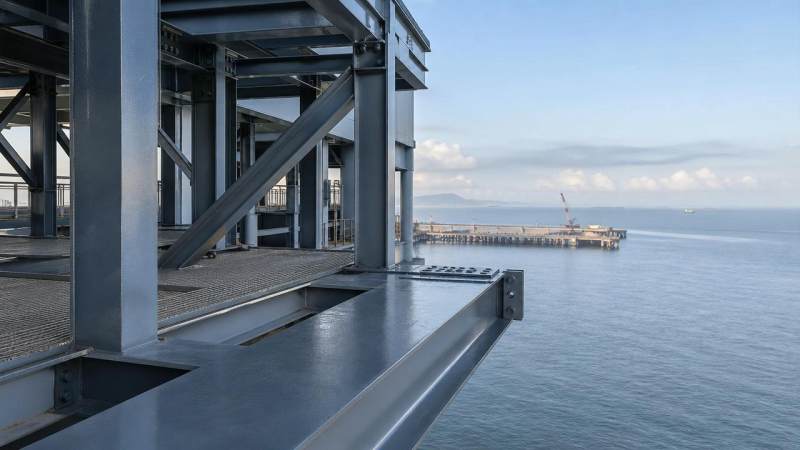
The main value of Corrosion Resistant Steel lies in its ability to slow down electrochemical reactions that cause rust, pitting, section loss, and coating failure. In bridges, port facilities, waterfront buildings, industrial sheds, support frames, and marine-adjacent infrastructure, better corrosion resistance directly improves structural safety and reduces downtime for repair. This is especially important where access for repainting or replacement is difficult and expensive.
A common misunderstanding is that all steel performs similarly if painted well enough. In reality, coating systems and substrate quality must work together. If the base steel is poorly selected for chloride-rich conditions, maintenance cycles shorten, localized damage spreads faster, and the total ownership cost rises. That is why Corrosion Resistant Steel should be evaluated early, together with coating design, detailing, drainage, and installation environment.
How should Corrosion Resistant Steel be selected for different coastal applications?
Selection should begin with environmental classification rather than price alone. Not all coastal projects face the same level of exposure. A warehouse several kilometers inland may only encounter salt mist and humidity, while a pier, shipyard platform, or sea-facing plant structure may suffer direct splash, standing water, and concentrated chloride deposits. The more severe the exposure, the more carefully Corrosion Resistant Steel grade, coating compatibility, and fabrication quality must be matched.
Key selection factors include mechanical strength, atmospheric corrosion resistance, weldability, dimensional stability, compliance with ASTM, EN, JIS, or GB standards, and expected maintenance interval. Structural members such as angle steel, channel steel, and steel beams may need a different specification strategy than flooring plates, covers, or access platforms. Surface wear, anti-slip needs, and drainage patterns also affect the material decision.
For example, in equipment walkways or marine-adjacent industrial floors, corrosion resistance is important, but so are slip resistance and fabrication efficiency. In such cases, a product like 235JR Patterned steel plate can be integrated into the overall steel solution where anti-skid performance, bending resistance, decorative appearance, and reliable dimensional control are needed. Typical thickness ranges of 2-8mm and width options from 600mm to 1800mm can support practical installation in construction, transportation, machinery, and shipbuilding-related environments.
It is also wise to confirm whether the steel will be galvanized, painted, duplex coated, or supplied for further processing. Corrosion Resistant Steel performs best when the final protection system is planned as a complete package rather than as separate purchasing decisions.
What is the difference between Corrosion Resistant Steel and ordinary structural steel in marine environments?
Ordinary structural steel can still be used in coastal construction, but only with appropriate protective treatment and a realistic maintenance plan. The difference is that Corrosion Resistant Steel is designed or specified to provide improved durability under corrosive exposure, helping delay rust formation and reduce the speed of deterioration once the surface system is challenged.
In marine and coastal environments, ordinary steel often shows earlier coating breakdown at cut edges, welds, bolt zones, and water-trapping details. Corrosion Resistant Steel generally provides a stronger baseline, which means the structure is less vulnerable when environmental stress, mechanical impact, or service wear weakens the coating. This does not make it maintenance-free, but it increases tolerance and service reliability.
Another distinction is procurement consistency. For export projects, stable chemistry, dimensional accuracy, and traceable quality control are crucial. A qualified structural steel supplier should provide standard compliance, production capacity, and reliable lead times. Hongteng Fengda supports this need through modern manufacturing facilities, strict quality control, and supply capability covering angle steel, channel steel, steel beams, cold formed steel profiles, and customized structural steel components for international construction and industrial projects.
What mistakes can shorten the life of Corrosion Resistant Steel near the sea?
The first major mistake is assuming Corrosion Resistant Steel alone will solve every durability issue. Even high-quality steel can fail early if water is trapped, joints are poorly sealed, drainage is blocked, or incompatible fasteners create galvanic corrosion. Good design details matter as much as material grade.
The second mistake is ignoring fabrication quality. Rough cut edges, damaged coating areas, poor weld finishing, and contamination during storage can all become initiation points for corrosion. Coastal steel should be handled with clean processing controls and inspected before shipment and installation.
The third mistake is choosing on initial price only. A cheaper steel option may appear attractive during procurement, but frequent repainting, unplanned shutdowns, and early section repair often make it more expensive over time. Corrosion Resistant Steel should be assessed by life-cycle value, not only by invoice cost.
Another frequent issue is using the same specification across all zones of a project. Roof framing, façade support members, exposed platforms, and splash-prone lower sections may require different protection strategies. A zone-based approach usually delivers better durability and more efficient budgeting.
How can buyers evaluate suppliers of Corrosion Resistant Steel for coastal construction?
A dependable supplier evaluation process should cover more than the material certificate. For coastal work, the supplier should understand export packaging, dimensional tolerances, surface condition requirements, and the link between steel selection and final corrosion protection systems. It is helpful to confirm whether the supplier can support standard products as well as OEM structural components.
Useful checkpoints include:
- Compliance with ASTM, EN, JIS, and GB or other required standards
- Stable production capacity and dependable lead time
- Quality control for chemistry, dimensions, and surface condition
- Experience in export documentation and overseas shipment
- Ability to provide customized structural steel solutions
- Clear communication on coating, fabrication, and application recommendations
Hongteng Fengda serves customers across North America, Europe, the Middle East, and Southeast Asia, helping reduce sourcing risks and improve project efficiency. This matters when Corrosion Resistant Steel is part of a larger package of structural products that must arrive on schedule and fit project specifications without rework.
What is the best way to balance cost, durability, and maintenance?
The best strategy is to compare options through a life-cycle lens. Corrosion Resistant Steel may have a higher upfront material cost than conventional alternatives, but in many coastal projects it lowers total expenditure by extending maintenance intervals and reducing repair frequency. This is especially true in structures where shutdown, access, or replacement work is disruptive.
A balanced decision often includes three layers: the right base material, an appropriate protective surface system, and design details that avoid water retention. In working areas such as platforms and floors, selecting suitable steel products with functional surfaces can also improve safety and longevity. For example, where anti-slip performance is needed alongside structural practicality, patterned plate solutions can contribute to safer operation and efficient material use.
The table below summarizes common evaluation points for Corrosion Resistant Steel in coastal projects.
In coastal projects, Corrosion Resistant Steel should be treated as a strategic design and sourcing decision rather than a simple material upgrade. The right combination of steel grade, product form, coating system, and supplier capability can significantly improve service life and reduce avoidable maintenance. When evaluating solutions for marine-adjacent buildings, industrial plants, transport structures, or ship-related facilities, it is worth comparing both technical performance and long-term commercial value.
Hongteng Fengda provides structural steel products and customized export solutions for global projects, with support for international standards, stable production, and dependable delivery. If a coastal application requires durable framing members, specialized profiles, or practical plate solutions such as 235JR Patterned steel plate, a clear specification review is the best next step to ensure the selected Corrosion Resistant Steel aligns with service conditions, budget goals, and project timelines.
Please give us a message


Please enter what you want to find