For decision-makers balancing durability, lifecycle cost, and project risk, corrosion resistant rebar offers clear long-term advantages in demanding environments. From marine structures to bridges and industrial facilities, choosing the right reinforcement can reduce maintenance, extend service life, and improve asset performance. This article explores where corrosion resistant rebar delivers the best value and what buyers should consider when sourcing for large-scale construction projects.
Where does corrosion resistant rebar create the strongest financial return?
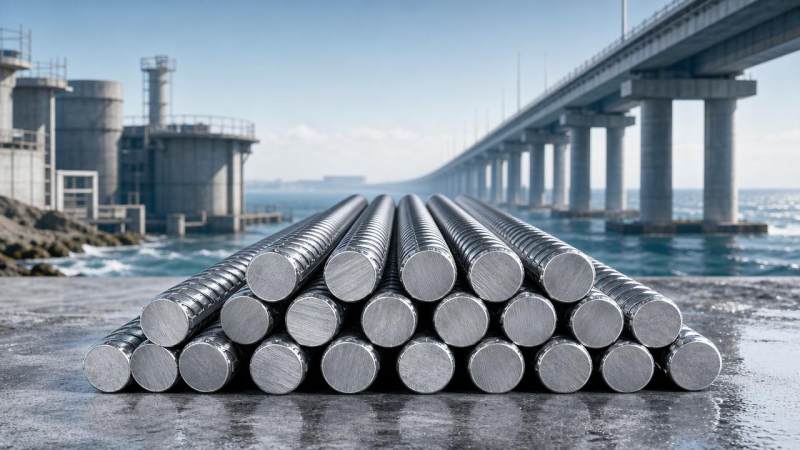
Not every project needs premium reinforcement, but some environments punish ordinary carbon steel quickly. In those cases, corrosion resistant rebar is not just a material upgrade. It is a risk management decision.
Enterprise buyers usually compare upfront steel cost first. That is understandable. Yet the larger cost often comes later through concrete repair, traffic interruption, shutdown losses, labor, and premature asset rehabilitation.
The best long-term value appears where chloride exposure, humidity, chemical attack, or poor maintenance access make corrosion expensive to fix. In these settings, corrosion resistant rebar helps control the full lifecycle cost of the structure.
High-value conditions for long service life
- Marine and coastal projects where salt exposure accelerates rebar corrosion inside concrete.
- Bridges, parking decks, and elevated roads exposed to deicing salts and freeze-thaw cycling.
- Wastewater, petrochemical, and industrial facilities where aggressive media increase deterioration risk.
- Critical infrastructure with limited maintenance windows or high shutdown cost.
- Remote projects where future repair logistics are costly and disruptive.
When these conditions apply, corrosion resistant rebar often delivers better value than standard reinforcement, even if the purchase price is higher. The right decision depends on exposure severity, design life, inspection access, and operational consequences.
Which project scenarios justify corrosion resistant rebar most clearly?
Decision-makers need practical screening criteria. The table below shows where corrosion resistant rebar usually delivers the best payback compared with standard rebar in reinforced concrete construction.
The key pattern is simple. Corrosion resistant rebar makes the most sense where failure is expensive, access is difficult, or the owner expects a long design life with minimal intervention.
When the return may be weaker
- Dry indoor structures with low chloride and low moisture exposure.
- Temporary or short-life construction where lifecycle durability has limited value.
- Projects where cover depth, concrete quality, and drainage already provide enough protection for the target service life.
Even in these cases, buyers should still test assumptions. A small material premium can be justified if maintenance interruption carries hidden commercial risk.
How does corrosion resistant rebar compare with standard reinforcement?
Material choice should match exposure, budget, and design intent. The comparison below helps procurement teams, engineers, and asset owners evaluate whether corrosion resistant rebar is necessary or whether standard rebar remains sufficient.
This comparison does not mean standard rebar lacks value. It remains the right choice for many projects. The decision should come from total cost of ownership, not material price alone.
A practical decision framework
- Define the exposure class and expected service life.
- Estimate the cost of future repair, access, and downtime.
- Check whether coating systems, concrete mix design, and cover depth alone can achieve the durability target.
- Compare compliant supply options, lead times, and fabrication requirements.
What technical and sourcing details should buyers review?
For procurement teams, the right question is not only which corrosion resistant rebar to buy. It is whether the full reinforcing package, fabrication route, and standards alignment support the project schedule and quality plan.
In many supply chains, upstream semi-finished or complementary steel materials also matter. For example, Wire Rod can support broad steel processing applications where formability, weldability, and standard compliance are important in manufacturing and construction-related production.
Available specifications may include GB1499.2 HRB400, HRB500, HRB400E, HRB500E, ASTM A615 Grade 60, BS4449 460B, 500B, 500C, and AS/NZS 4671 500N. Common materials include carbon steel rebar grades such as Q235, Q235B, Q345, Q345B, Q195, St37, St42, St37-2, St35.4, St52.4, and St35.
For buyers evaluating source compatibility, useful checkpoints include carbon content around 0.06-0.22%, round shape supply, length options such as 1-12 m or custom request, and certification alignment with ASTM, GB, EN, DIN, and JIS. These factors affect fabrication, welding, logistics, and end-use consistency.
Key technical review points before purchase
- Mechanical grade compatibility with project drawings and local code requirements.
- Corrosion protection method and expected durability in actual exposure, not only in theory.
- Bending, welding, and fabrication constraints that may affect site productivity.
- Traceability, mill documentation, and consistency across export shipments.
- Packaging and shipping protection to avoid handling damage before installation.
For global buyers, supply reliability is often as important as material performance. A missed delivery window can delay civil works, labor allocation, and downstream installation milestones.
How should decision-makers balance cost, risk, and procurement timing?
In steel procurement, the cheapest line item can become the most expensive asset decision. Corrosion resistant rebar should be assessed through lifecycle thinking, especially when long service life is part of the project business case.
The table below provides a practical selection guide for buyers comparing project priorities, environmental exposure, and sourcing pressure.
This approach helps avoid a common mistake: treating reinforcing steel as a simple commodity even when project conditions are highly specialized. In demanding environments, corrosion resistant rebar is a strategic material choice.
Common procurement mistakes
- Evaluating price without including maintenance shutdown cost or repair access constraints.
- Assuming all corrosion resistant rebar options perform equally in every environment.
- Ignoring fabrication and logistics details that affect installation schedule.
- Failing to confirm standard equivalence across international project documents.
What standards and compliance issues matter in export sourcing?
For international buyers, corrosion resistant rebar selection is closely tied to standards compliance. Design teams may specify ASTM, EN, JIS, GB, or country-specific requirements, and procurement teams must make sure mill output matches these expectations before production begins.
Documentation review should include grade designation, mechanical properties, chemical composition where applicable, dimensions, marking, and inspection records. This is especially important when projects involve third-party review, public infrastructure, or cross-border approval processes.
What buyers should confirm with suppliers
- Required standard and grade equivalency for the destination market.
- Mill test certificate format and document traceability.
- Inspection scope before shipment, including dimensions and appearance.
- Packaging method suitable for long-distance sea transport.
A supplier with modern manufacturing, stable production capacity, and strict quality control can reduce sourcing uncertainty. That matters when projects run on tight milestones and cannot absorb replacement or approval delays.
FAQ: what do buyers ask most about corrosion resistant rebar?
Is corrosion resistant rebar always worth the extra cost?
No. Its value depends on exposure severity, repair cost, and design life. In a dry, low-risk building, standard rebar may be fully adequate. In a marine bridge or chemical facility, corrosion resistant rebar can reduce much larger future costs.
Which sectors benefit most from corrosion resistant rebar?
Transport infrastructure, coastal construction, marine works, industrial plants, and any reinforced concrete asset exposed to chlorides, moisture, or aggressive media benefit most. These sectors usually face high repair disruption and long service life expectations.
What should procurement teams ask before placing an order?
Ask about grade, standard, corrosion protection type, fabrication limits, available lengths, documentation, lead time, and shipping method. Also verify whether the supplier can support custom requirements and consistent batch quality across export deliveries.
How do lead time and supply reliability affect material choice?
A technically suitable product still creates risk if delivery is unstable. For large projects, delayed reinforcement can affect concrete sequencing, contractor productivity, and cash flow. Buyers should evaluate production capacity and shipment planning alongside performance.
Why work with a structural steel manufacturer and exporter from China?
For many global buyers, the ideal supplier combines manufacturing control, export experience, standards familiarity, and responsive communication. That combination helps reduce sourcing risk when projects involve strict specifications, variable demand, and international logistics.
Hongteng Fengda supports global construction, industrial, and manufacturing projects with structural steel products and customized solutions. The company focuses on reliable production, strict quality control, and practical coordination for overseas buyers across North America, Europe, the Middle East, and Southeast Asia.
With experience in angle steel, channel steel, steel beams, cold formed steel profiles, and customized structural steel components, the team can help buyers align product specifications with project demands, standards requirements, and delivery schedules. This is valuable when corrosion resistant rebar projects also require broader steel sourcing coordination.
Why choose us
- Support for international standards including ASTM, EN, JIS, and GB to help reduce specification mismatch.
- Stable manufacturing capacity and quality control for more dependable project planning.
- OEM and customized supply options for buyers managing non-standard structural needs.
- Export-oriented service that helps control lead-time risk, communication gaps, and documentation issues.
If you are evaluating corrosion resistant rebar or related steel products for a bridge, marine structure, industrial plant, or large infrastructure package, you can consult us on grade selection, standard confirmation, delivery cycle, custom dimensions, sample support, and quotation planning. Early technical and commercial alignment often saves more than last-minute price negotiation.
Please give us a message


Please enter what you want to find