Construction Materials decisions for 2026 builds are being shaped by cost control, supply chain resilience, compliance, and long-term project performance. For business evaluators, understanding how structural steel fits these trends is essential to reducing sourcing risk and improving procurement outcomes. As a China-based structural steel manufacturer and exporter, Hongteng Fengda supports global projects with reliable products, OEM capabilities, and standards-aligned solutions for efficient delivery.
Why Construction Materials Selection for 2026 Requires a Clear Review Process
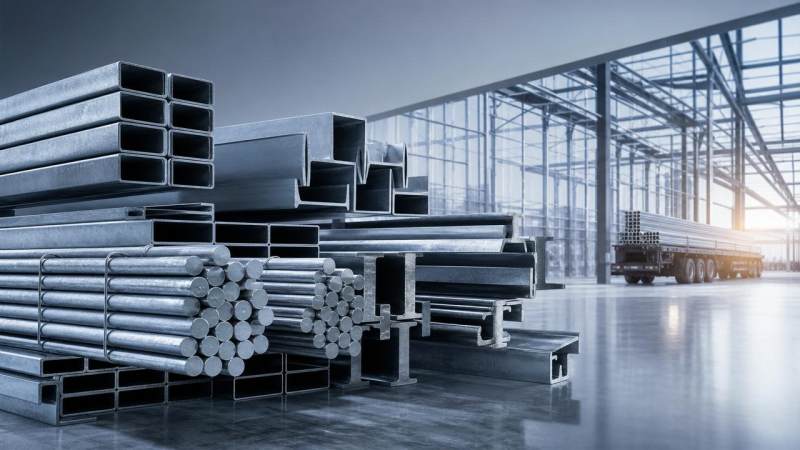
Construction Materials planning is no longer a simple price comparison. In 2026, project teams must evaluate durability, lead time reliability, code alignment, fabrication flexibility, and lifecycle value at the same time. Steel remains one of the most important Construction Materials because it supports structural strength, faster assembly, and broad compatibility with commercial, industrial, infrastructure, and manufacturing applications.
A structured review process helps reduce uncertainty. Instead of choosing materials based only on initial quotation, decision-makers can compare mechanical performance, corrosion resistance, quality control systems, export experience, and the supplier’s ability to handle standard and custom requirements. This matters even more when projects involve multiple standards such as ASTM, EN, JIS, and GB.
For global builds, structural steel sourcing from an experienced Chinese exporter can offer a practical balance of production scale and cost efficiency. Hongteng Fengda manufactures angle steel, channel steel, steel beams, cold formed steel profiles, and customized structural steel components for international projects, helping buyers improve consistency while controlling sourcing risks.
Core Points to Review Before Finalizing Construction Materials
The following points provide a useful framework for evaluating Construction Materials for 2026 builds, especially when structural steel is part of the design, procurement, or value-engineering plan.
- Confirm whether the material meets required structural loads, environmental exposure conditions, and design life targets instead of focusing only on upfront purchasing cost.
- Check compliance with project standards such as ASTM, EN, JIS, or GB, and verify that mill documentation can support inspection and approval workflows.
- Review production capacity, export experience, and delivery stability to reduce the chance of delays caused by uneven output or poor scheduling control.
- Assess corrosion protection options carefully, especially for outdoor, coastal, utility, transport, or industrial conditions where long-term exposure drives maintenance cost.
- Compare standard sections with OEM or customized steel components to determine which option lowers fabrication waste and installation complexity on site.
- Request dimensional tolerance details, surface condition data, and mechanical property ranges so that secondary processing remains efficient and predictable.
- Evaluate the supplier’s quality control process, including raw material inspection, in-process monitoring, coating checks, and final packing for international shipment.
- Factor in total lifecycle value, including maintenance frequency, replacement risk, transport efficiency, and installation speed, not just material unit price.
1. Structural Performance Must Match Real Project Demands
Among all Construction Materials, structural steel stands out because it combines strength, process flexibility, and dependable structural behavior. For 2026 builds, this remains critical in projects that need long spans, modular construction, or high load-bearing capacity. Material selection should begin with the actual engineering environment: static loads, dynamic loads, wind exposure, connection design, and expected service life.
In many applications, steel sections can simplify both design and assembly. Products such as steel beams, channels, angles, and cold formed profiles can be selected in standard sizes or customized for project-specific dimensions. This flexibility makes steel one of the most adaptable Construction Materials for industrial plants, commercial structures, utility systems, and infrastructure expansions.
2. Corrosion Resistance Is a Major 2026 Priority
Environmental exposure is shaping material decisions more strongly than before. Outdoor installations, transport networks, power systems, and marine-adjacent projects require Construction Materials that can maintain performance with lower maintenance burden. In these cases, galvanized steel often becomes a practical option because it provides a durable anti-corrosion layer while preserving the mechanical utility of the base material.
For example, Galvanized Round Steel can be applied in electric power towers, communication towers, railway and highway protection systems, street light poles, marine components, building steel structure components, and substation ancillary facilities. With tensile strength in the 570-820 MPa range, diameter options from 16-250 mm or customized, and support for standards such as ASTM, EN, JIS, GB, and others, it fits projects that need both anti-corrosion performance and dimensional adaptability.
3. Supply Chain Resilience Should Be Treated as a Material Criterion
In 2026, reliable Construction Materials sourcing depends on more than factory output. It also requires stable raw material access, disciplined production scheduling, consistent packaging, and an exporter that understands documentation and international delivery expectations. A delayed steel shipment can affect fabrication sequencing, erection plans, subcontractor scheduling, and even financing timelines.
This is why supplier capability must be reviewed together with material performance. Hongteng Fengda supports global buyers through modern manufacturing facilities, strict quality control, and dependable lead times. For projects in North America, Europe, the Middle East, and Southeast Asia, this combination helps reduce exposure to sourcing disruptions while keeping steel procurement aligned with construction schedules.
4. Standard Compliance and Documentation Need Early Verification
Construction Materials that meet the technical requirement but fail the approval process still create risk. Before confirming a supplier, review whether material test certificates, dimensional records, coating information, and specification references can be provided in the required format. This is especially important for projects with third-party inspection, public infrastructure, export compliance, or owner-specific QA procedures.
Structural steel suppliers with experience across ASTM, EN, JIS, and GB frameworks can help shorten technical clarification cycles. That improves procurement efficiency and lowers the chance of disputes related to substitution, tolerance mismatch, or coating assumptions.
How Construction Materials Priorities Change by Application
Different build environments place different demands on Construction Materials. Steel selection becomes more effective when the review criteria are adjusted to the project type rather than applied in a generic way.
Industrial and Manufacturing Facilities
Industrial buildings often prioritize structural efficiency, fabrication precision, and installation speed. Here, Construction Materials should be reviewed for load-bearing performance, compatibility with equipment layouts, and ease of connection or secondary processing. Standard and customized structural steel sections are often preferred because they support faster project execution and future expansion.
If the environment includes humidity, chemicals, or outdoor interfaces, corrosion protection should be upgraded early in the specification phase rather than added later as a corrective measure.
Power, Utility, and Communication Infrastructure
For towers, substations, poles, and protective systems, Construction Materials must deliver long-term exposure resistance and dimensional consistency. Galvanized steel products are commonly selected because maintenance access may be limited and service interruption costs can be high. Round steel, angles, and custom steel components should be checked for coating quality, straightness, and tolerance control.
Transport and Public Infrastructure
Railway, highway protection, and urban support structures need Construction Materials that balance public safety, durability, and efficient replacement planning. In these projects, lead time reliability can be almost as important as unit cost because delays may affect traffic management or phased openings. Prequalified steel suppliers with export discipline can reduce coordination pressure.
OEM and Precision Processing Uses
Some steel products also serve precision processing applications in light industry, office equipment, electronics, accessories, hardware, and components. In such cases, Construction Materials evaluation should include tighter dimensional tolerances, surface finish expectations, and suitability for cold drawing, stamping, automatic lathe processing, or secondary machining. For certain projects, the ability to request ISO h8 or h9 tolerance levels can improve downstream productivity.
Commonly Overlooked Risks When Comparing Construction Materials
One common mistake is assuming that all steel with a similar description performs the same in real conditions. Differences in coating process, tolerance control, raw material consistency, and packaging quality can affect fit-up, durability, and total installed cost.
Another risk is underestimating the impact of customization. If a project needs non-standard sizes, hole patterns, component integration, or specific lengths, selecting a supplier without OEM capability may create redesign work or site modification costs. Hongteng Fengda addresses this through customized structural steel solutions alongside standard specifications.
A further issue is ignoring logistics suitability. Construction Materials intended for export must be packed and documented correctly to avoid transit damage, customs complications, or receiving delays. A reliable exporter should treat packaging and shipment coordination as part of product quality, not as an afterthought.
Finally, some evaluations focus too heavily on current price and overlook lifecycle economics. A lower-cost material that corrodes faster, requires more maintenance, or creates rework during installation may become the more expensive option over the full project horizon.
Practical Steps for Smarter 2026 Material Decisions
- Create a short material evaluation sheet covering strength, corrosion resistance, standards compliance, tolerances, customization needs, and expected delivery window.
- Request technical data and sample documentation before final comparison so approval and inspection expectations are clear from the start.
- Compare total project impact, including fabrication efficiency, maintenance exposure, freight considerations, and installation speed, not just base material pricing.
- Prioritize suppliers with proven export capability, consistent production systems, and experience serving multiple regional standards and application types.
- Where outdoor durability matters, evaluate galvanized solutions such as Galvanized Round Steel for long anti-corrosion life and broad environmental adaptability.
Conclusion
Construction Materials choices for 2026 builds should be guided by performance, resilience, compliance, and long-term value. Structural steel remains central to this decision process because it offers strength, flexibility, and strong lifecycle economics across industrial, infrastructure, and commercial applications.
A practical next step is to review your upcoming project against a defined steel sourcing checklist: required standards, corrosion environment, dimensional needs, customization scope, documentation requirements, and target lead time. With stable manufacturing capacity, international standards alignment, and tailored structural steel solutions, Hongteng Fengda helps global projects source dependable steel products with lower risk and better delivery confidence.
Please give us a message


Please enter what you want to find