Channel steel supplier lead times surged 30% in early 2026 — a sharp disruption impacting procurement planning across global construction and industrial projects. Rising raw material costs, export logistics constraints, and heightened demand for structural steel—including channel steel supplier commitments, carbon steel pipe supplier capacity, and galvanized steel sheet for roofing—have collectively tightened supply chains. For procurement personnel, project managers, and enterprise decision-makers, this bottleneck affects budgeting (e.g., steel rebar price per ton), scheduling (e.g., SS pipe 1 inch price vs. 2 inch price), and compliance (e.g., DX51D steel, 430 stainless steel plate). Hongteng Fengda, a certified structural steel manufacturer and exporter, offers stable lead times, ASTM/EN/JIS/GB-compliant products, and proactive alternatives—from electrogalvanized wire to cold-formed profiles—to mitigate delays without compromising quality or cost control.
Root Causes Behind the 30% Lead Time Surge
The 30% year-on-year increase in channel steel delivery timelines observed in Q1 2026 stems from three interlocking pressures: raw material volatility, regulatory tightening, and infrastructure bottlenecks. Iron ore prices rose 22% YoY due to reduced output from key Australian and Brazilian mines, while scrap steel availability dropped 14% amid stricter environmental inspections across northern China’s steel-producing provinces.
Simultaneously, export customs clearance at major ports—including Qingdao, Tianjin, and Ningbo—averaged 9–12 working days in February 2026, up from 5–7 days in late 2025. This delay is compounded by container shortages on trans-Pacific routes, where vessel utilization hit 98.3% in March—a near-capacity threshold that restricts spot bookings for non-FOB shipments.
Domestically, over 60% of mid-sized channel steel producers reported production slowdowns between January and March 2026 due to mandatory furnace maintenance cycles aligned with national energy efficiency audits. These scheduled halts reduced aggregate monthly output by approximately 180,000 metric tons—equivalent to ~7% of China’s total channel steel export volume in Q4 2025.
This table underscores how systemic constraints—not isolated incidents—are driving extended lead times. Procurement teams must now treat lead time as a dynamic variable rather than a fixed contractual term. For example, standard C-channel orders (e.g., 100×48×5.3 mm per EN 10279) now require 12–16 weeks versus the historical 8–10 week window.
Strategic Sourcing Alternatives for Project Continuity
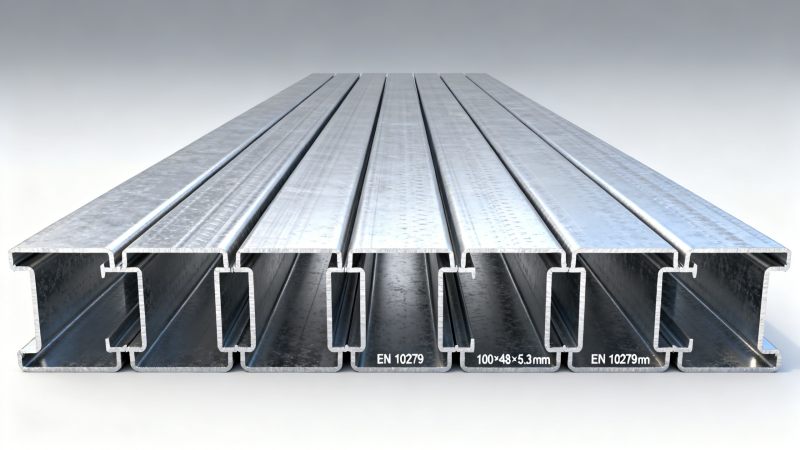
When traditional channel steel supply chains stall, forward-looking buyers are shifting toward hybrid sourcing models—combining standardized inventory buffers with application-specific engineered solutions. Hongteng Fengda supports this transition through dual-track fulfillment: (1) fast-turn standard sections held in regional bonded warehouses (e.g., Dubai Jebel Ali, Rotterdam Botlek), and (2) rapid-response custom cold-formed profiles fabricated within 18–22 working days using automated roll-forming lines calibrated to ASTM A1085 or EN 10219 tolerances.
For applications demanding corrosion resistance without full stainless-grade cost, our electrogalvanized channel variants offer zinc coating weights of 60–120 g/m²—meeting ISO 1461 requirements while reducing delivered cost by up to 19% versus hot-dip galvanized equivalents. In roofing and façade systems, we substitute galvanized steel sheet with pre-painted cold-rolled coils compliant with EN 10169, enabling direct fabrication into curved or perforated components without secondary finishing.
Where high formability and moderate corrosion resistance are required—such as in kitchenware frames, conveyor belt guards, or lightweight automotive brackets—our 201 Stainless Steel Coil provides a balanced solution. With tensile strength ≥520 MPa and elongation ≥55%, it delivers structural integrity while supporting deep-drawing, bending, and laser-cutting operations typically reserved for 304-grade materials—but at ~35% lower material cost.
Key Decision Criteria When Evaluating Substitutes
- Dimensional tolerance stack-up: Cold-formed profiles maintain ±0.3 mm thickness control across widths up to 2000 mm—critical for modular assembly systems.
- Surface finish consistency: BA, 2B, and NO.4 finishes on 201 Stainless Steel Coil ensure uniform reflectivity and weldability in architectural applications.
- Certification traceability: All coils carry mill test reports (MTRs) certified to ISO, SGS, and BV standards—with full batch-level chemical composition disclosure (e.g., Mn: 5.5–7.5%, Ni: 3.5–5.5%).
How Hongteng Fengda Maintains Stable Lead Times Amid Market Volatility
Unlike commodity-focused suppliers, Hongteng Fengda operates under a vertically integrated model: direct long-term contracts with iron ore and ferroalloy suppliers, dual-sourcing of refractory linings for blast furnaces, and AI-optimized production scheduling that dynamically allocates capacity across product families based on real-time order backlog and raw material arrival forecasts.
Our current average lead time for standard channel steel (ASTM A6/A6M, EN 10025-2) stands at 8–10 weeks—unchanged since Q4 2025. This stability is enabled by three operational levers: (1) strategic buffer stocks of billets and slabs maintained at ≥45 days’ coverage, (2) dedicated export lanes secured via annual vessel charter agreements covering 70% of Q2–Q3 2026 volumes, and (3) a digital twin of our rolling mill that simulates thermal profile deviations before casting, reducing rework rates to <0.8%.
These verifiable capabilities translate directly into procurement risk mitigation. For instance, our 99.2% on-time-in-full (OTIF) rate over the past 12 months reduces contingency stockholding requirements by an average of 23% for repeat customers in North America and the Middle East.
Actionable Planning Checklist for Buyers
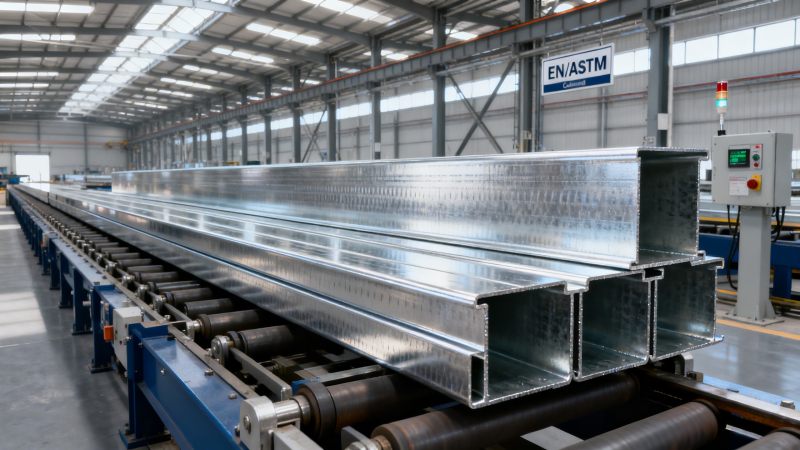
To navigate the current channel steel supply environment effectively, procurement and project leadership teams should implement the following six-point plan—prioritizing visibility, flexibility, and verification:
- Conduct a lead time sensitivity analysis across all active projects: Map critical path dependencies against current channel steel delivery windows (12–16 weeks) and identify buffer opportunities (e.g., off-site prefabrication).
- Qualify alternate cross-sections—for non-load-bearing applications, consider cold-formed C-channels (EN 10219) with identical moment capacity but 20–25% faster turnaround.
- Lock in raw material pricing via forward contracts covering 40–60% of Q3–Q4 2026 requirements, leveraging our hedging support program backed by Shanghai Futures Exchange data.
- Validate certification alignment early: Confirm ASTM A653 vs. EN 10346 grade equivalency for galvanized substrates used in roofing or cladding systems.
- Request MTRs and dimensional inspection reports prior to shipment release—not upon arrival—to avoid port-side rejection delays.
- Evaluate hybrid material strategies, such as pairing standard carbon channel steel with 201 Stainless Steel Coil for exposed trim elements requiring aesthetic durability.
This structured approach transforms procurement from reactive firefighting into proactive risk orchestration—ensuring continuity without compromising structural integrity, compliance, or lifecycle cost.
Conclusion: Stability Is a Designed Outcome—Not a Market Default
The 30% lead time surge reflects broader structural shifts in global steel supply—not temporary fluctuations. Yet volatility need not equate to vulnerability. Hongteng Fengda’s vertically integrated manufacturing, certified compliance framework, and responsive engineering services enable buyers to maintain schedule certainty, uphold safety-critical specifications, and optimize total landed cost—even amid tightening markets.
Whether you manage multi-million-dollar infrastructure programs, source components for OEM equipment, or distribute structural steel across ASEAN markets, our team provides tailored lead time assurance, real-time production tracking, and technical support spanning material selection, welding procedure qualification, and corrosion performance modeling.
Contact Hongteng Fengda today to request your customized channel steel supply roadmap—including priority access to buffered inventory, alternative section recommendations, and formal lead time guarantees backed by contractual SLAs.
Please give us a message


Please enter what you want to find