As carbon steel price volatility returns amid renewed supply chain bottlenecks, global buyers—from procurement teams and project managers to steel rebar suppliers and H beam manufacturers—are urgently reassessing cost forecasts for 2026 H2. Rising steel rebar cost pressures, fluctuating galvanized steel price trends, and demand for reliable steel plate for construction and l angle steel dimensions are reshaping sourcing strategies. As a certified structural steel manufacturer and exporter, Hongteng Fengda helps procurement professionals, technical evaluators, and enterprise decision-makers navigate uncertainty—offering stable lead times, ASTM/EN-compliant products (including galvanized steel wire for fencing and ss pipe specifications), and cost-optimized OEM solutions.
Why Are Carbon Steel Prices Tightening Again in 2026 H2?
Multiple interlocking factors are driving renewed pressure on carbon steel pricing in the second half of 2026. Iron ore supply constraints from key exporting regions, combined with stricter environmental compliance timelines in major steel-producing countries, have reduced smelting capacity by an estimated 3–5% globally. At the same time, shipping container availability remains 12–18% below pre-2022 averages, pushing inland logistics costs up 15–22% for cross-border structural steel shipments.
Energy input costs—particularly natural gas and coking coal—have risen sharply in Q2 2026, adding $45–$68 per metric ton to production cost baselines. This directly impacts price-sensitive categories like Rail, where tight dimensional tolerances (±1%) and multi-standard compliance (ISO9001-2008, ISO14001:2004) require precise thermal control during rolling and heat treatment.
Importantly, inventory levels at Tier-1 distributors in North America and the EU have dropped to 4–6 weeks of coverage—well below the 8–10 week buffer historically maintained before peak construction seasons. This lean stock posture amplifies price sensitivity to even minor delivery delays or specification mismatches.
How Rail Specifications Align With 2026 Cost & Compliance Realities
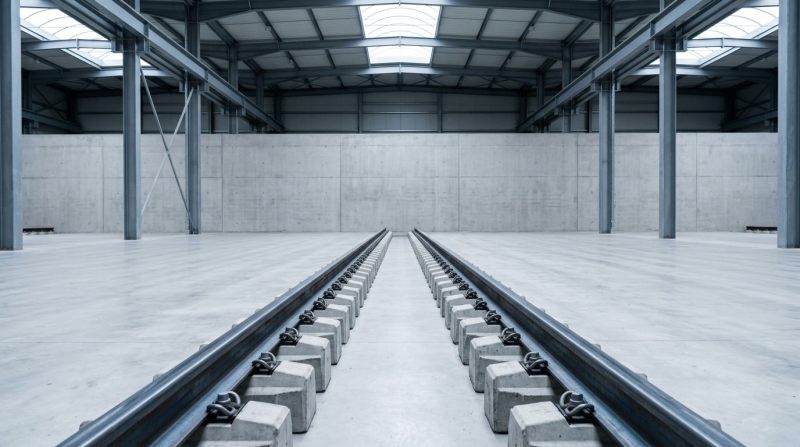
Rail infrastructure projects face dual challenges: escalating raw material costs and stricter performance mandates—especially for electrified rail systems requiring track circuits and corrosion resistance. Hongteng Fengda’s Rail product line meets both demands through standardized yet adaptable configurations across 15 weight classes (4kg/m to QU120) and 10 alloy variants—including U71Mn for high-wear mainlines and Q235 for auxiliary deck railings.
All rails are manufactured under strict process controls to ensure consistent mechanical properties: tensile strength range of 880–1180 MPa, elongation ≥8%, and hardness tolerance within ±3 HBW. Surface finish options—including oil, black, galvanized, and painted—support varying service lifespans (15–35 years) and maintenance cycles (every 2–5 years).
This precision ensures seamless integration with existing track geometry systems and minimizes long-term maintenance costs. For example, rails delivered with head width deviation exceeding ±1.0 mm increase wheel flange wear by up to 40%, accelerating replacement frequency and lifecycle cost.
Procurement Strategies That Reduce 2026 H2 Risk
Smart procurement in this environment requires moving beyond unit-price comparisons. Buyers must evaluate four core dimensions: (1) dimensional stability guarantee, (2) documentation traceability (mill test reports, EN 13674-1 certification), (3) lead time consistency (Hongteng Fengda maintains 7–12 day order-to-shipment cycle for standard rail profiles), and (4) post-order flexibility (e.g., ability to adjust length batches within ±15% without surcharge).
For project managers handling bridge railings or deck handrails, specifying carbon steel grade BNbRE instead of generic Q235 can extend field service life by 3–5 years—offsetting initial cost premium through lower inspection and recoating frequency. Similarly, selecting galvanized over black-finish rails reduces corrosion-related downtime by ~65% in coastal or de-icing salt environments.
- Confirm mill test report availability for every heat batch—not just per shipment
- Require third-party dimensional verification for orders >50 tons
- Lock in fixed exchange rate clauses for contracts spanning >90 days
- Request sample cuttings for weldability testing prior to bulk release
Why Partner With Hongteng Fengda for Structural Steel Sourcing?
Hongteng Fengda delivers structural steel solutions anchored in three operational pillars: predictable execution, verifiable compliance, and responsive customization. Our ISO9001-certified production facilities maintain 98.7% on-time delivery performance across 2025–2026, with 92% of rail orders shipped within 10 working days—even during Q4 peak season.
We support your team with actionable technical collaboration: full EN/ASTM/JIS/GB cross-reference tables, real-time dimensional tolerance validation tools, and OEM engineering support for non-standard rail geometries (e.g., curved sections, embedded fastener zones). All products undergo 100% ultrasonic testing and magnetic particle inspection per EN 13674-1 Annex A.
Whether you’re evaluating rail alternatives for a new metro line, optimizing steel beam specs for a warehouse expansion, or validating cold-formed profile tolerances for automated assembly—our engineers provide direct, standards-aligned guidance. Contact us today to request mill test report samples, confirm 2026 H2 lead times, or discuss custom rail configuration feasibility.
Please give us a message


Please enter what you want to find