As carbon steel price trends continue to influence global construction and manufacturing, buyers are closely comparing steel rebar cost, steel coil price per ton, and galvanized steel price to make smarter sourcing decisions. This market outlook explores what current signals mean for procurement teams, project managers, and distributors seeking reliable supply, cost control, and quality assurance from an experienced h beam manufacturer and structural steel exporter.
What Is the Carbon Steel Market Signaling Right Now?
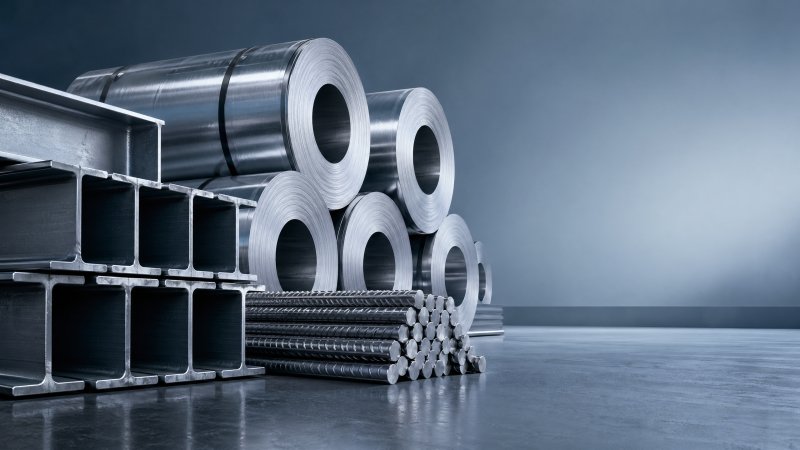
Carbon steel prices rarely move for one reason alone. In most sourcing cycles, the market is shaped by 4 core variables: raw material costs, mill operating rates, downstream demand, and export-import trade flow. For buyers in construction, fabrication, and industrial supply, the current signal is not simply “high” or “low” pricing. It is a market with frequent short-cycle adjustment, where lead time, specification availability, and logistics cost can change within 2–6 weeks.
For procurement personnel and commercial evaluators, this means unit price per ton should never be reviewed in isolation. A lower steel coil price per ton may still result in a higher project cost if there are coating changes, reprocessing needs, delayed shipment, or inconsistent dimensional tolerance. The same principle applies to steel rebar cost and galvanized steel price when project schedules are tight and replacement sourcing is limited.
For technical reviewers and quality managers, the market is also signaling a stronger need for specification discipline. Buyers are paying closer attention to grade matching, section dimensions, mechanical consistency, and compliance with ASTM, EN, JIS, or GB standards. In structural applications, a small mismatch in beam size, angle thickness, or channel tolerance can create downstream fabrication issues, especially across 3 stages: design approval, workshop processing, and site installation.
For enterprise decision-makers and finance approvers, the practical takeaway is clear: the best buying window is not always the lowest visible quote. It is often the point where production stability, shipment certainty, and acceptable cost alignment meet. A supplier with stable production planning and export experience can help reduce sourcing risk more effectively than chasing short-term spot offers.
Why price movement feels faster than before
In recent procurement cycles, many buyers have noticed that quotations can remain valid for only 3–7 days on certain structural steel items. This is especially true when hot rolled feedstock, zinc cost, freight, or currency movement changes quickly. The effect is stronger for bulk orders, customized sections, and mixed-container export shipments.
At the same time, project owners are demanding better traceability and more predictable delivery. That creates a gap between price-driven sourcing and risk-controlled sourcing. Experienced exporters bridge that gap by confirming specification details early, aligning production windows, and reducing variation in packaging, inspection, and shipment execution.
- Raw material volatility can influence quotations in as little as 1 procurement cycle.
- Production scheduling matters more when orders involve 2 or more product categories.
- Export documentation and standard compliance often affect total cost as much as mill price.
How Should Buyers Compare Steel Rebar Cost, Coil Pricing, and Galvanized Steel Price?
A practical comparison starts with use case, not headline price. Steel rebar cost is typically tied to reinforcement demand and project volume. Steel coil price per ton is often more sensitive to processing route, thickness range, and later conversion into profiles or components. Galvanized steel price includes not only the base steel value but also coating-related cost, which can affect corrosion performance and service life in outdoor or humid environments.
This distinction is important for project managers and end users. If the final application is structural framing, platform support, warehouse systems, or industrial fabrication, the decision should consider fabrication efficiency, weldability, corrosion exposure, and replacement cycle. In many cases, the cheapest per-ton option is not the best value over a 12–36 month project and maintenance horizon.
The table below helps compare common purchasing logic across three frequently tracked price categories. It is not a fixed pricing chart; instead, it shows which cost drivers and decision points buyers should review before approving an order.
For distributors, the table also shows why fast inventory turnover depends on correct product mix. Rebar may move in large recurring volume, while coil can support multiple processed applications, and galvanized steel often targets customers prioritizing corrosion resistance. Each category responds differently to short-term price changes, so purchasing strategy should reflect actual selling rhythm and customer demand profile.
Three decision filters that reduce buying mistakes
Instead of evaluating quotations only by price per ton, buyers should screen options through 3 practical filters: specification fit, processing impact, and delivery reliability. This framework helps technical teams, procurement officers, and financial reviewers speak the same language during approval.
- Specification fit: confirm grade, dimensions, tolerances, and applicable standards before comparing offers.
- Processing impact: review whether cutting, welding, drilling, galvanizing, or assembly will add hidden cost.
- Delivery reliability: assess realistic production and shipping timing, often in a 2–8 week planning window.
This is where a structural steel manufacturer with export coordination capability adds value. Hongteng Fengda supports buyers not only with standard sections such as angle steel, channel steel, and steel beams, but also with OEM-oriented structural solutions that reduce conversion loss and sourcing complexity.
What Procurement Teams Should Check Before Locking a Structural Steel Order
In a moving market, disciplined pre-order review is one of the strongest cost-control tools. Buyers who finalize carbon steel purchases successfully usually verify 5 key areas: specification, quantity structure, standard compliance, inspection method, and shipment plan. Missing any one of these can turn a competitive quote into a delayed or costly project outcome.
For structural steel, the specification review should go beyond nominal size. Teams should confirm section type, web and flange dimensions, thickness tolerance, length range, steel grade, surface condition, and whether post-processing is required. On export projects, packaging details and document requirements should also be clarified before production begins, especially when delivery must align with customs or contractor milestones.
The following checklist can support project managers, quality personnel, and procurement teams when comparing suppliers for angle steel, channel steel, h beam supply, cold formed profiles, and custom structural components. It is especially useful where multiple stakeholders need to approve the order within 1–2 review rounds.
This checklist matters because structural procurement usually affects more than one department. Engineering wants fit and compliance, purchasing wants a workable quote, finance wants controlled risk, and operations want on-time use. A supplier that understands this coordination burden can simplify the process by aligning product details, lead time, and export execution from the beginning.
Where diversified sourcing can still support steel-related projects
Even in a carbon steel-focused supply strategy, many industrial buyers also source supporting materials for screening, filtration, plant maintenance, or architectural use. In those cases, product consistency and export convenience remain important. A relevant example is Stainless Steel Welded Mesh, which can be used in filters, sieve applications, chemical industry, mine industry, architecture, and residences.
For teams comparing complementary industrial materials, the technical range is broad: common grades include SS 201, 304, 304L, 316, 316L, and 430; diameter can range from 0.0008″ to 0.12″; mesh can range from 2–635 mesh; and roll width can reach up to 240″. These details matter when one supplier must support multi-item procurement with both structural and industrial material requirements in the same sourcing cycle.
The procurement lesson is simple: whether buying structural steel beams or industrial mesh, cost control works best when technical fit, compliance, and delivery are managed together. That is the same purchasing logic many global buyers use when they evaluate export-ready suppliers from China.
How Do Standards, Lead Times, and Quality Control Affect Real Purchase Value?
For quality control teams and safety managers, the market outlook is not complete without discussing standards and process control. In structural steel procurement, compliance with commonly recognized standards such as ASTM, EN, JIS, and GB helps create a shared technical language between buyer, fabricator, and site team. This reduces avoidable disputes during inspection, installation, and final acceptance.
Lead time is equally important. In many export projects, a realistic planning sequence includes 3 stages: technical confirmation, manufacturing, and shipment arrangement. Depending on section type, quantity, and customization level, this may fall within a 2–4 week range for simpler items or a longer 4–8 week range for mixed specifications and OEM structural components. A supplier with stable production capacity can usually provide clearer delivery visibility during this cycle.
Quality control also influences commercial value more than many first-time buyers expect. Dimensional consistency, straightness, weldability, surface condition, packing integrity, and marking accuracy all affect downstream efficiency. When these elements are controlled at the manufacturing stage, buyers can reduce rework, avoid site waiting, and improve installation rhythm across fabrication and project execution.
A practical supplier review framework
For decision-makers comparing structural steel exporters, it helps to use a 4-point review framework rather than relying on quotation alone.
- Manufacturing scope: can the supplier support standard sections and customized structural components in one program?
- Standard familiarity: can they align production and documentation with ASTM, EN, JIS, or GB as required?
- Quality execution: do they maintain inspection discipline and stable batch consistency?
- Export coordination: can they support shipment planning, document handling, and dependable lead times?
Hongteng Fengda is positioned around this practical need set. As a professional structural steel manufacturer and exporter from China, the company supplies angle steel, channel steel, steel beams, cold formed steel profiles, and customized structural steel components for buyers across North America, Europe, the Middle East, and Southeast Asia. The commercial value lies in helping customers reduce sourcing risk while maintaining consistent quality and manageable delivery timing.
Common mistakes that increase total cost
Many procurement problems are not caused by the visible steel price. They come from incomplete alignment before ordering. Common mistakes include comparing non-equivalent grades, overlooking tolerance requirements, underestimating packaging and freight impact, and approving orders without clear inspection scope. Each of these can add hidden cost after the PO is issued.
Another common issue is treating all suppliers as interchangeable. In reality, a trader-focused quote and a manufacturer-exporter solution can differ significantly in production visibility, customization response, and issue resolution speed. For urgent projects or specification-sensitive structural work, that difference often matters more than a small price gap.
What Should Different Buyer Roles Ask Before Making a Final Decision?
Because carbon steel purchasing affects multiple departments, each role should ask different questions before approval. Information researchers may focus on market direction and supplier reliability. Operators and users care about practical usability and dimensional consistency. Technical evaluators want standards, grade matching, and processing suitability. Procurement managers need a balanced view of quotation, lead time, and supply stability.
Commercial reviewers and business evaluators often compare total landed cost, not just ex-works price. Enterprise decision-makers look at supplier continuity, risk concentration, and multi-project support. Finance approvers want predictable payment exposure and fewer surprise costs. Quality and safety teams need inspection clarity and specification traceability. Project managers care most about whether steel arrives in the right sequence and supports installation progress without disruption.
A useful way to align these concerns is to structure the final review meeting around 6 questions. Doing so reduces internal back-and-forth and helps turn market information into an executable purchase plan.
FAQ for carbon steel sourcing and structural steel decisions
How should we time carbon steel purchases when the market is moving?
Use a rolling review window instead of waiting for a perfect low point. For many projects, checking quotation validity every 3–7 days and reviewing supply conditions every 2–4 weeks is more practical than trying to predict the bottom. If the project has a fixed installation date, supply certainty may be worth more than minor spot-price savings.
What matters more: steel coil price per ton or processed yield?
Processed yield often matters more for fabrication users. A lower coil price can lose its advantage if slitting loss, forming difficulty, or dimensional inconsistency increases scrap or labor time. Buyers should compare at least 3 items together: base price, processing suitability, and final usable output.
When is galvanized steel worth the added cost?
Galvanized steel is typically worth stronger consideration in outdoor, humid, or corrosion-prone environments, especially where maintenance access is difficult. The premium should be judged against expected service conditions, repainting frequency, and replacement disruption over the life of the asset rather than only against initial purchase price.
What lead time should buyers expect for structural steel export orders?
A common planning range is 2–4 weeks for simpler standard items and 4–8 weeks for mixed specifications, large volume, or custom components. Actual timing depends on order complexity, production scheduling, inspection requirements, and vessel or container availability. Early confirmation of drawings and specifications usually shortens risk more than pushing for unrealistic shipment promises.
What should be included in the first supplier inquiry?
At minimum, include 5 elements: product type, standard or grade, section dimensions, quantity, and delivery destination. If the order is project-based, add drawing references, packaging expectations, inspection needs, and required delivery window. This helps the supplier issue a more accurate quotation and reduces revision cycles.
Why Choose a China-Based Structural Steel Manufacturer for Long-Term Supply Planning?
When the carbon steel market sends mixed signals, buyers benefit from suppliers that can combine manufacturing strength with export execution. Hongteng Fengda supports global construction, industrial, and manufacturing projects with structural steel products and customized solutions designed to improve sourcing clarity, cost control, and delivery confidence.
The company’s practical strengths are relevant to both first-time importers and experienced distributors: standard and OEM supply capability, familiarity with ASTM, EN, JIS, and GB requirements, modern manufacturing facilities, and strict quality control. For customers managing multiple SKUs or phased shipments, stable capacity and dependable lead times can reduce disruption across procurement and project management.
If you are comparing steel rebar cost, steel coil price per ton, galvanized steel price, or structural steel sourcing options, the next step should be specific. Share your required grade, dimensions, tonnage, delivery port, and target schedule. You can also request support for product selection, custom structural solutions, standard confirmation, sample discussion, packaging requirements, and quotation review based on your project stage.
A clear inquiry today can save 1–2 purchasing cycles later. For project managers, distributors, technical teams, and commercial decision-makers, working with a responsive structural steel manufacturer and exporter makes it easier to convert market signals into practical supply decisions.
Please give us a message


Please enter what you want to find