Carbon Steel Coil Prices Are Entering a More Selective Phase
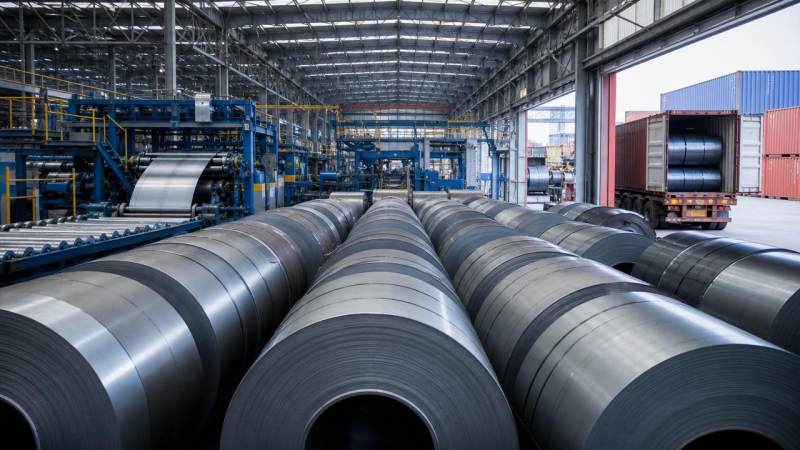
Carbon steel coil pricing is unlikely to follow a simple up-or-down path in 2026. The more realistic outlook is selective volatility, with sharper moves between grades, regions, and delivery windows.
That matters because steel costs now shape far more than monthly purchasing budgets. They influence project timing, bid accuracy, inventory strategy, and even whether downstream fabrication stays competitive.
Recent market behavior already suggests this shift. Buyers are no longer reacting only to headline mill prices. They are watching freight, energy, policy adjustments, and replacement risk at the same time.
For companies sourcing from China and other export hubs, the key issue is not only where carbon steel coil prices may land. It is how fast cost signals move through the supply chain.
This is especially relevant for construction, industrial manufacturing, and infrastructure programs, where material timing often matters as much as nominal price.
As a structural steel manufacturer and exporter, Hongteng Fengda works across projects that depend on stable steel inputs, reliable standards compliance, and predictable lead times. That operating reality offers a useful lens for reading the 2026 market.
Why the Price Story Is Becoming More Complex
The first change is that carbon steel coil prices are being shaped by overlapping cost layers rather than one dominant driver. Iron ore and coking coal still matter, but they no longer explain the full picture.
Energy pricing remains important in both blast furnace and downstream processing economics. When power, gas, or fuel costs fluctuate, mills tend to adjust offers faster than many buyers expect.
At the same time, global steel demand is fragmenting. Some segments remain soft, while grid investment, transport upgrades, warehouse construction, and selected industrial renewal projects continue to create pockets of firmness.
Trade policy is another factor that could reshape carbon steel coil market behavior in 2026. Anti-dumping reviews, tariff revisions, and local content rules can change sourcing decisions even before physical supply tightens.
More noticeable now is the role of logistics resilience. Ocean freight may be calmer than peak disruption periods, yet route instability, vessel scheduling, and port-side delays still create landed-cost uncertainty.
When these elements move together, price benchmarks become less useful on their own. A low quoted number can still turn into a high delivered cost.
The main drivers worth tracking together
Demand Signals Are Shifting From Volume to Specification
One of the clearest changes is that demand quality now matters more than aggregate tonnage. Orders linked to certified specifications, fabrication compatibility, and timeline certainty tend to hold up better than purely price-led volume.
In practical terms, that means carbon steel coil price trends may diverge between commodity buying and application-led buying. Projects with strict ASTM, EN, JIS, or GB requirements often accept a narrower supplier pool.
That distinction affects exporters with established quality systems. Suppliers able to match documentation, dimensional consistency, and dependable production windows are usually better positioned when markets become uneven.
This also explains why price conversations increasingly include processing readiness. Coil buyers are asking whether material can move smoothly into profiling, forming, coating, or structural fabrication without hidden cost losses.
A related example appears in corrosion-sensitive applications. Products such as Electrical Conduit Galvanized show how downstream users are weighing lifecycle value, coating consistency, and standards alignment alongside base steel cost.
Where galvanized pipe or conduit supports construction, machinery, transport, or low-pressure fluid systems, buying decisions often reflect total service life rather than only the current carbon steel coil benchmark.
What demand is rewarding more often
- Stable compliance with ASTM, EN, JIS, and GB requirements
- Production capacity that supports repeat orders without long gaps
- Closer tolerance control for conversion into beams, channels, profiles, or pipe
- Clear lead-time visibility for project-based delivery planning
The Impact Will Not Be the Same Across Every Business Link
Carbon steel coil price changes rarely stay confined to one transaction. They move outward into estimating discipline, stocking policy, contract structure, and manufacturing rhythm.
For project-based steel users, the biggest pressure point is quotation validity. If input costs shift within a short period, older estimates can quickly become unreliable.
For fabrication-heavy operations, the concern is conversion efficiency. Even a moderate change in coil pricing becomes more significant when scrap loss, coating, forming, and transport are added.
Export-oriented supply chains face another issue: timing mismatch. Material may be secured at one market level, while shipping, destination policy, or local demand changes before cargo arrives.
This is why many steel buyers are shifting from static annual assumptions to staged purchasing logic. The goal is not perfect timing. The goal is limiting exposure to avoidable swings.
Where the pressure tends to show first
- Budget planning becomes less accurate when benchmark prices lag real offers
- Project scheduling gets tighter when replacement material arrives later than expected
- Supplier comparison becomes harder when freight and compliance costs differ widely
- Inventory decisions carry more risk when demand is uneven across end-use sectors
What to Watch Before 2026 Price Moves Become Obvious
The market often signals change before published averages fully reflect it. Watching only monthly carbon steel coil price charts can leave important shifts unnoticed.
A better approach is to monitor several practical indicators together. Mill willingness to hold offers, booking lead times, destination-specific policy updates, and freight quotations often reveal direction earlier.
It also helps to separate short-cycle procurement from strategic sourcing. Material needed for immediate conversion should not be judged by the same logic as supply for long-duration project pipelines.
From recent buying behavior, a stronger signal is the premium attached to reliability. Suppliers with modern facilities, quality control discipline, and export execution experience tend to gain share when markets become harder to read.
That is where a company like Hongteng Fengda fits the broader market picture. In sectors using structural sections, cold formed profiles, and custom steel components, sourcing confidence can reduce total risk more effectively than chasing the lowest headline number.
The same logic applies in adjacent products with corrosion resistance needs. When a DX52D-based galvanized solution must meet broad dimensions, coating expectations, and international standards, substitution risk becomes a hidden cost.
A Practical 2026 Response Is More About Discipline Than Prediction
No forecast can remove uncertainty from the carbon steel coil market. What helps most is a sourcing framework that responds faster than the volatility.
That framework usually starts with clearer segmentation. Separate items by urgency, specification sensitivity, and substitution difficulty, then align each group with a different buying rhythm.
It is also worth reviewing whether current supplier portfolios match actual risk exposure. A low-cost source can still become expensive if documentation, lead time, or coating performance create downstream delays.
For steel categories linked to outdoor use, transport systems, industrial sheds, pipelines, or machinery support frames, service life considerations deserve more weight in 2026 budgeting.
In that context, a product like Electrical Conduit Galvanized is relevant not as a sales insert, but as a reminder that coating quality, dimensional range, and standards compliance can reshape value calculations beyond raw coil cost.
The most useful next step is to build a short list of indicators, review contract exposure by project phase, and compare quoted steel prices against real delivered performance. In 2026, better decisions will come from tighter market reading, not louder forecasts.
Please give us a message


Please enter what you want to find