As global industries face rising cost pressure, tighter quality requirements, and supply chain uncertainty, the carbon plate steel market in 2026 is drawing greater attention from business decision-makers.
Understanding demand shifts, pricing trends, and international sourcing standards is essential for stable supply, cost control, and reliable project execution across construction, manufacturing, and industrial applications.
Carbon Plate Steel Market Trends in 2026: Core Definition and Scope
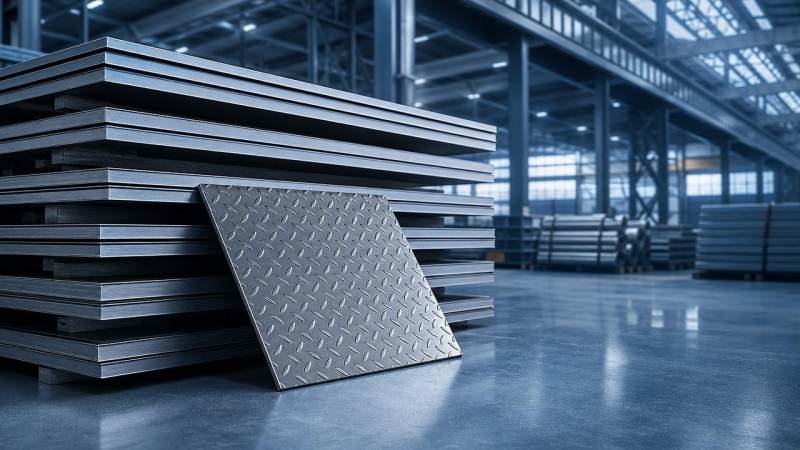
Carbon plate steel refers to flat rolled steel plates with carbon as a primary alloying element. It is widely used where strength, machinability, weldability, and cost balance are required.
In the steel sector, carbon plate steel covers a broad range of grades, thicknesses, and standards. Common references include ASTM, EN, JIS, and GB specifications.
The 2026 market discussion focuses on supply stability, plate quality consistency, lead times, and the relationship between raw material costs and downstream demand.
For many projects, carbon plate steel remains a preferred choice because it supports structural fabrication, machinery production, transport equipment, and general industrial construction.
Key Industry Signals Shaping the Carbon Plate Steel Market
Several market signals are likely to influence carbon plate steel purchasing and planning in 2026. These signals matter because they affect landed cost, technical selection, and project scheduling.
- Iron ore, coking coal, and energy prices still create volatility in steel plate quotations.
- Regional infrastructure spending continues to support baseline plate demand.
- Stricter quality documentation is becoming standard in international carbon plate steel trade.
- Freight fluctuations remain important for cross-border steel sourcing decisions.
- Shorter delivery expectations are pushing buyers toward stable export suppliers.
Price Direction, Supply Balance, and Sourcing Standards
The carbon plate steel market in 2026 is expected to stay active rather than uniformly bullish or weak. Prices may move within a wide band instead of following one clear direction.
This pattern often appears when downstream demand is stable, but upstream inputs remain volatile. In such conditions, purchasing timing becomes as important as unit price.
Supply balance will vary by specification. Standard grades usually remain available, while customized thicknesses, widths, or surface treatments may require longer production windows.
International sourcing now places stronger emphasis on test certificates, dimensional tolerance control, coating or surface condition requirements, and compliance with destination market standards.
Reliable exporters with modern facilities and clear quality systems offer practical advantages. Consistent lead times often reduce hidden costs more effectively than chasing the lowest headline quote.
A good example within application-oriented plate demand is SM400A Patterned steel plate, which fits projects needing surface grip, durability, and visual practicality.
This product is available in grades such as SM400A and SM400B, with thickness from 2mm to 8mm, width from 600mm to 1800mm, and length from 2m to 12m.
Its patterned surface supports anti-skid performance in transportation, construction, equipment floor areas, machinery, shipbuilding, and decoration. Compliance options include ASTM, DIN, JIS, BS, GB/TC, ISO, SGS, and BV.
Business Value of Carbon Plate Steel in Industrial Use
Carbon plate steel remains valuable because it combines practical engineering performance with wide processing compatibility. It can be cut, welded, bent, machined, and fabricated across many project environments.
Its broad grade range also helps balance cost and performance. Not every application requires alloy-intensive material, especially in mainstream structural and industrial support functions.
From a sourcing perspective, carbon plate steel supports easier standardization. This helps simplify specification alignment between design teams, fabrication workshops, and international supply channels.
- Good cost-to-strength ratio for common structural needs
- Flexible processing for fabricated steel components
- Wide acceptance under international standards
- Suitable for large-volume, repeatable procurement programs
For exporters with stable production systems, this category also supports customized solutions. That includes tailored dimensions, OEM fabrication, and matching delivery plans for global project schedules.
China-based structural steel suppliers with strong quality control can play an important role here. Stable production capacity and export experience help reduce sourcing risk in competitive international markets.
Typical Carbon Plate Steel Application Segments
Different segments use carbon plate steel for different reasons. Understanding those differences helps refine grade selection, stock planning, and supplier communication.
Patterned plate products are especially relevant in flooring and access areas. They add anti-skid performance while maintaining the practical benefits of carbon-based steel material.
Practical Guidance for 2026 Carbon Plate Steel Procurement
A disciplined sourcing approach can improve cost control and reduce project disruption. In 2026, the most effective strategy is likely to combine technical clarity with supplier verification.
- Define grade, dimensions, tolerance, and standard before requesting quotations.
- Confirm whether carbon plate steel requires surface treatment, patterned finish, or custom fabrication.
- Review mill certificates, inspection procedures, and export documentation in advance.
- Compare total landed cost, not only base steel price.
- Check delivery capacity for both regular and urgent replenishment orders.
- Align packaging and loading plans with destination handling conditions.
It is also useful to work with suppliers offering broader structural steel capabilities. Integrated support can simplify mixed orders involving plate, beams, channels, angle steel, or custom components.
Suppliers with international export experience usually provide better coordination on standards, documentation, and shipment timing. These factors matter as much as product availability in complex projects.
Outlook and Next-Step Considerations
The carbon plate steel market in 2026 will likely be shaped by moderate demand, uneven pricing, and continued emphasis on quality assurance and supply reliability.
For projects involving structural fabrication, machinery, transport, or industrial flooring, carbon plate steel will remain a practical and competitive material choice.
The best results usually come from early specification review, realistic delivery planning, and cooperation with dependable structural steel exporters that understand international requirements.
If a project requires stable steel supply, customized dimensions, or export-standard structural steel solutions, it is worth reviewing product details, certifications, and lead time options before finalizing procurement plans.
With strong manufacturing capability, strict quality control, and broad export experience, Hongteng Fengda supports global steel supply needs with consistent quality, flexible solutions, and dependable service.
Please give us a message


Please enter what you want to find