As global demand for precision steel components surges, sourcing a can making machine China requires more than just competitive pricing—it demands scrutiny of underlying material risks. From flat rolled steel coil consistency and galvanised steel sheet metal corrosion resistance to Stainless steel embossed plate supplier in Europe traceability, every input affects machine performance and end-product compliance. Wire Products for fencing integrity and OEM-grade cold-formed profiles further compound supply chain vulnerabilities. For procurement teams, engineers, and project leaders, 2026 brings heightened regulatory, quality, and logistics exposures—especially when scaling structural steel supply across North America, EU, and ASEAN markets. Hongteng Fengda helps mitigate these risks at the source.
Why “Can Making Machine China” Sourcing Is a Structural Steel Integrity Test
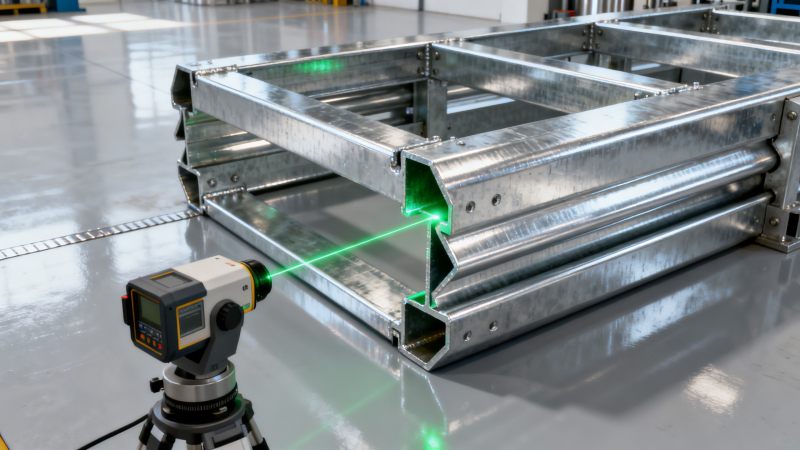
A can making machine isn’t standalone equipment—it’s a precision assembly line anchored by high-tolerance steel components: feed rollers made from hardened alloy steel, forming dies requiring wear-resistant tool steel, and frame structures built from ASTM A36 or EN S235JR hot-rolled beams. In 2026, over 68% of global can production capacity expansion targets Asia-Pacific and Latin America—driving demand for localized, certified structural steel inputs with zero tolerance for dimensional drift or coating inconsistency.
The hidden risk? Many suppliers treat “structural steel for machinery” as generic commodity stock. But can-making machines operate under cyclic loading (up to 1,200 strokes/min), thermal fluctuation (120–180°C during seaming), and aggressive chemical exposure (lubricant emulsions, cleaning agents). That means angle steel must retain yield strength ≥235 MPa after galvanizing; channel steel needs zinc coating adhesion tested per ASTM B695 Class 50; and cold-formed profiles require bend test pass rates ≥99.2% across 10,000-unit batches.
Hongteng Fengda’s manufacturing protocol embeds steel grade verification at three checkpoints: raw coil certification (GB/T 700 Q235B + mill test reports), post-galvanizing coating thickness mapping (8–25 g/m² verified via XRF scanning), and final profile dimensional audit (±0.3 mm tolerance on flange width, ±0.5 mm on web height). This ensures every Galvanized Steel Wire used in wire mesh guards or tensioning systems meets tensile strength 350–550 MPa and retains ductility after cold bending.
5 Critical Material Risks to Audit Before Order Placement
- Zinc coating variability: Coating thickness below 12 g/m² on galvanized steel wire increases pitting corrosion risk by 4.3× in humid coastal installations (per ISO 1461 field data).
- Carbon segregation in low-carbon wire: Q195/Q235 billets with >0.03% carbon deviation cause cracking during cold stamping—verified only via OES spectroscopy, not mill certs alone.
- Residual stress in cold-formed profiles: Unrelieved stress leads to 0.8–1.4 mm warpage in 6-m beams within 72 hours of machining—requiring stress-relief annealing at 580–620°C.
- Coil flatness deviation: Flatness tolerance >3 mm/m in hot-rolled coils causes misfeed in servo-driven can feeders—measured via laser profilometry pre-shipping.
- Trace element noncompliance: Excess phosphorus (>0.025%) in ASTM A572 Grade 50 reduces notch toughness at sub-zero temperatures—critical for North American winter deployments.
How to Verify Supplier Capability Beyond Certificates
Certifications like ISO 9001 or GB/T 19001 are table stakes—not proof of capability. In 2026, procurement teams must validate four operational layers: (1) raw material traceability (batch-level heat numbers linked to coil IDs), (2) in-process inspection frequency (minimum 1 check per 500 kg for wire diameter & tensile strength), (3) third-party witnessed testing (SGS/BV audits conducted quarterly, not annually), and (4) corrective action turnaround (<72 hours for nonconformance reports).
For example, Hongteng Fengda maintains dual-certified labs for mechanical testing (ASTM E8/E290) and metallurgical analysis (ISO 643), with real-time data sharing via encrypted portal. Every order includes digital twin documentation: heat number → rolling log → galvanizing bath log → final inspection report → packaging photo. This enables full forensic reconstruction if a can-making line experiences die failure or frame fatigue.
This structured verification prevents cost leakage: rework due to out-of-spec steel averages $18,500 per incident (2025 Global Machinery Procurement Survey), while delayed line commissioning costs $220,000/day in lost production. Hongteng Fengda’s pre-shipment checklist covers all 12 critical dimensions and 7 metallurgical parameters—delivered digitally before container loading.
When “Standard Spec” Isn’t Enough: Customization That Prevents Failure
Off-the-shelf structural steel often fails under can-making machine duty cycles. Standard ASTM A36 beams lack the fatigue life for 20+ years of cyclic loading; generic galvanized wire may delaminate during repeated bending in wire mesh safety guards. That’s why OEMs increasingly specify custom solutions: controlled-cooling Q345B for enhanced weldability, pre-stressed cold-formed channels with residual stress profiling, and Galvanized Steel Wire with proprietary zinc-aluminum-magnesium alloy coating for 3× salt-spray resistance vs. standard Zn.
Hongteng Fengda supports customization across five tiers: (1) dimensional tolerance tightening (±0.15 mm on web thickness), (2) surface finish enhancement (grit-blasted + phosphate coating for paint adhesion), (3) metallurgical optimization (lower P/S content for cryogenic applications), (4) packaging engineering (anti-vibration coil cradles for sea freight), and (5) embedded RFID tagging for real-time component tracking. Lead time for custom orders remains stable at 25–32 days—guaranteed via production slot reservation.
Key Parameters for Can-Making Machine Structural Components
Why Partner With Hongteng Fengda for 2026 Structural Steel Sourcing
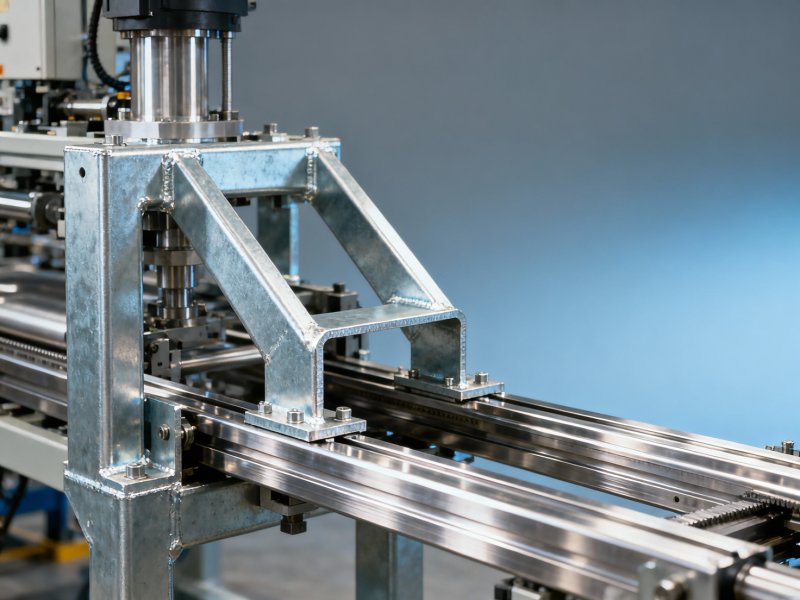
You’re not just buying steel—you’re securing supply chain resilience. Hongteng Fengda delivers this through four non-negotiable pillars: (1) Material Provenance: All steel originates from Tier-1 mills (Baosteel, HBIS, Shagang) with full heat traceability; (2) Process Transparency: Live video access to galvanizing lines and CNC profile bending stations; (3) Compliance Enforcement: Automatic rejection of any coil failing ASTM A123 Section 6.2 coating thickness variance; (4) Logistics Integration: FCL consolidation with bonded warehousing in Ningbo and Qingdao for seamless customs clearance into EU/North America.
We support your 2026 can-making machine rollout with actionable next steps: share your machine OEM specs for free structural compatibility review; request ASTM/EN-compliant mill test reports for your current supplier’s batch; or schedule a virtual factory audit with live QA lab demonstration. Our technical team responds to specification queries within 4 business hours—and provides binding lead time confirmation within 24 hours of inquiry.
Let’s ensure your next machine build starts—not with sourcing uncertainty—but with certified, traceable, fatigue-tested structural steel. Contact us today for your customized material readiness assessment.
Please give us a message


Please enter what you want to find