When load paths, connection space, or installation efficiency matter, c shaped angle iron can outperform traditional L sections in specific structural applications.
Current steel design decisions are shifting toward profiles that reduce fabrication steps while keeping reliable strength and stable sourcing.
That is why engineers increasingly compare c shaped angle iron with conventional L sections beyond simple weight or price.
The better choice often depends on connection geometry, torsional behavior, corrosion exposure, and how quickly the structure must be assembled.
In steel construction, understanding where each profile fits best helps avoid overdesign, site delays, and avoidable fabrication cost.
Why profile selection is changing in modern steel projects
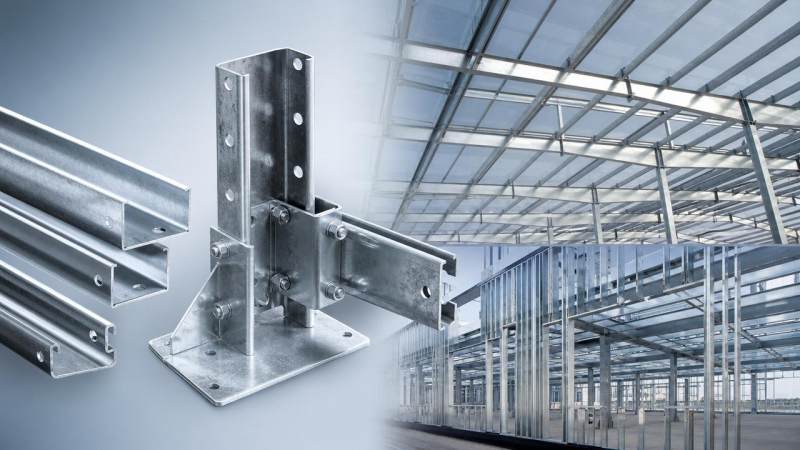
Steel projects now face tighter schedules, more complex connections, and stronger pressure to optimize material use without reducing structural confidence.
Under these conditions, c shaped angle iron gains attention because its geometry can simplify fixing points and create more practical support surfaces.
Unlike a standard L section, a C-shaped profile offers two flanges linked by a web, improving stability in many secondary structural roles.
This matters in frames, supports, wall members, roof systems, and equipment structures where eccentric loading often creates twisting challenges.
As design standards and digital detailing improve, the benefits of c shaped angle iron become easier to quantify and specify early.
Where c shaped angle iron works better than L sections
The strongest advantage appears when the section must carry load while also offering a convenient surface for bolting, cladding, or bracket attachment.
An L section is efficient in simple edge reinforcement, but c shaped angle iron performs better in several upgraded use cases.
1. Secondary framing with off-center loads
When loads do not pass through the shear center, L sections can twist more easily during service or installation.
C shaped angle iron usually provides better resistance to torsional effects because its geometry is more balanced around the web.
2. Purlins, girts, and wall support lines
Roof and wall systems often need repetitive fixing points, fast alignment, and room for insulation or cladding interfaces.
In these positions, c shaped angle iron can support cleaner installation than a single-leg angle.
3. Brackets and equipment support members
Brackets benefit from wider bearing faces and easier hole positioning.
That often reduces welding complexity and helps maintain dimensional consistency in batch production.
4. Light industrial frames needing predictable assembly
For lightweight steel structures, the practical fit-up of members can matter as much as nominal strength.
C shaped angle iron often improves alignment and reduces connection improvisation on site.
The main forces driving this shift in profile preference
Several technical and commercial factors explain why c shaped angle iron is specified more often in upgraded steel applications.
How these differences affect fabrication, sourcing, and project performance
Choosing c shaped angle iron changes more than structural calculation. It influences cutting plans, hole layouts, transport efficiency, and site handling.
In fabrication shops, repeatable C-shaped members can improve welding access and reduce rework from unclear connection geometry.
On site, crews often gain from easier positioning, especially in long runs of roof, wall, or support framing.
For sourcing teams, consistency in thickness tolerance, height control, and coating quality becomes more important than the nominal profile name alone.
That is where stable structural steel supply makes a measurable difference to the final result.
For example, Metal Channel options are widely used in construction, wall beams, brackets, purlins, and light manufacturing frames.
Available grades include Q195, Q235, Q235B, Q345B, Duplex, and 201, 202, 304, 316 stainless variants for broader environmental requirements.
With thickness from 1.5mm to 25mm, height from 80mm to 160mm, and standards like ASTM, JIS, DIN, and GB/T, selection stays flexible.
What should be checked before replacing an L section
Not every application should shift automatically to c shaped angle iron.
The profile should be evaluated against actual service conditions, detailing demands, and fabrication economics.
- Check load direction and whether eccentricity may cause twist in an L section.
- Review available connection space for bolts, clips, cladding rails, or brackets.
- Compare the total installed cost, not only section weight.
- Confirm corrosion protection requirements, especially for outdoor or humid environments.
- Verify tolerance and straightness for repetitive members in long structural lines.
- Align the section choice with ASTM, EN, JIS, or GB project specifications.
Where reliable supply support creates a real specification advantage
A profile performs well only when manufacturing quality matches the design assumption.
That includes dimensional control, mechanical consistency, coating quality, and documentation aligned with export standards.
Hongteng Fengda, a structural steel manufacturer and exporter from China, supports global steel projects with stable production and customized solutions.
Its product range covers angle steel, channel steel, steel beams, cold formed profiles, and custom structural steel components.
With compliance to ASTM, EN, JIS, and GB, the company helps reduce sourcing uncertainty across North America, Europe, the Middle East, and Southeast Asia.
For projects comparing c shaped angle iron against L sections, this support can improve specification accuracy and delivery confidence.
Practical judgment points for the next round of steel design decisions
The current trend is not about replacing every L section.
It is about using c shaped angle iron where geometry, connection efficiency, and stability create a measurable project benefit.
If the application includes off-center loads, repetitive support lines, or installation-sensitive connections, c shaped angle iron deserves priority review.
If geometry is simple and space is tight, an L section may still remain the most efficient answer.
The key is early comparison using actual connection details, not generic assumptions.
For upcoming steel projects, review the member function, environment, standard requirements, and available supply options before finalizing the section type.
That approach leads to better performance, cleaner fabrication, and stronger cost control from design through delivery.
Please give us a message


Please enter what you want to find