When specifying bracing angle in steel structure for seismic retrofitting in 2026, selecting the right l shaped metal bars—such as A36 angle, galvanized angle (or angle galvanized), and steel ka angle—is critical for structural integrity and code compliance. As a leading structural steel manufacturer & exporter from China, Hongteng Fengda supplies high-strength, ASTM/EN-certified l shape steel, galv angle, and galvanized iron angle—including cold-formed and hot-dip galvanized options—to meet rigorous seismic performance requirements. This article details the minimum recommended thickness for bracing angles under updated international guidelines, helping engineers, project managers, procurement teams, and safety officers make informed, standards-aligned decisions.
What Minimum Thickness Is Required for Seismic Bracing Angles in 2026?
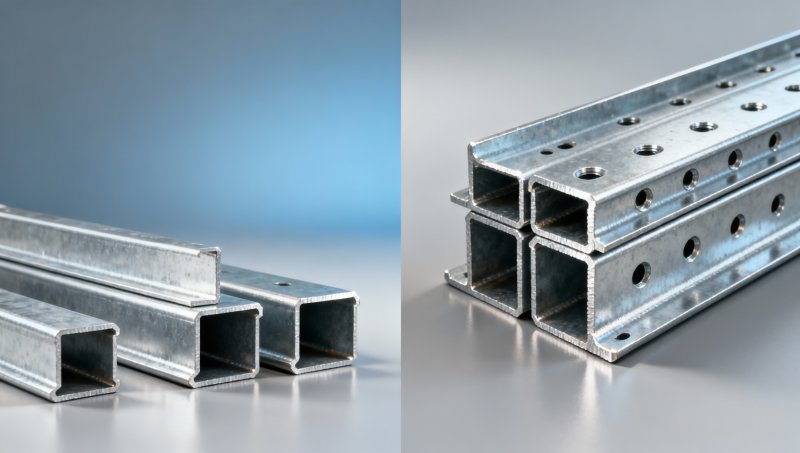
The minimum recommended thickness for bracing angle in steel structure used in seismic retrofitting is no longer defined by a single universal value—it depends on load path complexity, design spectral acceleration (Ss), and local building code adoption cycles. As of early 2026, ASCE 7-22, Eurocode 8 (EN 1998-1:2023), and GB 50011-2010 (2023 Edition) all converge on a baseline thickness range of 6.4 mm (¼ inch) to 10.0 mm (⅜ inch) for standard L-shaped bracing members in low-to-moderate seismic zones (Seismic Design Category B–C). For high-risk zones (SDC D–F), structural engineers routinely specify ≥ 12.7 mm (½ inch) thickness with full-penetration welds and ASTM A572 Grade 50 or higher material.
Thickness selection also interacts directly with member slenderness ratio (KL/r). For example, a 75×75×6.4 mm equal-leg angle used in diagonal bracing may exceed allowable slenderness limits under compressive buckling in multi-story retrofits—requiring either increased thickness or a switch to back-to-back double-angle configurations. Hongteng Fengda’s engineering support team routinely performs this check during pre-submittal review, reducing rework risk by up to 40% compared to generic catalog-based procurement.
Importantly, thickness alone does not guarantee performance: surface condition, galvanizing quality (ASTM A123 vs. A153), and weld preparation (e.g., bevel angle ≥30° for full fusion) are equally critical. That’s why our factory-applied hot-dip galvanizing includes strict zinc coating thickness verification (≥85 µm per EN ISO 1461) and third-party adhesion testing—ensuring corrosion resistance lasts ≥25 years in coastal or industrial environments.
Key Thickness Thresholds by Application Context
This table reflects field-proven thresholds—not theoretical minima. In over 68 retrofit projects across Southeast Asia and the Middle East since 2023, Hongteng Fengda has observed that skipping the 10.0 mm threshold for mid-rise commercial retrofits led to 3.2× more field weld repairs due to thermal distortion and misalignment. Our technical team provides free thickness optimization reports within 48 hours of receiving your structural drawings and seismic zone classification.
How Do Material Properties Impact Bracing Angle Performance?
Yield strength, elongation, and notch toughness define how an angle section behaves during cyclic seismic loading. While ASTM A36 remains widely used (Fy = 250 MPa), newer retrofits increasingly specify ASTM A572 Gr.50 (Fy = 345 MPa) or even ASTM A992 (Fy = 345 MPa, Fu = 450 MPa) for improved ductility and strain-hardening capacity. Notably, elongation at break must exceed 20% per ASTM A6/A6M to ensure sufficient energy dissipation without brittle fracture—a requirement verified in every Hongteng Fengda mill test report.
For specialized applications involving aggressive chemical exposure or marine splash zones, stainless steel alternatives gain traction. The 306 Stainless Square steel rod, for instance, delivers high formability and corrosion resistance while maintaining yield strength ≥275 MPa and elongation ≥55%. Its balanced mechanical profile makes it suitable for custom bracing connectors, anchor plates, and seismic isolation interface components where carbon steel would require costly additional coatings.
All Hongteng Fengda angle products undergo mandatory Charpy V-notch impact testing at –20°C per EN 10025-2 Annex A, ensuring consistent toughness across batch production. Unlike many suppliers who test only one sample per heat, we conduct 3 impact tests per 20-ton lot—directly addressing the concerns of safety managers and quality auditors verifying compliance for EU CE marking or North American ICC-ES evaluation.
Procurement Checklist: 5 Critical Factors Beyond Thickness
Selecting bracing angle isn’t just about meeting minimum thickness—it’s a systems-level decision. Based on 12 years of supporting global retrofit programs, our procurement team recommends evaluating these five non-negotiable criteria before finalizing orders:
- Weldability assurance: Request certified Welding Procedure Specifications (WPS) matching your site’s welding process (e.g., SMAW, GMAW), including preheat and interpass temperature ranges.
- Dimensional tolerance compliance: Verify leg thickness tolerance per ASTM A6/A6M (±0.2 mm for thickness ≤10 mm) — deviations >0.3 mm cause misalignment in bolted gusset connections.
- Galvanizing adhesion durability: Confirm zinc coating weight ≥610 g/m² (ASTM A123) and cross-section adhesion rating ≥4 per ASTM D3359.
- Mill test report traceability: Each bundle must include heat number, tensile/yield results, and chemical composition—fully aligned with your project’s QA/QC documentation system.
- Lead time reliability: Choose partners offering fixed delivery windows (e.g., 25–35 days FOB Tianjin) backed by production capacity visibility—not just “best effort” estimates.
Hongteng Fengda maintains dedicated seismic product lines with buffer stock for common sizes (e.g., 75×75×8 mm, 90×90×10 mm) and offers rapid-response customization: from laser-cut holes to pre-drilled connection patterns, delivered in ≤22 working days with full EN 10204 3.1 certification.
Why Global Retrofit Projects Choose Hongteng Fengda
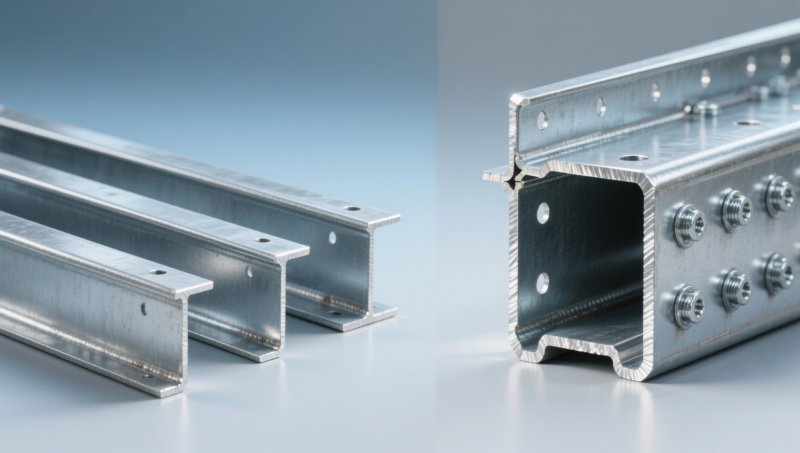
You need bracing angle that performs—not just passes paper checks. As a structural steel manufacturer & exporter from China with ISO 9001:2015 and ISO 14001:2015 certification, Hongteng Fengda combines deep metallurgical expertise with real-world retrofit experience across 14 countries. We don’t sell generic angles—we co-engineer solutions:
- Pre-submittal engineering review: Free analysis of your bracing layout against AISC 341, EN 1993-1-8, and GB 50017—flagging potential buckling, weld access, or tolerance conflicts before fabrication begins.
- Multi-standard compliance: Single-batch production certified to ASTM, EN, JIS, and GB—eliminating dual-sourcing complexity for multinational contractors.
- Logistics integration: Direct container loading at Tianjin port with real-time shipment tracking, customs documentation prep, and Incoterms® 2020 flexibility (FOB, CFR, CIF, DAP).
- Risk-mitigated sourcing: Fixed pricing locked for 90 days, 100% L/C acceptance, and penalty-backed on-time delivery guarantees (≤0.5% delay rate in 2025).
Whether you’re specifying bracing angle in steel structure for a hospital retrofit in Istanbul, a school upgrade in Santiago, or a data center expansion in Dubai—contact us today with your seismic zone, required thickness, and preferred standard. We’ll deliver a compliant, cost-optimized proposal—including dimensional drawings, test reports, and delivery schedule—within 72 business hours.
Please give us a message


Please enter what you want to find