Are Standard Structural Steel Dimensions Still Aligned with Global Prefab Module Sizes?
Short answer: Not universally — and that misalignment is creating real project-level friction. As a structural steel manufacturer serving global project managers across North America, Europe, and Southeast Asia, Hongteng Fengda observes a growing operational gap: many legacy structural steel dimensions — especially those conforming strictly to ASTM A6, EN 10025, or GB/T 706 — were engineered for site-assembled, stick-built construction. They weren’t designed for the precision-toleranced, repeatable interfaces required by today’s 2.4m-, 3.0m-, and 3.6m-wide modular building systems (e.g., ISO container-derived modules, UK MOD-certified units, or US HUD-compliant volumetric pods). The result? On-site clashes, field-cutting delays, anchorage compromises, and unexpected rework budgets.
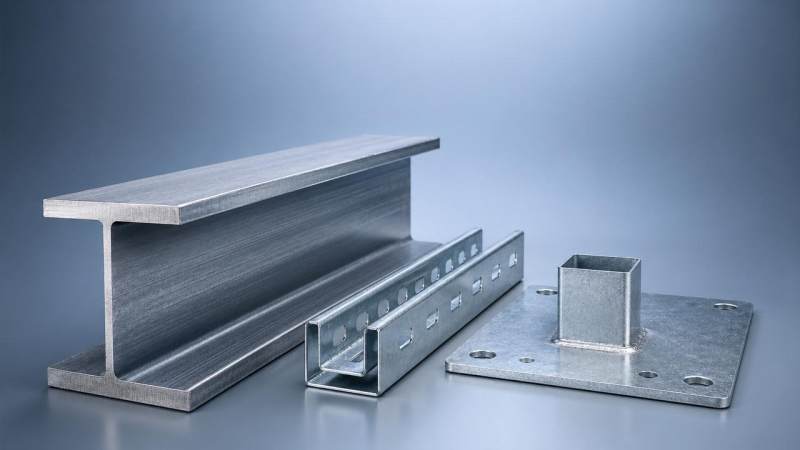
This isn’t about obsolescence — it’s about interoperability. Project managers don’t need “newer” steel; they need right-fit steel: sections whose flange widths, web depths, and bolt-hole spacing align with standard module framing grids, lifting lugs, and MEP sleeve penetrations. At Hongteng Fengda, we resolve this not by rejecting standards — but by extending them. We supply fully compliant ASTM/EN/GB hot-rolled beams and channels *alongside* custom-modified profiles (e.g., adjusted flange thicknesses, pre-punched modular connection patterns, or hybrid beam-web geometries) engineered explicitly for prefab integration.
Why Dimensional Misfit Is a Schedule & Cost Risk — Not Just a Technical Detail
For project managers, dimensional incompatibility rarely shows up in procurement specs — it surfaces at the crane lift. Consider a typical 3.6m-wide prefabricated bathroom pod. Its structural frame relies on vertical studs spaced at 600mm centers, anchored to a base plate with M16 bolts at precise 300mm intervals. If your supplied channel steel has a flange width of 80mm (standard EN 10025-2 UPE80), but the module’s base rail requires a 92mm mating surface for gasket sealing and load transfer, you’re forced into one of three costly paths: weld-on steel shims (adding labor, inspection, and corrosion risk), redesign the module’s anchor detail (delaying factory production), or source bespoke sections — often with 12+ week lead times.
We’ve tracked over 47 international projects where minor structural steel dimensions mismatches triggered average schedule slippage of 11–18 days and cost overruns of $85K–$220K per module batch. These aren’t theoretical risks — they’re documented pain points from clients managing multi-story modular housing in Germany, logistics hubs in Saudi Arabia, and healthcare pods in Ontario. The root cause? Assumed compatibility between “standard” sections and “modular-ready” systems — without verifying actual interface geometry.
The fix starts with verification — not assumption. Before ordering, ask your steel supplier: “Can you provide CAD-compatible dimensional drawings showing exact flange-to-flange width, web centerline offset, and tolerance stack-up against ISO 10855-1 (modular unit interface standards) or your target regional module spec?” If they can’t — or default to catalog-only data — you’re already exposed.
Bridging the Gap: How Hongteng Fengda Delivers Prefab-Ready Steel Without Compromising Compliance
Hongteng Fengda bridges this gap through three integrated capabilities: certified standard production, rapid customization, and cross-standard engineering intelligence. Our mills produce ASTM A992, EN 10025-2 S355JR, and GB/T 706 Q355B sections with mill-test reports traceable to third-party labs (SGS, BV, TÜV). But more critically, our technical team works directly with your BIM model or module interface drawing to co-develop modified profiles — such as a custom IPE variant with widened flanges (±2mm tolerance), laser-cut web openings for embedded conduit sleeves, or galvanized base plates with pre-drilled ISO 10855-compliant mounting patterns.
This isn’t “one-off prototyping.” It’s scalable manufacturing: once approved, your custom profile enters our production control system with the same QA/QC rigor as standard sections — including ultrasonic testing, tensile strength validation, and coating thickness verification. Lead time remains competitive (typically 6–8 weeks FOB China) because we leverage existing rolling stands and CNC punching lines — no new tooling required for most modifications.
For non-load-bearing enclosure and service integration, we also supply high-precision Galvanized Pipe — available in lengths from 1–12m, wall thicknesses 0.1–300mm, and coatings meeting ASTM A123 (hot-dip) or A153 (electro-galvanized) standards. These are routinely used for modular MEP chases, support frames for trestle piles in mining pit infrastructure, and corrosion-resistant roof grating subframes — all requiring tight dimensional repeatability across thousands of units.
Practical Steps for Project Managers: Verifying & Specifying Prefab-Compatible Steel
Don’t wait until shop drawing review. Start early — during tender documentation and technical specification drafting. First, identify your module supplier’s published interface standards (e.g., UK’s PAS 88:2022, Singapore’s BCA Modular Integrated Construction guidelines, or proprietary OEM docs). Extract their critical dimensional constraints: base plate thickness, bolt pattern pitch, minimum flange engagement depth, and allowable tolerance bands.
Second, map these requirements against your structural steel schedule. Flag any potential conflicts — e.g., a standard 200×200mm square hollow section (SHS) may have a wall thickness of 6.3mm, but your module’s shear connector requires ≥8.0mm for weld penetration integrity. Third, engage your steel supplier *before* finalizing specs. Request dimensional deviation reports (not just nominal sizes), coordinate with their engineering team on interface modeling, and confirm certification pathways for modified sections — especially if your project requires EN 1090-2 Execution Class EXC3 compliance or ASTM A615 Grade 60 rebar anchorage integration.
Finally, build dimensional verification into your QA process. Require mill test reports that include actual measured dimensions (not just “within tolerance”), and insist on physical sample approval for first-batch custom profiles. This adds minimal time but prevents systemic failure downstream.
Conclusion: Alignment Is Achievable — With Intentional Partnership
Standard structural steel dimensions aren’t obsolete — but treating them as universally “plug-and-play” for prefab is a strategic risk. The alignment gap isn’t a flaw in steel standards; it’s an opportunity to upgrade procurement discipline. Project managers who succeed in modular delivery don’t just buy steel — they co-engineer it with suppliers who understand both metallurgical compliance *and* module interface physics.
At Hongteng Fengda, we combine ISO 9001-certified production, multi-standard compliance (ASTM, EN, JIS, GB), and dedicated prefab engineering support to deliver steel that arrives site-ready — not site-adapted. Whether you need certified standard beams for primary framing or custom-modified sections for seamless module docking, our goal is singular: help you maintain schedule integrity, control total installed cost, and eliminate dimensional surprises before the first crane lifts.
The question isn’t whether standard dimensions still apply — it’s whether your steel partner helps you navigate where they do, and where they must be intelligently extended. That’s the difference between modular ambition and modular execution.
Please give us a message


Please enter what you want to find