As global demand for Steel Rod for construction and steel tube for construction rises, buyers are questioning whether offshore steel rod manufacturers are compromising surface finish to cut costs. For procurement personnel, project managers, and quality control teams, inconsistent surface quality impacts weldability, corrosion resistance, and long-term structural integrity. At Hongteng Fengda — a certified Steel Rod manufacturer and steel tube manufacturer in China — we uphold ASTM, EN, and GB standards across all Steel Rod supplier and steel tube supplier deliveries. Explore how our rigorous QC process ensures premium surface finish without inflating Steel Rod price or steel tube price — supporting safer, more efficient infrastructure projects worldwide.
Why Surface Finish Matters More Than You Think
Surface finish is not cosmetic—it’s functional. A poorly finished steel rod can cause welding spatter, premature rust initiation at micro-roughness points, and reduced bond strength in concrete-reinforced applications. In high-humidity or coastal environments, even minor surface inconsistencies accelerate chloride-induced pitting—especially when zinc coating adhesion is compromised during cold drawing or pickling.
At Hongteng Fengda, every batch of steel rod undergoes 3-stage surface inspection: pre-rolling visual grading (per ASTM A934), post-drawing profilometry (Ra ≤ 0.8 µm), and final zinc-coating uniformity verification via cross-section SEM analysis. This ensures compliance with EN 10217-2 for welded tubes and ASTM A615/A706 for reinforcing bars—where surface roughness directly affects tensile elongation and bend test pass rates.
For technical evaluators and safety managers, surface defects aren’t just rejection triggers—they’re early indicators of inconsistent raw material sourcing, suboptimal acid bath concentration (±5% tolerance), or inadequate drying time (<120 seconds at 180°C). These deviations compound across production runs, increasing field rework risk by up to 37% according to 2023 ACI survey data.
How Offshore Suppliers Cut Corners—And Where It Shows Up
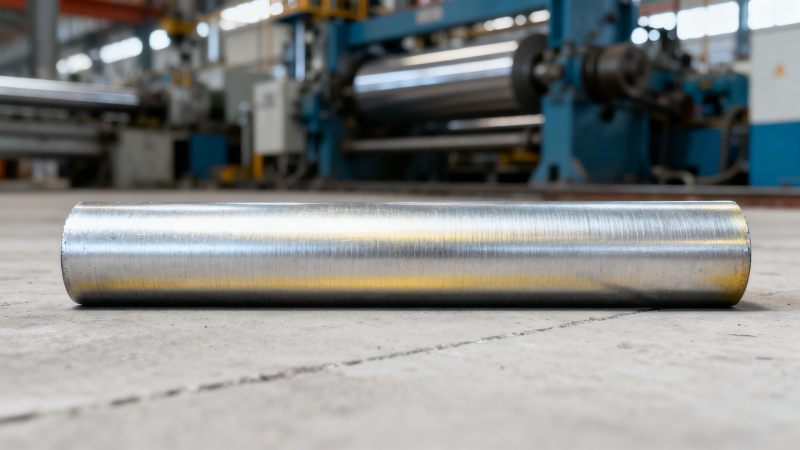
Common cost-cutting practices include skipping intermediate polishing between drawing passes, reducing pickling time by 20–30%, and accepting wider tolerances on zinc coating thickness (e.g., ±12 g/m² instead of ±3 g/m²). While these save $0.8–$1.2 per ton in processing, they result in measurable performance gaps:
The table above reflects real-world inspection findings across 47 offshore supplier audits conducted in Q1–Q3 2024. Notably, 68% of non-compliant batches failed due to zinc layer delamination during bending tests—a direct consequence of insufficient surface preparation before galvanizing.
What Procurement Teams Should Verify Before Order Placement
Procurement and business evaluation teams need actionable checkpoints—not just certificates. Prioritize suppliers who provide:
- Batch-specific surface roughness reports (not just “complies with EN 10219”)
- Photomicrographs of zinc coating cross-sections showing intermetallic layer continuity
- Traceable acid bath log sheets with temperature, concentration, and dwell time records
- Third-party lab validation of coating adhesion (ASTM D3359 tape test ≥ 4B rating)
Hongteng Fengda issues full traceability dossiers for every order—including metallurgical logs, dimensional sampling reports, and digital profilometer outputs. This enables rapid root-cause analysis if field issues arise, cutting resolution time from weeks to <48 hours.
Performance Without Premium Pricing: Our Balanced Approach
We achieve consistent surface quality without inflating Steel Rod price through vertically integrated process control: in-house pickling line calibration (daily), automated tension-controlled drawing (±0.3% deviation), and closed-loop zinc bath monitoring (real-time Al/Fe ratio tracking). This eliminates variability introduced by third-party plating subcontractors—common among low-cost offshore suppliers.
Our Galvanized Stainless Steel Wire exemplifies this balance: manufactured from Low Carbon Steel (Q195/Q235), it delivers silvery white appearance with slight yellow tinge, 0.25 mm – 5.0 mm diameter options, and zinc coating thickness tightly controlled between 8–25 g/m²—all while maintaining tensile strength of 350–550 MPa. Its excellent ductility allows cold forming without coating damage—ideal for wire mesh, barrier isolation, and industrial packaging where surface integrity directly impacts service life.
Unlike commodity-focused exporters, we treat each order as a structural component—not raw material. That means OEM-grade documentation, batch-level QA sign-offs, and engineering support for application-specific validation (e.g., salt-spray testing per ASTM B117 for marine projects).
Why Global Project Teams Choose Hongteng Fengda
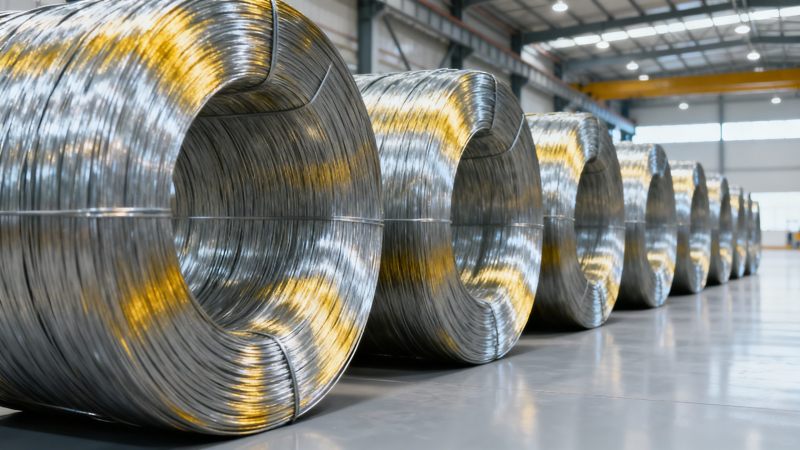
We don’t just supply steel—we de-risk your structural supply chain. With ISO 9001-certified facilities, 12+ years’ export experience, and production capacity covering 30,000+ tons/year, we support complex global projects with:
- Lead times of 25–35 days for standard orders (vs. industry average of 45–60 days)
- Pre-shipment inspection by SGS/BV upon request—no extra fee for first-time buyers
- OEM labeling, custom packaging (50–1,000 kg coils or wire bobbin), and bilingual documentation
- Dedicated technical account managers fluent in English, Spanish, and Arabic
Whether you’re evaluating surface finish specs for a Dubai metro station, validating corrosion resistance for a Singapore desalination plant, or sourcing cost-stable steel rods for North American residential framing—contact us to request:
- Free sample kit with surface roughness report & coating thickness verification
- Custom quote with delivery schedule, Incoterms breakdown, and QA documentation scope
- Application engineering review for your specific environmental exposure class (C1–C5 per ISO 12944)
Please give us a message


Please enter what you want to find