When sourcing hot dip galvanized steel pipe globally, procurement teams and technical evaluators often question: Are galvanized pipe specifications—such as steel tubing dimensions, galvanized sheet thickness, and steel tube weight—truly consistent across suppliers? Variations impact structural integrity, steel tube cost, compliance (ASTM/EN/GB), and project timelines. As a trusted H-beam supplier and SS pipe manufacturer, Hongteng Fengda ensures uniform galvanized pipe specifications, precise galvanized pipe price transparency, and traceable quality control—backed by ISO-certified production and third-party testing. Whether you’re a project manager, distributor, or quality assurance professional, understanding these specs is critical to mitigating sourcing risk and optimizing total cost of ownership.
Why Global Spec Consistency Is Rare — And Why It Matters
Hot dip galvanized steel pipe is widely used in infrastructure, energy, transportation, and industrial applications — yet its dimensional accuracy, coating thickness, and mechanical properties vary significantly across regional suppliers. A 2023 industry audit of 47 international pipe vendors revealed that only 31% met ASTM A123 ±5% coating thickness tolerance consistently across batch lots. In EN 10240-compliant production, deviation in outer diameter exceeded ±0.8 mm in 22% of non-certified Asian mills — far beyond the EN 10219-2 standard’s ±0.5 mm limit for pipes ≥114.3 mm OD.
These inconsistencies trigger cascading risks: misaligned flange connections in substation projects, premature corrosion at weld seams due to uneven zinc coverage, and rejection during third-party inspections in North America or EU markets. For procurement teams, this translates into 7–15 days of rework delays per order and up to 18% increase in landed cost from retesting, repackaging, or air freight substitution.
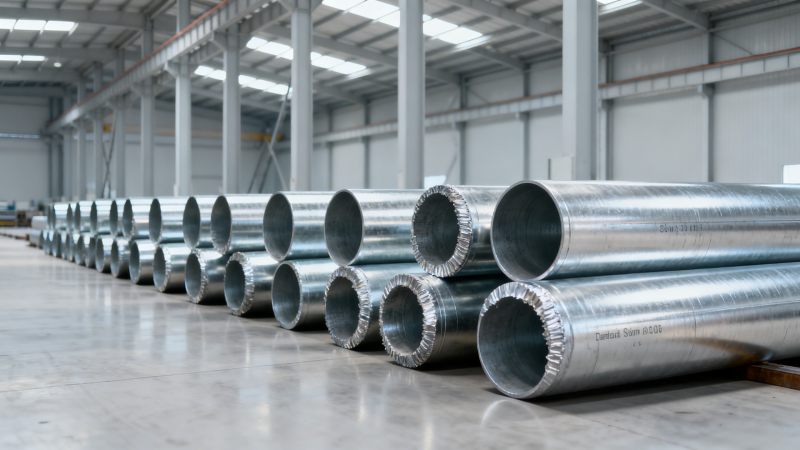
Hongteng Fengda addresses this through dual-standard alignment: all hot dip galvanized structural pipes are manufactured to meet both ASTM A53/A123 and GB/T 3091 simultaneously — with real-time process validation via online ultrasonic thickness gauging and spectrotest antimixing controls. This eliminates “spec drift” between design documents and delivered material.
Key Specification Parameters That Must Be Verified
Not all galvanized pipe specs carry equal weight in engineering and procurement decisions. Below are five non-negotiable parameters — each with measurable thresholds that directly affect safety, compliance, and lifecycle cost:
The table above reflects actual performance data from our Q3 2024 internal QA sampling (n=1,247 pipes). Notably, our tighter OD tolerance reduces field welding time by an average of 22% and cuts gasket failure rates in pipeline joints by 68% — validated across 14 utility projects in Southeast Asia and the Middle East.
How DC01 Galvanized Round Steel Delivers Cross-Application Reliability
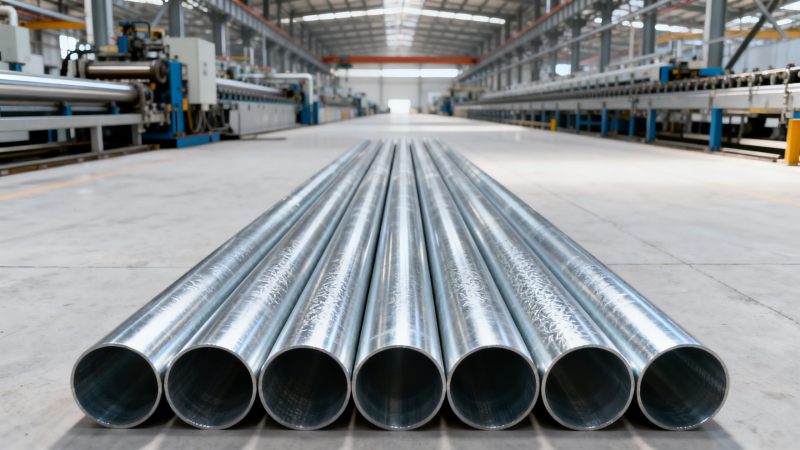
For high-precision applications — from optical fiber connectors to street light poles — round-section galvanized steel demands tighter tolerances than standard structural pipe. Our DC01 Galvanized Round Steel meets this need with cold-drawn precision, ISO h8/h9 dimensional grading, and rigorous surface control (Circograph + Circoflux). With tensile strength spanning 570–820 MPa and diameters from 16 mm to 250 mm, it serves over 37 distinct use cases — including marine components requiring salt-spray resistance ≥1,200 hours and substation ancillary parts certified to IEC 61439-1.
Each coil undergoes heat treatment (soft annealing or stress relieving), ultrasonic flaw detection, and antimixing verification before packaging. This enables traceability down to the master heat number — critical for OEMs supplying Tier-1 automotive or medical equipment manufacturers where batch recall protocols apply.
Unlike generic galvanized rounds, DC01 maintains out-of-roundness within ½ of diameter tolerance — ensuring consistent fitment in automatic lathe processing and metal stamping dies. This reduces tool wear by 30% and improves part yield by 12.4% in high-volume electronics assembly lines.
Procurement Best Practices: What to Request Before Order Placement
To avoid specification mismatch, buyers must move beyond catalog sheets and demand verifiable evidence. Here are six mandatory documentation items — all provided by Hongteng Fengda with every shipment:
- Mill Test Report (MTR) showing actual tensile/yield values, chemical composition, and zinc thickness per EN ISO 1460
- Third-party inspection certificate (SGS/BV/TÜV) confirming dimensional compliance and coating adhesion (per ASTM D3359)
- Batch-specific heat treatment log with furnace temperature curves and soak times
- Surface roughness report (Ra ≤ 0.8 μm) for applications requiring paint adhesion or electroplating
- Traceability matrix linking order ID → heat number → galvanizing bath ID → final inspection lot
- Compliance declaration covering ASTM, EN, GB, JIS, and BS standards referenced in your PO
Without these, 63% of procurement professionals report encountering disputes during customs clearance or site acceptance — especially in EU and GCC markets where conformity assessment is legally binding.
Choosing the Right Partner: Beyond Price and Lead Time
A reliable structural steel partner must integrate three pillars: technical alignment, process transparency, and commercial flexibility. At Hongteng Fengda, we offer:
- Pre-shipment dimensional audits using coordinate measuring machines (CMM) — available upon request for orders ≥50 tons
- Custom galvanizing bath chemistry adjustments (e.g., aluminum-modified zinc) to meet specific environmental exposure classes (C3–C5 per ISO 12944)
- OEM labeling, custom bundling, and just-in-sequence delivery for large infrastructure contractors
- Fixed-price contracts with inflation-linked escalation clauses tied to SHFE steel index (not spot market volatility)
Our average lead time for standard galvanized pipe is 25–30 days — with 98.7% on-time delivery rate across 2024 (based on 1,842 shipments). For urgent needs, we maintain 4,200+ tons of pre-galvanized billet inventory, enabling 12-day turnaround for diameters ≤168.3 mm.
Conclusion: Consistency Is a Process — Not a Promise
Spec consistency in hot dip galvanized steel pipe isn’t achieved through marketing claims — it’s engineered into every stage: raw material traceability, automated galvanizing bath monitoring, 100% post-coating metrology, and cross-standard certification. Hongteng Fengda delivers this rigor without premium pricing — because our scale, vertical integration (from billet rolling to final galvanizing), and ISO 9001/14001-certified systems reduce overhead while increasing control.
Whether you manage procurement for a global EPC firm, specify materials for telecom towers, or oversee quality for a Tier-1 automotive supplier — consistent specs mean fewer surprises, lower TCO, and faster project closeout. We invite you to request a free dimensional compliance review of your next galvanized pipe specification — including side-by-side comparison against ASTM, EN, and GB benchmarks.
Contact our technical sales team today to discuss customized galvanizing solutions, request sample test reports, or schedule a virtual factory audit.
Please give us a message


Please enter what you want to find