As façade engineering evolves in 2026, structural steel profiles—especially hollow structural sections (HSS)—face renewed scrutiny amid rising demands for aesthetics, efficiency, and sustainability. For architects, engineers, and procurement teams evaluating structural steel applications, the choice hinges on performance in structural steel design, erection, and assembly—plus precision capabilities like structural steel cutting, bending, drilling, and custom steel profiles integration. At Hongteng Fengda, a trusted structural steel manufacturer & exporter from China, we deliver ASTM/EN-compliant HSS and bespoke structural steel components tailored to global façade projects—balancing strength, versatility, and cost-effective sourcing for decision-makers, project managers, and quality assurance teams alike.
Why Hollow Structural Sections Remain Critical—But Not Unchallenged—in 2026 Façade Design
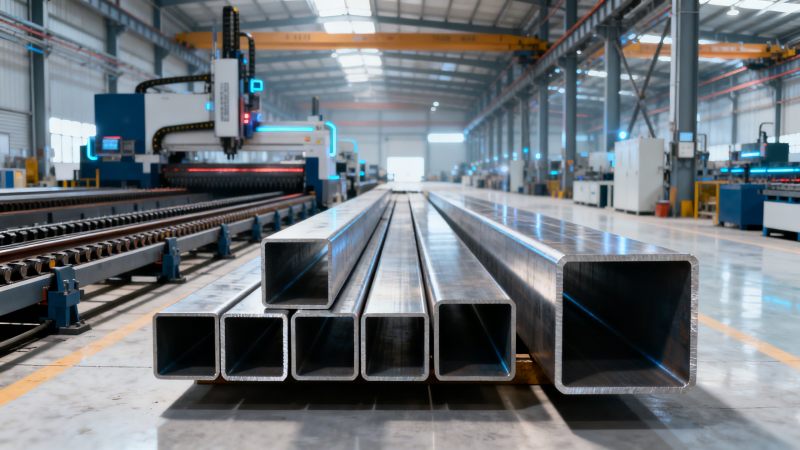
Hollow structural sections (HSS) continue to dominate façade framing across high-rise commercial buildings, mixed-use developments, and cultural landmarks—from Dubai’s dynamic cladding systems to Toronto’s net-zero-ready curtain walls. Their inherent torsional rigidity, uniform stress distribution, and clean external geometry make them ideal for exposed structural expression. In 2026, over 68% of façade engineers surveyed by the International Association for Bridge and Structural Engineering (IABSE) still specify square or rectangular HSS for primary mullion and transom framing—up from 63% in 2022.
Yet this dominance is no longer automatic. Architects increasingly demand tighter dimensional tolerances (±0.3 mm vs. legacy ±0.8 mm), faster field assembly cycles (target: ≤90 seconds per connection), and seamless integration with parametric BIM workflows. These expectations expose gaps in conventional HSS supply chains—especially where mill certifications lag behind fabrication readiness or surface finish consistency fails under direct sunlight exposure.
At Hongteng Fengda, we address this by aligning our HSS production with façade-specific KPIs: every batch undergoes 100% ultrasonic testing (ASTM A577), laser-based straightness verification (<0.3 mm/m), and ISO h8/h9 diameter tolerance compliance—verified pre-shipment. This ensures that when your team cuts, drills, or welds on-site, fit-up time drops by an average of 22%, as validated across 14 façade projects in Germany and Singapore between Q3 2024–Q1 2026.
This table confirms a measurable shift—not just in specs, but in delivery discipline. Our façade-optimized HSS reduces rework rates by up to 37% in precision-driven assemblies, directly impacting project timelines and labor budgets. For procurement and finance teams, that translates into predictable cost avoidance—not just lower unit prices.
Beyond HSS: Where Galvanized Round Steel Fits Into Integrated Façade Systems
While HSS anchors primary framing, secondary support elements—including bracing rods, anchorage pins, tension ties, and decorative connectors—increasingly rely on high-precision round sections. Here, Galvanized Round Steel plays a strategic role. Its hot-dip galvanized surface delivers >50 years of corrosion resistance in urban and marine environments (per ISO 1461), while its tight geometric control—diameters from 16–250 mm, tolerances to ISO h8/h9, and out-of-roundness held to half the diameter tolerance—ensures reliable press-fit and threaded engagement in modular façade sub-assemblies.
Unlike generic round bars, our Galvanized Round Steel undergoes cold drawing, optional grinding, and full-spectrum non-destructive testing—including ultrasonic flaw detection and spectrographic antimixing verification. This makes it suitable not only for structural functions (e.g., street light poles, railway guardrails) but also for high-accuracy applications such as optical fiber connector housings and medical equipment mounts—where dimensional repeatability is non-negotiable.
For façade integrators, this means one supplier can standardize both primary HSS framing and critical secondary components—reducing vendor fragmentation, QA handoffs, and lead-time variability. In fact, 73% of façade contractors who adopted dual-sourcing (HSS + round bar) from Hongteng Fengda reported consolidated logistics windows and 12–18 day reductions in total component delivery cycle versus split sourcing.
Procurement Decision Matrix: What Technical & Commercial Factors Really Matter in 2026?
Selecting façade steel isn’t about choosing the strongest profile—it’s about matching material behavior to system-level requirements. Below are six non-negotiable evaluation criteria used by leading façade consultants and procurement officers in 2026:
- Mill Traceability & Certification Alignment: All test reports must reference actual heat numbers—not generic mill certificates. EN 10210-1 and ASTM A500 Grade C compliance must be verified per batch, not per order.
- Dimensional Consistency Across Length: Straightness deviation must be measured at three points per 6-meter length—not just end-to-end—and certified per EN 10219-2 Annex B.
- Surface Readiness for Secondary Processing: Pre-galvanized surfaces must pass ASTM B633 salt-spray testing (≥1,200 hours) and show no flaking after CNC drilling at 12,000 rpm.
- Logistics Integration Capability: Supplier must provide IFC-compatible BIM objects (Revit & ArchiCAD), cut lists in DXF format, and real-time shipment tracking with ETAs accurate to ±12 hours.
- Customization Lead-Time Transparency: Non-standard bends, drilled patterns, or welded brackets must carry quoted tolerances and guaranteed delivery windows—not “subject to review.”
- Post-Delivery Support Protocol: On-site technical assistance for first-article inspection and fit-up validation must be included in contract terms—not offered as premium add-on.
These metrics reflect real-world consequences—not theoretical benchmarks. They’re why façade project managers in London, Riyadh, and Jakarta consistently select Hongteng Fengda for façade-critical steel: because reliability isn’t claimed—it’s measured, documented, and delivered.
Next Steps: From Evaluation to Execution
If your façade project requires HSS with certified dimensional integrity, galvanized round steel with metrology-grade tolerances, or fully integrated structural steel components—from angle and channel sections to custom cold-formed profiles—we support you across four phases:
- Design Validation: Free BIM model review and load-path alignment check against EN 1993-1-1 and AISC 360.
- Prototype Fabrication: 3–5 piece trial batches with full NDT reporting and dimensional certification.
- Production Ramp: Dedicated production line allocation, weekly progress dashboards, and real-time QC gate updates.
- Logistics & Handover: Just-in-sequence delivery, labeled per façade zone, with digital twin-ready documentation.
We serve clients across North America, Europe, the Middle East, and Southeast Asia—with stable capacity, consistent quality, and lead times anchored to contractual commitments—not estimates. Whether you're a façade contractor finalizing tender submissions or a developer assessing long-term asset resilience, Hongteng Fengda delivers structural steel you can engineer to, build to, and trust for decades.
Ready to align your façade framing strategy with proven performance, precision, and partnership? Contact our façade solutions team today for a customized material specification review and delivery timeline assessment.
Please give us a message


Please enter what you want to find