Planning for 2026 steel procurement in the Philippines requires more than checking the latest Angle Steel price per ton Philippines data. Buyers and engineers must also compare quality grades such as S355JR, assess Galvanized options, and benchmark related products like Steel Beam and Steel Sheet Pile. This guide helps procurement teams, project managers, and distributors evaluate pricing trends, supplier factors, and cost-saving opportunities with practical market insight.
What Will Angle Steel Price per Ton in the Philippines Likely Look Like in 2026?
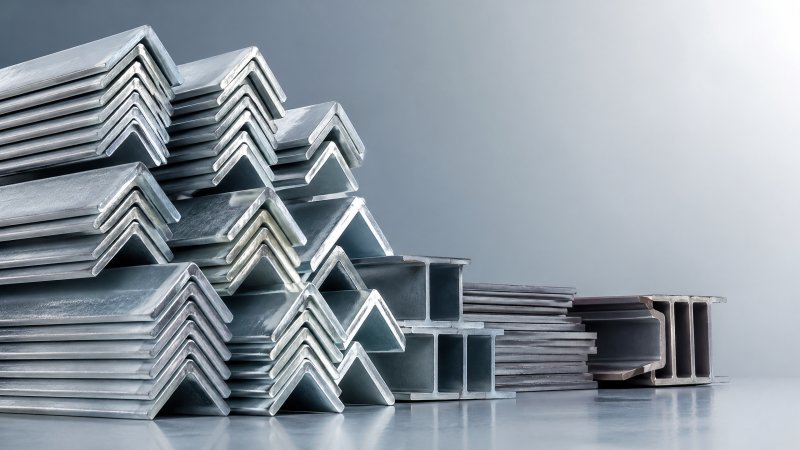
For most buyers, the key question is simple: how much will angle steel cost per ton in the Philippines in 2026, and what will actually affect the final landed price? The practical answer is that prices will continue to depend on global steel raw material trends, China export supply, freight costs, peso-dollar exchange movement, coating requirements, and project specification grade.
In the Philippine market, angle steel is widely used in warehouses, transmission structures, fabrication workshops, support frames, industrial buildings, utility projects, and general construction. Because of that broad demand, procurement teams should expect 2026 pricing to remain sensitive to:
- International billet and hot rolled steel prices
- China mill export offers
- Ocean freight to Manila, Cebu, Davao, and other ports
- Import duties, taxes, and customs handling
- Grade requirements such as mild steel versus S355JR
- Surface treatment, especially galvanized angle steel
- Order volume, production lead time, and packaging method
So, anyone searching for Angle Steel price per ton Philippines in 2026 is usually not looking for a single fixed number. They are trying to build a realistic budget, compare sourcing options, and reduce procurement risk before placing an order.
What Buyers in the Philippines Care About More Than the Headline Price
Experienced buyers know that the lowest quotation is not always the lowest total cost. For angle steel imports, the most important concerns usually include the following:
1. Grade and mechanical performance
Not all angle steel is interchangeable. Structural projects may require specific standards such as ASTM, EN, JIS, or GB. If a project calls for higher strength grades like S355JR, the price per ton will usually be higher than standard mild steel angles. Engineers and quality teams should confirm:
- Yield strength and tensile strength requirements
- Dimensional tolerances
- Chemical composition compliance
- Mill test certificates and traceability
2. Galvanized or black angle steel
For outdoor, coastal, and high-humidity environments in the Philippines, galvanized angle steel is often preferred. However, zinc coating adds processing cost, weight variation, and lead time. Buyers should compare:
- Hot-dip galvanized angle steel price per ton
- Black angle steel plus local galvanizing cost
- Required coating thickness and corrosion resistance
3. Actual delivered cost, not just EXW or FOB
A supplier may offer an attractive factory price, but the final landed cost can change significantly after freight, insurance, customs clearance, inland transport, and unloading. For Philippine importers, the best comparison format is usually:
- FOB China port
- CFR Philippines port
- CIF Philippines port
- Landed warehouse cost per ton
4. Reliable lead time
Project managers and distributors often lose more money from delays than from a modest price difference. Stable production scheduling, clear shipment planning, and realistic delivery commitments matter as much as the unit price.
Key Factors That Will Influence 2026 Angle Steel Prices
To make a better purchasing decision, it helps to break down the pricing logic behind angle steel in the Philippine market.
Raw material and mill production costs
Angle steel prices are directly linked to steel billet and hot rolled feedstock prices. If upstream raw materials rise, finished structural sections usually follow. Energy costs and environmental production controls in China may also affect quotations.
Specification size and section weight
Larger equal angles and unequal angles typically have different per-ton pricing depending on rolling efficiency and availability. Non-standard sizes may also involve extra production planning.
Surface treatment
Galvanized material costs more than untreated angle steel because of zinc consumption, additional processing, and quality inspection requirements.
Order volume
Container optimization and mill batching can improve pricing. Small trial orders may carry a higher cost per ton compared with full-container or project-volume orders.
Freight and exchange rates
For importers in the Philippines, shipping market fluctuations and USD/PHP exchange rates can quickly change procurement economics, especially for projects with tight margins.
How to Evaluate Supplier Quotes Without Missing Hidden Risk
When comparing supplier offers for 2026, buyers should use a structured checklist instead of choosing based only on the quoted ton price.
- Standard compliance: ASTM, EN, JIS, or GB as required by the project
- Material grade: confirm whether the quote is for standard carbon steel, S275, S355JR, or another grade
- Weight basis: theoretical weight or actual weight settlement
- Zinc coating details: if galvanized, confirm coating standard and average thickness
- Tolerance control: dimension, straightness, angle precision
- Documentation: MTC, inspection report, packing list, certificate of origin
- Shipment method: break bulk or containerized shipment
- Lead time: production days plus transit days
- Claims process: handling for shortage, damage, or non-conformity
This is especially important for procurement teams serving government, infrastructure, industrial, and EPC projects, where non-compliant steel may create major downstream cost and approval problems.
How Related Steel Products Affect Procurement Strategy
In many projects, angle steel is not purchased alone. Buyers often compare it with other structural materials such as steel beam, channel steel, and steel sheet pile, depending on the design requirement. Looking across related products can reveal where costs should be optimized.
For example:
- If the project requires heavier load-bearing capacity, a steel beam may provide better structural efficiency than oversized angle sections.
- If retention or foundation work is involved, steel sheet pile pricing may affect the total structural package budget more than angle steel alone.
- If a project includes fabricated assemblies, combining multiple steel products under one supplier may reduce coordination cost and delivery risk.
Some buyers also review other metal products used in industrial systems, enclosures, transport components, food-related equipment, or corrosion-sensitive environments. In such cases, materials selection may expand beyond carbon structural steel. For example, 202 Stainless Steel Coil can be relevant for applications requiring good ductility, corrosion resistance, and stable toughness across high and low temperature environments. It is commonly used in medical equipment construction, chemical processing, food industry, agriculture and ship parts, kitchen supplies, vehicles, trains, airplanes, conveyor belts, and fastener-related manufacturing. With tensile strength of at least 520 MPa and yield strength of at least 275 MPa, it serves very different use cases from structural angle steel, but this comparison helps technical and commercial teams select the right material family instead of over-specifying one product for every application.
Best Ways to Control Angle Steel Procurement Cost in 2026
If your goal is to secure a competitive Angle Steel price per ton Philippines outcome in 2026, the following actions usually deliver better results than simply waiting for a lower market quote:
Plan early around project schedule
Last-minute buying reduces supplier options and weakens price negotiation power. Early planning allows time for spec confirmation, volume consolidation, and logistics coordination.
Standardize specifications where possible
Using common sizes and standard grades can reduce production complexity and improve availability.
Bundle structural steel requirements
If your project needs angle steel, channel steel, beams, and custom fabricated components, sourcing them from one capable supplier can improve consistency and reduce transaction cost.
Clarify quality requirements before RFQ
Many price gaps come from different assumptions. A complete RFQ should define size, grade, standard, coating, quantity, tolerance, packing, destination port, and document requirements.
Compare total value, not only base price
A stable supplier with dependable quality and on-time delivery may save far more than a lower-priced source with inconsistent execution.
What Type of Supplier Is Best for Philippine Importers and Distributors?
For many importers, distributors, contractors, and industrial users, the best supplier is not merely the cheapest mill or trader. The better partner is one that can consistently support specification compliance, customized supply, shipment reliability, and problem resolution.
A professional structural steel manufacturer and exporter can offer advantages such as:
- Stable production capacity for ongoing project demand
- Support for angle steel, channel steel, steel beams, and customized structural components
- Compliance with international standards including ASTM, EN, JIS, and GB
- Better quality control and inspection consistency
- OEM and project-based supply flexibility
- Reduced sourcing risk through coordinated export service
For buyers in the Philippines, this is especially useful when balancing budget pressure, engineering specifications, and project deadlines.
Final Takeaway for 2026 Procurement Planning
The most useful way to approach Angle Steel price per ton Philippines in 2026 is to treat it as a procurement decision, not just a price lookup. The real buying question is whether the quoted material meets your grade, coating, timeline, and total delivered cost targets.
For procurement teams, engineers, distributors, and decision-makers, the smartest approach is to compare quotations based on standard compliance, galvanized versus black finish, landed cost, supplier reliability, and related product strategy. That will produce a more accurate budget and a lower-risk purchase outcome than focusing on ton price alone.
If you are planning imports or project supply for 2026, early specification review and supplier evaluation will give you the strongest position on both cost control and execution reliability.
Please give us a message


Please enter what you want to find