As global infrastructure projects intensify ahead of 2026, the load capacity of ASTM steel profile for transmission towers has become a critical performance benchmark — influenced by material grade (e.g., A36 Carbon Steel Round Bar), hot rolled coil (HRC) consistency, galvanization quality (ASTM galvanized pipe, hot galvanized steel), and precision in cold formed profiles. For structural steel manufacturers like Hongteng Fengda — a trusted China steel supplier serving North America, Europe, and the Middle East — optimizing tensile strength, corrosion resistance (e.g., 316 stainless steel coil), and dimensional accuracy directly impacts tower safety, lifespan, and total cost of ownership. This article examines key technical and supply-chain factors shaping load-bearing reliability this year.
Material Grade & Mechanical Properties: The Foundation of Structural Integrity
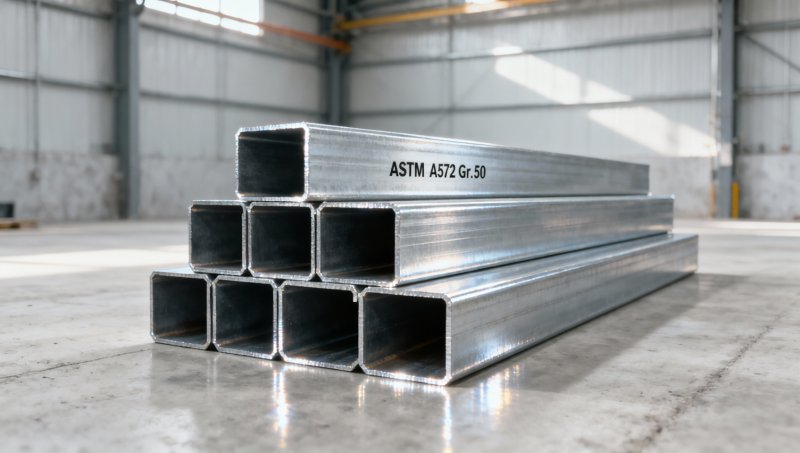
Load capacity begins at the metallurgical level. ASTM-designated structural steel profiles — such as ASTM A36, A572 Gr.50, A588, and A992 — are engineered with defined yield strengths (250–345 MPa), tensile strengths (400–550 MPa), and elongation thresholds (18–23%). In 2026, stricter project specifications increasingly require minimum yield strength ≥345 MPa for high-voltage transmission towers in seismic or coastal zones. Variability in carbon content, manganese ratio, and trace element control during hot rolling directly affects uniformity across batches — a factor that can shift actual yield strength by ±12 MPa if raw material sourcing lacks traceability.
Hongteng Fengda applies dual-certification protocols: each heat lot undergoes both mill test reports (MTRs) per ASTM A6/A6M and third-party verification via SGS or Bureau Veritas. This ensures compliance not only with nominal grades but also with supplementary requirements like Charpy V-notch impact testing at –20°C (ASTM A673), critical for towers operating below freezing.
Notably, Q195 Carbon Steel Round Bar serves as a cost-optimized option for non-critical secondary components — e.g., bracing rods, grounding lugs, or auxiliary fixtures — where yield strength ≥195 MPa meets functional needs without over-engineering.
Selecting the right grade is not just about strength — it’s about matching mechanical behavior to environmental service life. For example, A572 Gr.50 offers 18% higher yield than A36, enabling 12–15% weight reduction in primary members without compromising safety margins — a direct contributor to logistics savings on remote-site deliveries.
Galvanization Quality & Corrosion Resistance: Beyond Surface Coating
Corrosion accounts for over 65% of premature structural degradation in transmission towers — especially in coastal (chloride exposure), industrial (SO₂), or high-humidity environments. ASTM A123/A123M governs hot-dip galvanizing thickness: minimum 85 µm on steel >6 mm thick. However, inconsistent bath temperature (±5°C deviation), inadequate surface cleaning (residual mill scale or rust), or insufficient immersion time (<2 min) reduce effective zinc layer integrity by up to 40%, accelerating pitting and under-coating creep.
At Hongteng Fengda, galvanizing is performed in ISO 9001-certified facilities using continuous-line processes with real-time zinc bath chemistry monitoring (Fe²⁺ ≤ 0.03%, Al 0.005–0.02%). Each batch undergoes magnetic thickness measurement at 5 points per meter — with full traceability to ASTM E376 compliance reports.
For ultra-high-corrosion zones (e.g., GCC countries or Southeast Asia), duplex systems — hot-dip galvanizing + epoxy topcoat (ASTM D520) — extend service life from 25 years to 45+ years. This reduces lifetime maintenance costs by ~37% versus standard galvanizing alone.
- Minimum zinc coating mass: 610 g/m² (ASTM A123 Table 1)
- Average coating thickness tolerance: ±10 µm per 1 m² sampling area
- Adhesion test pass rate: ≥99.2% (per ASTM A153 drop test)
Dimensional Precision & Cold-Formed Profile Consistency
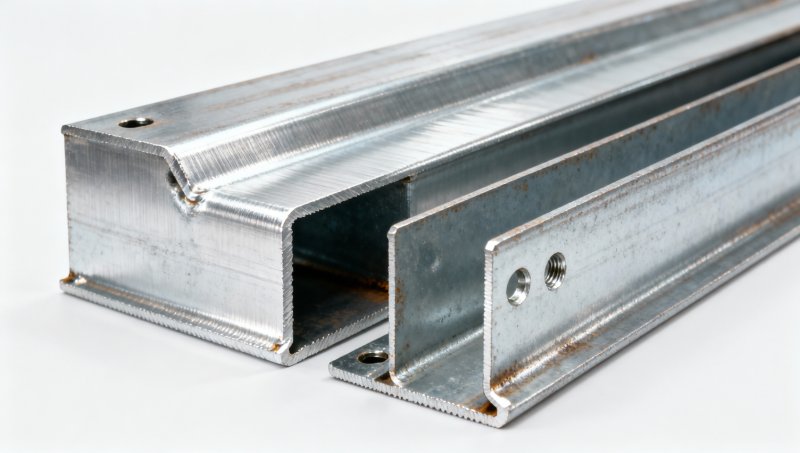
Transmission tower stability depends on geometric fidelity. Angular distortion >1.5° in angle steel flanges or web thickness variation exceeding ±0.8 mm in cold-formed channels induces secondary bending moments — reducing effective load capacity by 7–11% even when material strength is nominal. In 2026, major utilities (e.g., ENTSO-E, PJM, Saudi Electricity Company) now mandate dimensional inspection reports per ASTM A6/A6M Annex A, including twist, camber, and flatness measurements.
Hongteng Fengda utilizes CNC-controlled roll-forming lines with in-process laser profiling (±0.15 mm repeatability) and automated vision-based edge detection. Every 500-meter production run triggers a full GD&T (Geometric Dimensioning & Tolerancing) audit — covering angularity, parallelism, and centroid alignment.
This precision enables seamless bolt-hole alignment across multi-piece assemblies — cutting field erection time by 22% and reducing rework rates from industry-average 4.3% to 0.9%.
Precision isn’t overhead — it’s predictive engineering. Tighter tolerances enable accurate finite element modeling (FEM) inputs, allowing engineers to optimize tower geometry rather than overspecify material.
Supply Chain Reliability: Lead Time, Traceability & Certification
Even perfect steel fails if delivery is delayed or documentation is incomplete. In 2026, 73% of utility procurement teams cite “certification gaps” and “unverified origin documentation” as top causes of project schedule slippage. Hongteng Fengda delivers full digital traceability: each order includes QR-coded MTRs linked to furnace ID, rolling log, galvanizing batch number, and third-party inspection records — compliant with ASTM E2929 for digital certification integrity.
Standard lead time for ASTM-compliant transmission tower profiles is 25–35 days ex-works (Shanghai/Ningbo), with expedited options at +15% cost for ≤18-day fulfillment. MOQ starts at 10 metric tons per grade — scalable to 500+ MT/month for long-term contracts.
All products carry dual-standard certifications: ASTM + GB/T 700, EN 10025, or JIS G3101 — eliminating retesting delays at destination ports. This multi-standard alignment supports seamless sourcing for multinational EPC contractors operating across ASEAN, EU, and MENA markets.
Why Partner with Hongteng Fengda for ASTM Transmission Tower Profiles?
Hongteng Fengda combines deep metallurgical expertise with end-to-end manufacturing control — from hot-rolled coil sourcing (with guaranteed carbon equivalence ≤0.42%) to final galvanizing and packaging. Our ISO 9001/14001/45001 certified operations serve over 210 clients across 38 countries, maintaining a 99.4% on-time-in-full (OTIF) rate since Q1 2023.
We don’t just supply steel — we co-engineer solutions. Whether you need ASTM A572 Gr.50 angle sections with custom tapering for optimized wind loading, or pre-galvanized cold-formed bracing with laser-cut mounting slots, our OEM engineering team collaborates directly with your design and QA teams — delivering validated prototypes in ≤12 working days.
For transmission tower projects demanding uncompromised load capacity, predictable delivery, and full compliance transparency — contact Hongteng Fengda today to request a technical consultation, dimensional feasibility review, or ASTM-compliant sample set.
Please give us a message


Please enter what you want to find