When sourcing A36 Carbon Steel Round Bar, buyers often find noticeable price differences between suppliers, regions, and order volumes. For business evaluators, these gaps are rarely random—they usually reflect variations in raw material costs, production methods, quality standards, processing options, and export service capability. Understanding where the price comes from is essential for balancing cost, quality, and supply reliability in structural steel procurement.
In practical B2B purchasing, even a gap of USD 30–80 per ton can materially affect project budgeting when annual demand reaches 500–2,000 tons. At the same time, a lower quote is not always a lower total cost. Differences in chemistry control, rolling tolerance, document compliance, packaging, and delivery stability can easily create hidden costs later in fabrication or installation.
For evaluators comparing Chinese exporters, stockists, and regional mills, the key question is not simply “Who offers the cheapest A36 Carbon Steel Round Bar?” but “What is included in the quoted price, and what supply risk remains outside the quotation?” That distinction is where better procurement decisions are made.
The Main Cost Drivers Behind A36 Carbon Steel Round Bar Pricing
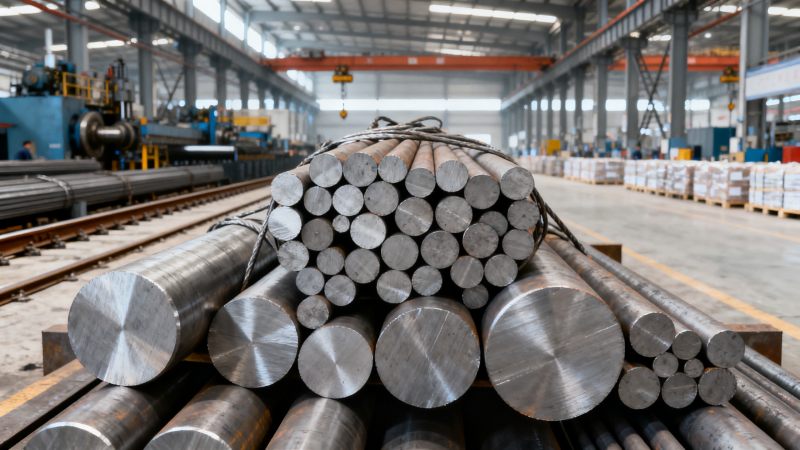
A36 Carbon Steel Round Bar is widely used in structural fabrication, base plates, anchor components, machinery support parts, and general engineering applications. Although the grade is considered standard, pricing can still vary significantly because the finished bar cost is built from several layers: billet or scrap input, rolling method, tolerance control, finishing service, inspection level, and logistics execution.
Raw material and steelmaking route
The first major variable is raw material cost. In most market cycles, the steelmaking input accounts for roughly 55%–75% of the finished round bar price. If a mill uses higher-cost billets, tighter chemistry control, or purchases during a rising scrap market, the quotation will move accordingly. Monthly swings are common, and in active markets, price adjustments may happen every 7–15 days.
Why this matters for business evaluators
A quote issued in Week 1 may no longer be valid by Week 3, especially for orders above 100 tons. Evaluators should confirm whether the offer is linked to a raw material validity window, whether there is a price-lock mechanism, and whether substitution between billet sources is controlled under the agreed standard.
Size range, rolling efficiency, and yield loss
Not all diameters cost the same to produce. Small diameters may require different rolling passes, while larger diameters may reduce yield efficiency depending on the mill setup. Bars outside the most common production range often carry a premium. In addition, fixed-length requirements such as 5.8 m, 6 m, 9 m, or 12 m can create extra cutting loss compared with random length supply.
For example, if a buyer requests strict cut lengths with low tolerance, total yield loss can increase by 1.5%–4%. That cost is usually reflected in the unit price. This is one reason why two suppliers quoting the same grade may still differ on a per-ton basis.
The table below shows common pricing variables that evaluators should compare before treating one quotation as directly equivalent to another.
The main takeaway is that pricing gaps often come from specification detail rather than arbitrary markup. A lower base number may exclude processing, testing, or tighter dimensional control that another supplier has already included.
Testing, certification, and documentation depth
Documentation also affects price. A36 Carbon Steel Round Bar supplied with basic mill certification is different from material delivered with full heat traceability, third-party inspection coordination, mechanical test records, and export-compliant packing lists. For projects in North America, Europe, or the Middle East, document completeness can influence customs clearance, contractor approval, and final acceptance.
In many transactions, enhanced inspection and documentation add a modest premium, but they can reduce far larger downstream costs. Rejected material, delayed site release, or missing traceability on 1 shipment can erase the savings from a seemingly low quotation.
Why Supplier Capability Creates Real Price Separation
Business evaluators should also distinguish between mill price and supply-chain price. Two companies may both offer A36 Carbon Steel Round Bar, but one may only trade spot material while another manages manufacturing schedules, quality checks, and export coordination. That difference directly affects lead time reliability, replacement handling, and communication efficiency.
Production stability and order execution
Stable production capacity matters most when procurement is tied to project milestones. If a supplier can support rolling plans, batch consistency, and shipment booking within a 2–5 week window, the buyer faces less delay risk. If the supplier depends entirely on market collection from multiple sources, chemistry variation, mixed heats, and schedule uncertainty become more likely.
For global buyers, this is where an experienced structural steel manufacturer and exporter adds value. A company with modern production management, quality control, and familiarity with ASTM, EN, JIS, and GB requirements can often provide more consistent commercial performance than a low-price seller with limited execution depth.
Export service is part of the price
Freight coordination, export packing, document accuracy, and response speed are often invisible in the first quote comparison. Yet these services affect the landed cost and procurement workload. An incomplete invoice, wrong marking, or delayed certificate can cost days at port. For project-based buyers, a 3–7 day delay may disrupt fabrication planning or site installation sequencing.
Suppliers with strong export experience usually price in a more disciplined service package. That may not always be the cheapest offer on paper, but it can be more competitive on total procurement cost.
A related procurement comparison in structural steel
The same logic applies across other structural products. For example, buyers evaluating Steel Sheet Piles often see price gaps based on grade selection such as S275, S355, S390, S430, SY295, SY390, or ASTM A690, as well as on production standards including EN10248, EN10249, JIS5528, JIS5523, and ASTM. When single lengths can extend to over 80 m and project use includes deep water construction or cofferdam formation, service capability, dimensional control, and certification become just as important as the headline unit price.
In both sheet piling and round bar procurement, value comes from matching specification, application risk, and delivery execution—not from comparing tonnage price alone.
The table below helps evaluators separate low-price offers from low-risk offers when reviewing suppliers for A36 Carbon Steel Round Bar.
A useful procurement rule is to quantify likely downstream cost exposure. If a supplier is USD 40 per ton cheaper on a 300-ton order, the nominal saving is USD 12,000. But if one shipment delay stops a fabrication sequence or creates re-inspection cost, the real advantage can disappear quickly.
How to Evaluate Quotes More Accurately
To compare A36 Carbon Steel Round Bar quotations properly, evaluators should use a structured review process. This avoids false comparisons between offers that appear similar but differ in technical scope or execution commitments.
Five checks before approving a supplier
- Confirm grade and equivalent standard scope, including whether the quote is strictly ASTM A36 or cross-referenced with another market standard.
- Check diameter range, length tolerance, straightness expectations, and whether machining or cutting is included.
- Review testing and document package: MTC, heat number traceability, third-party inspection need, and marking requirements.
- Clarify trade terms such as EXW, FOB, CFR, or CIF, because landed cost differences may be 5%–12% depending on route and timing.
- Ask for delivery commitment by batch, not only by total order, especially for orders above 200 tons or multi-size combinations.
These five checks help turn a simple price comparison into a commercial risk assessment. That is usually the right approach for procurement teams supporting construction, manufacturing, and industrial projects.
Common reasons a low quote later becomes expensive
- Material is sourced from mixed batches, increasing variation in chemistry or mechanical performance.
- Quoted lead time is based on estimate, not confirmed rolling or stock availability.
- Inspection scope is minimal, causing issues at receiving or fabrication stage.
- Packing, marking, or export documents are incomplete, creating avoidable logistics costs.
For business evaluators, the best procurement outcome often comes from the supplier that offers the clearest technical scope, stable quality execution, and reliable delivery support at a commercially reasonable level.
What Global Buyers Should Expect from a Reliable Chinese Structural Steel Supplier
China remains a major source for structural steel products because of manufacturing scale, export experience, and flexible production support. However, supplier selection should go beyond country of origin. Buyers should assess whether the exporter can support standard and OEM requirements, provide consistent quality control, and communicate effectively across specification review, production, and shipment stages.
Hongteng Fengda operates as a structural steel manufacturer and exporter serving global construction, industrial, and manufacturing projects. With experience in angle steel, channel steel, steel beams, cold formed steel profiles, and customized structural steel components, the company supports buyers who need both standard specifications and tailored solutions. This kind of supply model is especially useful when round bar procurement is part of a broader structural package rather than a single isolated item.
What evaluators should ask during supplier review
Ask how quality is controlled from raw material to final dispatch, what international standards can be supported, and how non-standard dimensions or OEM requests are managed. Also confirm document response time, typical export regions, and how the supplier handles schedule changes. A response cycle of 24–48 hours and a realistic production plan are usually better indicators of reliability than an aggressively low opening quote.
If the project includes multiple structural items, consolidating with one qualified exporter may reduce sourcing complexity, communication risk, and freight fragmentation. Even when the unit price of one line is slightly higher, the total project cost may improve through better coordination and fewer disruptions.
Final Decision Guidance for Business Evaluators
Price gaps in A36 Carbon Steel Round Bar usually come from identifiable commercial and technical factors: raw material timing, diameter and length requirements, production efficiency, testing scope, packaging, shipment terms, and supplier execution strength. The most effective evaluation method is to compare not only cost per ton, but also cost per compliant delivered ton within the required schedule.
For buyers seeking dependable structural steel sourcing from China, a capable manufacturing and export partner can help reduce supply uncertainty, improve specification control, and support project delivery across different international markets. If you are reviewing suppliers for A36 Carbon Steel Round Bar or related structural steel products, now is a good time to discuss your specification, order volume, delivery target, and inspection requirements in detail.
Contact us today to get a tailored quotation, review technical details, and explore a sourcing plan that balances price, quality, and delivery reliability.
Please give us a message


Please enter what you want to find