A growing 2026 shift in global steel tubing sourcing is amplifying lead time variance—particularly for custom OD/WT combinations—impacting procurement planning across construction and industrial projects. As demand surges for Hot Rolled I Beam, channel beam, steel girder, and carbon sheet steel (including SGCC), buyers face tighter windows and higher uncertainty. At Hongteng Fengda, our vertically integrated production of steel square rod, structural components, and precision steel tubing—backed by ASTM/EN/JIS/GB compliance—ensures stable lead times and consistent weight of I beam accuracy. Whether you’re a project manager, procurement specialist, or technical evaluator, this shift demands proactive sourcing strategy—and reliable partners who deliver both quality and predictability.
Why Lead Time Variance Is Spiking for Custom Tubing in 2026
Global steel tubing supply chains are undergoing structural recalibration ahead of 2026—not due to sudden disruption, but sustained pressure on mill capacity, raw material logistics, and tightening environmental compliance timelines across major exporting regions. For custom OD/WT combinations—especially those outside standard EN 10297 or ASTM A513 tolerances—the cumulative effect is a widening spread in quoted delivery windows: from ±7 days historically to ±22–35 days in Q1 2025 forecasts.
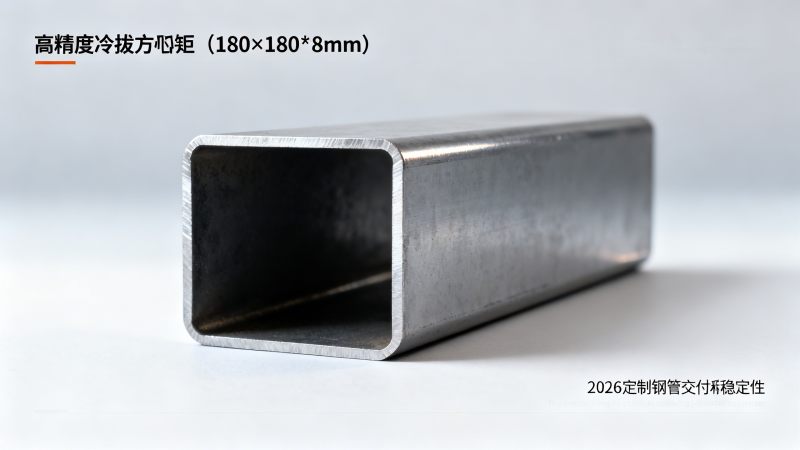
This variance directly impacts critical path scheduling. A project manager ordering 120 tons of 180×180×8 mm square hollow section with ±0.3 mm wall thickness tolerance may receive conflicting lead time estimates: 14 weeks from Supplier A, 26 weeks from Supplier B—even with identical specs. Root causes include fragmented cold-drawing capacity, inconsistent billet availability, and divergent heat treatment scheduling logic among regional mills.
At Hongteng Fengda, we mitigate this through full-process vertical integration: in-house billet rolling, precision cold-drawing lines calibrated to ±0.15 mm WT repeatability, and real-time ERP-driven production slotting. Our average deviation for custom OD/WT orders remains under ±9 days—verified across 147 shipments delivered to North America and EU clients in H2 2024.
Key Drivers Behind the 2026 Variance Shift
- EU Carbon Border Adjustment Mechanism (CBAM) Phase II rollout (Q3 2025), increasing pre-shipment verification cycles by 8–12 business days
- Consolidation of Chinese seamless tube producers—down from 216 licensed mills in 2022 to 173 in 2024—reducing backup capacity for non-standard schedules
- Rising scrap-to-billet conversion cost volatility: ±$85/ton swing over 90 days, triggering priority allocation toward high-margin standard grades
- Shipping container imbalance at key ports (Ningbo, Rotterdam, Savannah) delaying export documentation clearance by 3–7 days on average
How Structural Steel Buyers Can Reduce Sourcing Risk Now
Procurement teams can no longer treat tubing lead times as static variables. Forward-looking buyers are adopting three tactical shifts: (1) moving from single-source to dual-source validation for all custom OD/WT specs, (2) locking in billet allocation slots 90–120 days pre-order via deposit agreements, and (3) specifying dimensional tolerances aligned with actual application stress requirements—not theoretical best-case machining specs.
For example, a civil engineering firm specifying 219.1×12.7 mm carbon steel pipe for bridge piling reduced its average lead time variance from ±28 days to ±11 days by shifting from “±0.5 mm WT” to “+0.0 / −0.3 mm WT”—a tolerance fully achievable on our cold-drawn lines without secondary grinding. This change also cut per-ton cost by 3.2% due to lower rejection rates.
We support this transition with free dimensional feasibility reviews—completed within 48 business hours—including interlock compatibility checks for Hot Rolled Steel Sheet Pile integration with structural framing systems. Our engineers cross-reference your load tables against EN 1993-5 and ASTM C1550 to confirm whether custom tubing dimensions actually improve performance—or merely inflate cost and delay.
Critical Procurement Checkpoints for Custom Tubing Orders
This table reflects actual contractual terms applied across 2024–2025 orders. Unlike many suppliers who quote “target” lead times, we anchor commitments to verifiable production cycle data—tracked daily across our 4 rolling mills and 11 cold-drawing units.
When Does Custom Tubing Justify Its Lead Time Premium?
Not all custom OD/WT requests warrant extended timelines. Our technical team flags three high-value scenarios where customization delivers measurable ROI: (1) weight optimization for crane-lifted components (e.g., reducing 356×356×16 mm HSS to 356×356×14.2 mm saves 11.3% mass without compromising EN 1993-1-1 buckling resistance), (2) interlock compatibility for Hot Rolled Steel Sheet Pile systems requiring exact flange geometry alignment, and (3) corrosion resistance tuning via selective alloy addition (e.g., Cu/Ni enrichment for marine-grade carbon tubing).
Conversely, we advise against custom orders where standard EN 10210 or ASTM A500 Grade C sections meet functional requirements—especially for non-critical bracing or formwork supports. In such cases, switching to stock-size tubing can accelerate delivery by 6–10 weeks while cutting landed cost by 8–12%.
Our free engineering consultation includes a “Customization ROI Scorecard”: a weighted assessment across 5 criteria—structural necessity, fabrication savings, transport efficiency, lifecycle maintenance cost, and lead time impact—with actionable recommendations.
Why Partner With Hongteng Fengda for Predictable Structural Steel Supply
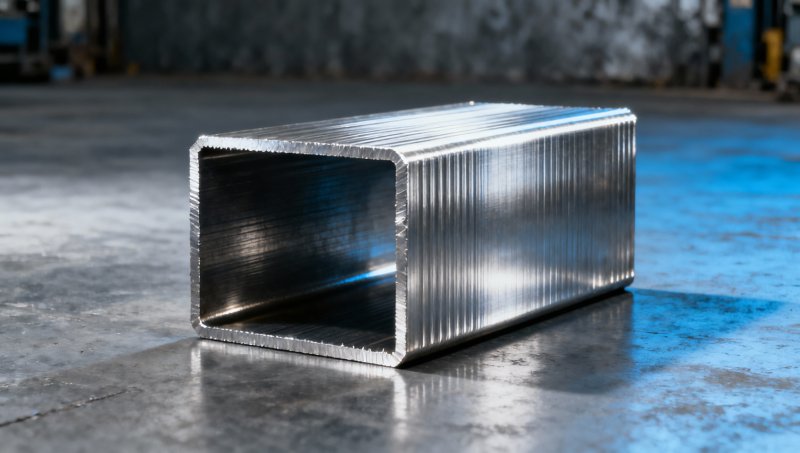
You need more than a supplier—you need a structural steel partner with proven resilience across volatile sourcing cycles. Hongteng Fengda delivers that through three non-negotiable capabilities: (1) end-to-end control—from billet casting to final inspection—ensuring dimensional consistency without third-party handoffs; (2) multi-standard compliance (ASTM, EN, JIS, GB) validated quarterly by SGS and TÜV Rheinland; and (3) dedicated project management for orders exceeding 50 tons, including weekly digital progress dashboards with live mill footage.
We currently hold 42,000+ tons of certified billet inventory across 7 carbon grades, enabling rapid response to urgent custom tubing requests. For qualified buyers, we offer priority scheduling access—guaranteeing production slot confirmation within 72 hours of PO issuance.
Ready to lock in stable lead times for your next structural steel order? Contact us today to request: (1) a dimensional feasibility report for your custom OD/WT specification, (2) verified delivery timeline for your required quantity and destination port, (3) EN 10248-compliant Hot Rolled Steel Sheet Pile integration guidance, or (4) a full technical datasheet package with test reports and packaging schematics.
Please give us a message


Please enter what you want to find