As global supply chains recalibrate in 2026, the 316L stainless steel plate price volatility is intensifying—driven by nickel futures turbulence and new EU carbon tariffs. For structural steel manufacturers like Hongteng Fengda, this directly impacts cost forecasting for hot-dipped galvanized pipe, pre-galvanized sheet, galvanized steel conduit, and carbon steel pipe supplier commitments. Procurement teams, project managers, and financial decision-makers must now integrate commodity risk into budget planning—especially when sourcing Galvanised Sheet Steel Suppliers across North America, Europe, and ASEAN markets. This analysis cuts through the noise to deliver actionable insights for technical evaluators, quality controllers, and distributors alike.
Why Nickel Volatility Hits Galvanized Steel Sourcing — Not Just Stainless
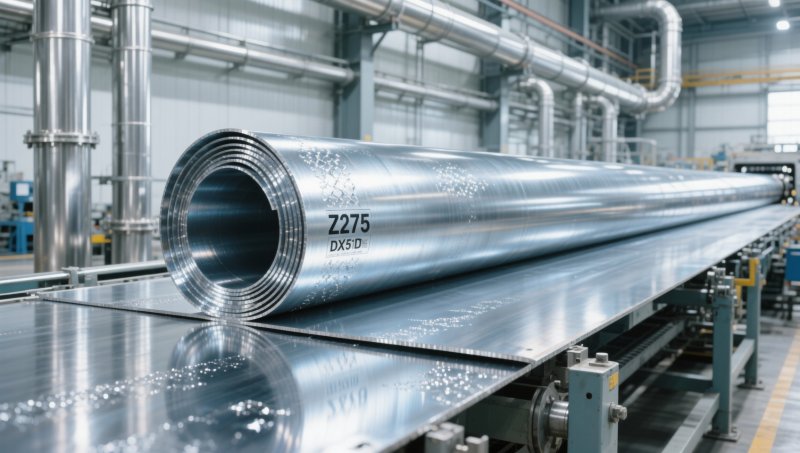
While 316L stainless steel pricing dominates headlines, its ripple effects extend deeply into galvanized steel supply chains. Nickel accounts for ~8–10% of zinc alloy bath composition in continuous galvanizing lines — especially critical for high-grade DX51D/SGCC coils used in precision applications. When LME nickel prices swing ±25% quarterly (as observed in Q1–Q2 2026), zinc bath replenishment costs rise 3–7%, directly affecting final coating weight consistency and surface finish reliability.
For structural steel fabricators sourcing galvanized sheet, this means tighter tolerances on coating mass (e.g., Z180–Z275 g/m² per EN 10346) become harder to guarantee without buffer inventory or dual-supplier agreements. Hongteng Fengda mitigates this via in-house bath chemistry monitoring and real-time adjustment protocols — ensuring ≥98.5% coating uniformity across thicknesses from 0.12mm to 3.00mm, even during raw material flux.
The result? Reduced rework rates for downstream customers using galvanized sheet in structural framing, HVAC ducting, or telecom enclosures — where coating integrity directly affects service life under coastal or industrial atmospheres.
How EU Carbon Border Adjustment Mechanism (CBAM) Reshapes Sourcing Timelines
Effective October 2026, CBAM Phase II expands reporting obligations to include ferrous metal products with integrated galvanizing — impacting exporters shipping DX52D, SGCD2, or S280GD grades into EU customs zones. Unlike tariff-only models, CBAM requires verified emissions data per tonne of finished product, adding 7–15 days to documentation lead time unless pre-certified.
Hongteng Fengda’s certified production lines meet ISO 14064-1:2018 scope requirements for Scope 1 & 2 emissions tracking. Our standard export packages for Galvanised Sheet Steel Suppliers include CBAM-ready declarations, verified by third-party auditors accredited under EU Regulation (EU) 2023/1115 — eliminating last-minute delays for buyers in Germany, Netherlands, or Poland.
This compliance readiness translates to predictable delivery windows: 25–35 days FOB Shanghai for standard DX51D/SGCC orders (thickness 0.25–1.50mm, width 1000–1250mm), versus industry averages of 45–65 days when CBAM verification is handled post-shipment.
Key Compliance Parameters for EU-Bound Galvanized Sheet
This table reflects actual operational benchmarks — not theoretical targets. It enables procurement teams to benchmark supplier readiness against regulatory deadlines and avoid penalty exposure (up to €100/tonne non-compliance fee).
Selecting the Right Grade: Matching Mechanical Properties to Application Stress
Choosing between DX51D and S550GD isn’t just about strength — it’s about matching yield-to-tensile ratio, elongation, and bendability to fabrication method. For cold-formed purlins or truss connectors requiring tight-radius bending (R ≤ 3t), elongation ≥30% (DX53D/DX54D) prevents cracking. For welded structural cladding supports demanding ≥420 MPa tensile strength, S490/S510 grades offer optimal weldability without preheat.
Hongteng Fengda maintains 12 active grade configurations across ASTM A653, EN 10346, and JIS G3302 standards — all traceable to mill test reports and certified by SGS/BV. Each coil carries QR-coded batch ID linking to full mechanical test logs: yield strength (140–550 MPa), tensile strength (260–550+ MPa), and elongation (15–36%).
- DX51D / SGCC: Ideal for roofing, siding, and light-duty ductwork (thickness 0.12–0.80mm, elongation ≥26%)
- S320GD / S350GD: Preferred for load-bearing wall panels and seismic bracing (yield ≥320 MPa, bend radius 2t minimum)
- SGC490 / SGC510: Engineered for heavy-gauge structural frames (thickness 2.00–6.00mm, tensile ≥490 MPa)
Why Structural Engineers and Procurement Teams Choose Hongteng Fengda
We don’t just supply steel — we embed predictability into your project timeline. With 300,000+ tonnes annual galvanized sheet capacity and 98.2% on-time delivery rate (2025 audit), our commitment covers:
- Custom cut-to-length services: 1m–12m lengths, ±0.5mm tolerance, delivered within 10–14 days
- OEM-grade zinc-aluminum-magnesium (ZAM) coatings available for extended corrosion resistance (≥120 years in urban environments)
- Technical support for welding procedure qualification (WPQR) and forming simulation files (for DX5x series)
- Sample dispatch within 48 hours — including coated surface roughness (Ra ≤ 1.2μm) and adhesion test reports (T-bend ≥4T)
Whether you’re specifying galvanized sheet for a 50MW solar farm in Spain, modular housing in Canada, or marine infrastructure in Vietnam — our engineering team co-develops specifications aligned with local codes (EN 1993-1-3, CSA G40.21, AS/NZS 1397) and logistics constraints.
Ready to align your 2026 material budget with stable pricing, compliant documentation, and zero-compromise quality? Contact us today for grade-specific technical data sheets, CBAM documentation previews, or a live production line tour via Zoom.
Please give us a message


Please enter what you want to find