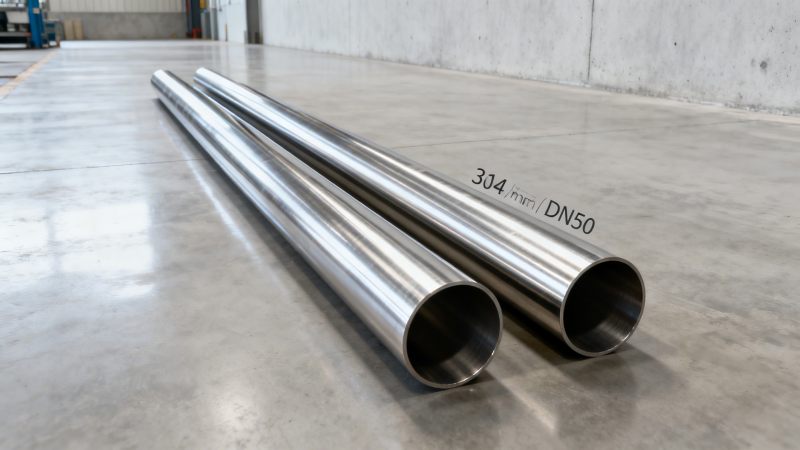
At first glance, 316 stainless steel pipe looks identical to 304 — same luster, same dimensions, same seamless stainless steel tube appearance. But when corrosion begins — in marine environments, chemical plants, or coastal infrastructure — the difference becomes undeniable. That’s why procurement personnel, project managers, and corrosion-resistant pipes specifiers increasingly choose 316 stainless steel pipe (and 316L stainless steel pipe) over standard grades. As a trusted stainless steel tube manufacturer and structural steel exporter from China, Hongteng Fengda supplies certified 316 stainless steel plate, 2 inch stainless steel pipe, and galvanized steel pipe — all backed by ASTM/EN compliance, rigorous quality control, and global delivery reliability.
Why the Visual Similarity Masks Critical Performance Gaps
Both 304 and 316 stainless steel pipes share nearly identical surface finish, dimensional tolerances (±0.15 mm for OD, ±0.05 mm for wall thickness), and cold-drawn or annealed microstructure — making visual or tactile differentiation impossible without lab testing. This uniformity creates real risk during procurement: a specification error, mislabeled shipment, or cost-driven substitution can go undetected until service failure occurs.
The divergence emerges only under aggressive environmental stress. In chloride-rich settings — such as offshore platforms (200–500 ppm Cl⁻), desalination plant piping, or coastal HVAC condensate lines — 304 typically shows pitting after 6–18 months. In contrast, 316 stainless steel pipe maintains integrity beyond 5 years under identical conditions due to its 2–3% molybdenum content, which stabilizes the passive oxide layer.
For project managers overseeing infrastructure with 25+ year design life, this isn’t just material selection — it’s lifecycle risk management. A single failed weld joint in a pharmaceutical clean utility line can trigger $120k+ in downtime, validation rework, and regulatory scrutiny.
How Corrosion Resistance Translates to Real-World Project Outcomes
Corrosion resistance isn’t abstract — it directly impacts safety margins, maintenance frequency, and total cost of ownership. Consider three benchmark applications:
- Chemical Processing Plants: 316 stainless steel pipe withstands 10–15% sulfuric acid at ambient temperature for >3 years; 304 fails within 6 months.
- Coastal Desalination Facilities: Pipe installed within 500 m of shoreline requires ≤0.05 mm/year penetration rate — met only by 316L (EN 1.4404) per EN 10217-7 Annex B.
- Food & Beverage Lines: 316L’s lower carbon content (<0.03%) prevents carbide precipitation during welding, eliminating post-weld acid cleaning — reducing commissioning time by 2–4 weeks.
This performance hierarchy also extends to complementary building systems. For example, Colored Corrugated Roof Sheet used on processing plant roofs benefits from 316-grade fasteners and support brackets — preventing galvanic corrosion where aluminum-zinc coated steel meets stainless components.
Technical Comparison: 304 vs. 316 Stainless Steel Pipe
Below is a side-by-side comparison of key technical parameters affecting long-term structural integrity and compliance:
Higher PREN values correlate directly with field-proven longevity in chloride exposure. Independent ASTM G48 testing shows 316 sustains zero pitting at 25°C in 6% FeCl₃ solution for 72 hours — while 304 exhibits visible attack within 2 hours. This data informs critical decisions for engineers specifying piping in LNG terminals or pulp & paper bleach plants.
Procurement Checklist: What Buyers Must Verify Before Order Placement
Avoid costly delays or non-conformance by validating these five elements before finalizing purchase orders:
- Mill Test Report (MTR): Confirm ASTM A312/A358 certification with actual Mo content ≥2.0% — not just “316 grade” stamped on packaging.
- Surface Finish Verification: Ra ≤0.8 μm required for sanitary applications (ASME BPE); request profilometer report if specified.
- Dimensional Tolerance Compliance: Check OD/wall thickness against ASTM A312 Table X1 — tolerance bands widen significantly above DN150.
- Traceability Documentation: Each heat lot must include furnace number, ladle analysis, and cold-working history for audit readiness.
- Packaging & Marking: Pipes must be bundled with ISO-compliant labels showing grade, size, heat number, and EN/ASTM standard — no handwritten tags accepted.
Hongteng Fengda provides full documentation packages within 48 hours of production completion — including third-party inspection reports (SGS/BV) and EN 10204 3.2 certificates — ensuring seamless customs clearance and project handover.
Why Global Projects Choose Hongteng Fengda for Critical Stainless Steel Supply
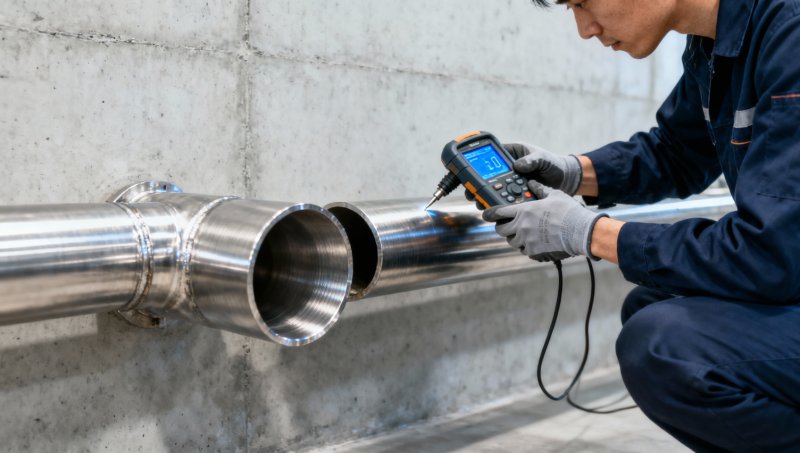
When structural integrity, regulatory compliance, and timeline certainty are non-negotiable, buyers turn to manufacturers who embed quality into every process step — not just final inspection. Hongteng Fengda delivers exactly that:
- Production Control: All 316 stainless steel pipe undergoes 100% ultrasonic testing (ASTM E213) and hydrostatic pressure verification at 1.5× design pressure — with digital traceability per pipe length.
- Global Compliance: Products meet ASTM A312, EN 10217-7, JIS G3459, and GB/T 14976 — with dual-certified mill test reports available for mixed-standard projects.
- Supply Chain Resilience: Stable lead times of 25–35 days for standard sizes (DN15–DN300), with 7-day expedite options for urgent replacements — backed by 12,000 MT monthly capacity.
- Engineering Partnership: Our technical team supports material substitution reviews, weld procedure qualification (WPQR), and corrosion modeling for complex environments — free of charge for qualified projects.
Whether you’re specifying 316 stainless steel pipe for a new biopharma facility in Ireland or sourcing Colored Corrugated Roof Sheet for a warehouse expansion in Saudi Arabia, we align our manufacturing rigor with your project’s critical path — not just its budget line.
Ready to Validate Your Next Stainless Steel Specification?
Contact Hongteng Fengda today for:
- Free review of your piping specifications against ASTM/EN corrosion resistance requirements
- Sample submission for independent lab testing (pitting, intergranular corrosion, tensile strength)
- Lead time confirmation and FOB/CIF quotation for your exact size, grade, and quantity
- Custom marking, packaging, and documentation to match your site’s QA/QC protocols
We respond to all technical inquiries within 4 business hours — with actionable answers, not generic brochures.
Please give us a message


Please enter what you want to find