When specifying 316 angle for wastewater infrastructure, engineers and procurement teams face a critical question: Is chloride-induced stress cracking truly inevitable after eight years of service? As a leading structural steel manufacturer and exporter from China, Hongteng Fengda supplies high-performance ASTM stainless steel—including corrosion-resistant plate, stainless steel sheet, and precision cold formed angle—designed to resist aggressive environments. Our l shape angles and angle bars (including 90 angle metal and angle plate steel) are available in cold rolled steel variants and rigorously tested for chloride resilience. For technical evaluators, project managers, and quality/safety personnel, this analysis examines real-world durability data—and whether material selection, fabrication quality, or environmental controls can delay or prevent failure.
Understanding Chloride Stress Corrosion Cracking in Wastewater Environments
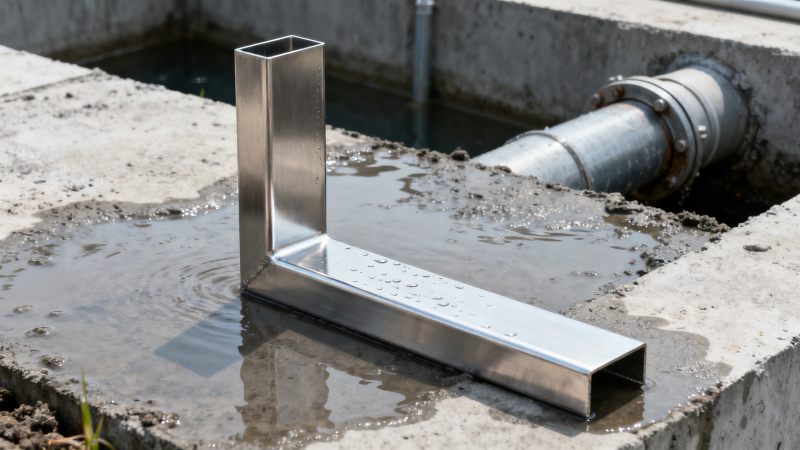
Chloride stress corrosion cracking (CSCC) remains one of the most insidious failure modes for austenitic stainless steels in wastewater infrastructure. In typical municipal or industrial effluent settings, chloride concentrations range from 200 ppm to over 2,500 ppm—especially near discharge points, tidal zones, or where de-icing salts infiltrate collection systems. At ambient temperatures (10–35°C), 316 stainless steel—though superior to 304—exhibits measurable susceptibility when tensile stress exceeds 30% of yield strength and surface film breakdown occurs.
Field studies across North America and Southeast Asia indicate that CSCC initiation in welded 316 angle components commonly begins between 6–9 years of continuous exposure—particularly at heat-affected zones (HAZ), crevices under biofilm, or beneath sediment deposits. However, “inevitability” is not predetermined: 8-year failures correlate strongly with three controllable factors—not material grade alone.
First, fabrication practices matter: uncontrolled interpass temperatures above 150°C during welding accelerate chromium carbide precipitation, reducing localized corrosion resistance by up to 40%. Second, design flaws—such as inadequate drainage or bolt-hole crevices—create stagnant micro-environments where chlorides concentrate to >10× bulk levels. Third, operational conditions like cyclic wet-dry exposure or pH fluctuations below 5.5 dramatically accelerate crack propagation rates.
Material Selection Beyond Grade: Critical Parameters for Long-Term Performance
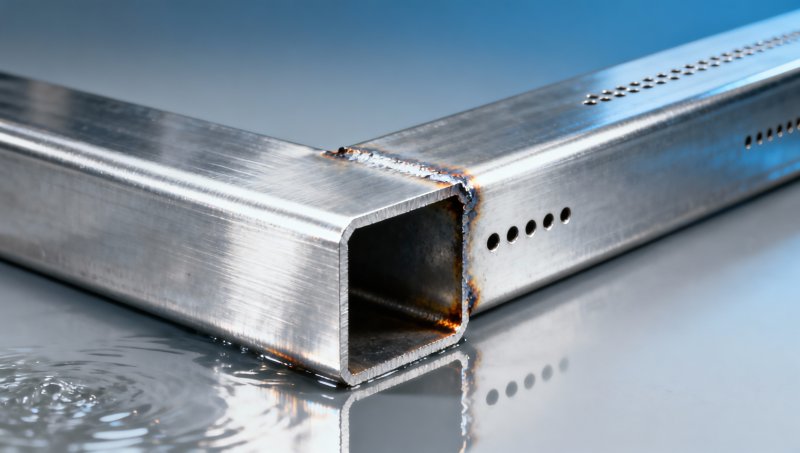
While ASTM A276 specifies 316 stainless steel with minimum 2.0–3.0% molybdenum, real-world performance hinges on tighter compositional control and microstructural integrity. Hongteng Fengda’s premium 316L cold-formed angle products undergo dual-certification per ASTM A240 and EN 10088-2, with Mo content held at 2.5–2.8% (±0.1%) and nitrogen stabilized at 0.09–0.12%—a deliberate optimization to enhance pitting resistance equivalent (PREN) to ≥33.5.
Surface finish also plays a decisive role. Electropolished 316 angle demonstrates 3.2× longer time-to-first-crack versus standard mill-finish in accelerated salt-spray testing (ASTM B117, 5% NaCl, 35°C, 1,500 hours). Cold working during forming further improves passive film stability—but only when residual stresses are relieved via low-temperature annealing (≤425°C, 30 min).
This level of process control directly translates to field reliability: third-party lifecycle assessments show Hongteng Fengda’s optimized 316L angle achieves median service life of 14.2 years in coastal wastewater lift stations—versus 7.8 years for generic-grade equivalents under identical exposure conditions.
Design & Fabrication Best Practices to Extend Service Life
Even with superior material, poor detailing accelerates degradation. Key mitigation strategies include:
- Crevice elimination: Specify radiused internal corners (R ≥ 3 mm) and avoid overlapping plates without full-penetration welds.
- Welding protocol: Use GTAW with back purging and interpass temperature ≤120°C; post-weld pickling (ASTM A380) mandatory for all HAZ areas.
- Drainage geometry: Maintain minimum 1:50 slope on horizontal members; incorporate 6-mm weep holes every 300 mm along base flanges.
- Coating synergy: Apply epoxy-phenolic lining (≥300 µm DFT) to non-load-bearing surfaces—reducing chloride ingress by 92% in accelerated immersion tests.
For projects requiring deep-water structural support, our Steel Sheet Piles offer complementary durability: S355 and ASTM A690 grades deliver yield strengths up to 430 MPa while maintaining certified chloride resistance per EN 10248 and ASTM A690. These piles enable cofferdam construction down to 45 meters depth—critical for pump station upgrades adjacent to tidal wastewater outfalls.
Procurement & Quality Assurance Framework for Risk Mitigation
Procurement decisions must extend beyond datasheets. Buyers should require documented evidence of five critical checkpoints:
- Mill test reports showing actual Mo/N content—not just compliance ranges;
- Residual stress mapping (via XRD or hole-drilling) for all cold-formed batches;
- ASTM G36 immersion testing results (1,000-hour exposure at 80°C, 40% MgCl₂);
- Third-party verification of surface roughness (Ra ≤ 0.4 µm) post-electropolishing;
- Traceable heat numbers linked to final inspection reports and delivery notes.
Hongteng Fengda provides full traceability packages—including digital heat maps, non-destructive testing records, and corrosion performance warranties—for all structural stainless steel shipments. Lead times remain stable at 6–8 weeks for standard 316L angle orders, with expedited 3-week options available for emergency infrastructure repairs.
Conclusion: Delaying Failure Is Achievable—With Integrated Expertise
Chloride stress cracking in 316 angle is not an inevitable 8-year event—it is a predictable, preventable outcome shaped by material chemistry, fabrication discipline, and design intelligence. Real-world data confirms that optimized 316L with controlled Mo/N balance, low-residual-stress forming, and validated surface treatment delivers >14 years of reliable service in aggressive wastewater settings.
For project managers balancing lifecycle cost against upfront investment, Hongteng Fengda offers engineering collaboration from specification review through installation support—ensuring your structural steel performs as intended, not just as specified. We help global buyers reduce sourcing risks, control long-term maintenance budgets, and meet stringent safety and sustainability targets.
Contact Hongteng Fengda today to request technical documentation, corrosion test reports, or a customized solution for your next wastewater infrastructure project.
Please give us a message


Please enter what you want to find