For quality control and safety teams in food equipment manufacturing, choosing 304 stainless steel means more than selecting a corrosion-resistant material. Compliance with hygiene standards, the right surface finish, and easy cleanability all directly affect product safety and inspection performance. This article explains the key requirements and practical considerations that help evaluate 304 stainless steel for reliable, sanitary food processing applications.
What Quality and Safety Teams Need to Confirm First
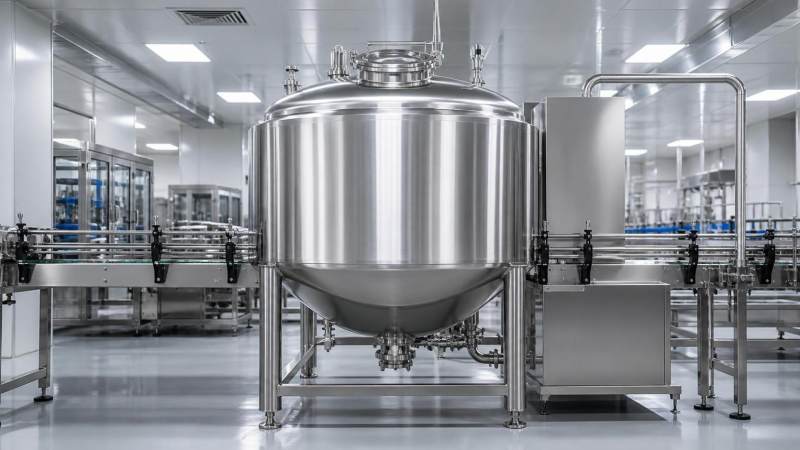
When buyers search for 304 stainless steel for food equipment, they are usually not asking whether the alloy is common. They want to know whether it is truly suitable for hygienic contact surfaces.
For quality control personnel, the core issue is verification. Does the material meet recognized standards, resist routine cleaning chemicals, and maintain a surface that does not trap soil or support bacterial growth?
For safety managers, the question is broader. A stainless steel part may look acceptable at delivery, yet still create compliance risks if welds, rough finishing, or poor fabrication reduce cleanability.
That is why 304 stainless steel should be evaluated as a complete sanitary material system. Grade selection matters, but surface finish, fabrication quality, passivation, and cleanability standards matter just as much.
Why 304 Stainless Steel Remains a Standard Choice in Food Equipment
304 stainless steel is widely used in food processing lines, storage tanks, worktables, conveyors, guards, and non-aggressive product contact components because it balances corrosion resistance, formability, availability, and cost.
Its chromium and nickel content supports a stable passive layer, which helps protect the surface from oxidation and everyday moisture exposure. In many food environments, that makes it a practical and dependable baseline material.
For facilities handling water-based foods, dry ingredients, bakery products, packaged foods, or mild cleaning cycles, 304 stainless steel often performs well when properly fabricated and maintained.
It is also easier to source globally than many specialized grades. For procurement and supplier qualification teams, this improves consistency across projects, spare parts, and replacement equipment.
However, being widely used does not mean it fits every process. Products with high chloride exposure, acidic formulations, or aggressive sanitation chemicals may require a higher-grade stainless option.
Which Standards Actually Matter for Food Equipment Compliance
One common mistake is assuming that a mill certificate alone proves food suitability. In practice, quality teams need to distinguish between material standards and hygienic design or equipment standards.
Material standards usually confirm chemistry, mechanical properties, and dimensional tolerances. For 304 stainless steel, common references include ASTM, AISI, EN, JIS, and GB specifications depending on the market.
These standards are important because they help verify that the supplied material is genuinely 304 grade and not a lower substitute with weaker corrosion performance or inconsistent composition.
But food equipment compliance usually goes further. Inspectors and auditors often focus on hygienic design frameworks such as 3-A, EHEDG principles, FDA-related material suitability, and customer-specific sanitation requirements.
In practical terms, quality control teams should ask suppliers for mill test certificates, traceability records, surface finish data, welding procedures if relevant, and any passivation or polishing documentation.
It is also useful to confirm whether the material will be used in direct food contact, splash zones, or structural areas outside product contact. This affects the level of scrutiny required.
A manufacturer with strong export experience typically works across ASTM, EN, JIS, and GB systems, which helps multinational buyers align internal specifications with regional compliance expectations.
Surface Finish Is Not Cosmetic: It Directly Affects Hygiene
In food equipment, surface finish is not mainly about appearance. It affects how easily product residue, oils, sugars, proteins, and biofilms can be removed during routine cleaning and sanitation.
A rough or damaged surface creates microscopic valleys where residue can remain after washdown. Over time, that increases contamination risk and makes visual inspection less reliable.
For many food contact applications, smoother finishes are preferred because they reduce soil retention. Teams often evaluate finishes such as 2B, No. 4, BA, or polished surfaces depending on equipment function.
No. 4 finish is common where a consistent brushed surface is acceptable and cleanability is needed. BA and finer polished finishes may be selected where appearance and lower roughness are priorities.
What matters most is not the finish name alone, but the measurable condition of the final surface after fabrication. Grinding, forming, and welding can all change the original mill finish.
Quality teams should therefore inspect the finished component, not just the incoming sheet or bar. Surface roughness targets, when specified by the customer, should be confirmed on the completed food-contact area.
How Cleanability Should Be Evaluated in Real Production Conditions
Cleanability is the point where many acceptable-looking stainless components fail. A surface can be corrosion resistant yet still be difficult to clean if the geometry or fabrication introduces retention points.
From a safety perspective, the main risks are crevices, undercut welds, pits, sharp internal corners, dead zones, and poorly finished joints. These areas can hold moisture and food residue between cleanings.
That is why cleanability assessment should include both material and design review. The stainless grade alone cannot compensate for poor fabrication details or inaccessible equipment geometry.
For routine evaluation, teams should check whether surfaces are smooth, continuous, and drainable. Weld seams should be finished appropriately, with no visible cracking, pinholes, spatter, or unblended transitions.
Inspection should also consider the actual cleaning regime. Hot alkaline cleaners, acid descalers, chlorine-based sanitizers, and repeated high-pressure washdowns can affect long-term surface condition differently.
If the process includes salt, sauces, brines, or frequent chloride exposure, even well-finished 304 stainless steel may show tea staining or corrosion over time. That is a material selection warning, not only a maintenance issue.
In these cases, safety managers should work with procurement and engineering teams early, because changing the grade after equipment commissioning is far more expensive than qualifying the right material upfront.
Where 304 Stainless Steel Performs Well and Where It Does Not
304 stainless steel is a strong choice for many dry processing systems, preparation tables, covers, frames near hygienic zones, hoppers for mild products, and general food manufacturing hardware.
It is also frequently used in bakery, dairy support equipment, beverage handling systems with moderate exposure, and packaging machinery where contact conditions are not excessively corrosive.
Its limitations become more important in chloride-rich or highly acidic environments. Seafood processing, pickling lines, harsh disinfectant regimes, and salt-heavy formulations can shorten service life significantly.
In those environments, quality teams should investigate whether 316 stainless steel or another higher-alloy option provides better lifecycle value, even if the initial purchase price is higher.
This matters because the true cost of a material decision includes downtime, replacement frequency, audit findings, sanitation labor, and the risk of contamination or product recall.
What to Ask a Supplier Before Approving 304 Stainless Steel
Supplier qualification is one of the most practical tools available to quality control teams. A good approval process reduces the chance of receiving material that looks correct but performs inconsistently.
Start with traceability. Ask for mill certificates, heat numbers, standard references, and confirmation that the delivered chemistry matches the ordered 304 stainless steel specification.
Then review processing capability. Can the supplier control polishing, forming, cutting, welding support, dimensional tolerances, and surface protection during packing and shipment?
For food equipment parts, it is also worth asking how surface defects are handled. Scratches, embedded iron contamination, and poor edge finishing can compromise hygiene and corrosion resistance.
Global buyers often benefit from suppliers that already manufacture to ASTM, AISI, JIS, GB, DIN, or EN requirements. This helps reduce specification mismatch across regions and customer audits.
Some manufacturers also support related stainless products for broader industrial use. For example, projects that combine food equipment with non-contact structural or utility components may source items such as 316 Stainless Square steel rod for selected fabrication needs.
That product category is often associated with applications ranging from kitchenware manufacturing to construction, automotive parts, shipbuilding, textiles, and heavy equipment, depending on grade and finish requirements.
How to Read Surface and Material Data Without Overlooking Risk
Quality and safety teams should be careful when reviewing catalog data because not every stainless listing applies to sanitary food contact use in the same way.
For example, a product may show strong tensile strength, acceptable hardness, multiple finishes, and international standards, yet still require separate review for direct food-contact suitability and finish consistency.
Mechanical properties are important for fabrication and service performance, but they do not replace hygiene validation. In food applications, corrosion behavior and cleanability often carry greater inspection weight.
This is especially relevant when comparing different stainless families. Some lower-cost options may offer useful formability or strength, but they may not deliver the same corrosion resistance expected from 304 stainless steel.
That distinction is important for safety managers working under audit pressure. A lower upfront material cost can quickly disappear if the surface degrades, stains, or becomes difficult to sanitize.
A Practical Approval Checklist for QC and Safety Teams
Before approving 304 stainless steel for food equipment, teams should confirm five points. First, verify the grade through material certificates and traceability, not by appearance alone.
Second, confirm the required standard system and customer specification. Third, review the final surface finish on the fabricated part, especially in food contact and splash areas.
Fourth, inspect weld quality, crevice risk, drainage, and accessibility for cleaning. Fifth, compare the material choice against actual chemicals, product composition, temperature, and washdown conditions.
This checklist sounds simple, but it prevents many common failures. Most sanitation-related problems come from overlooked details at the interface of material, finish, fabrication, and cleaning practice.
Teams that document these checks during sourcing and equipment acceptance usually face fewer disputes later with auditors, maintenance departments, and production managers.
Conclusion: 304 Stainless Steel Is Reliable When the Whole Sanitary Picture Is Right
For food equipment, 304 stainless steel is often a sound and economical choice, but only when the application is appropriate and the final fabricated surface supports hygienic cleaning.
Quality control and safety professionals should not judge suitability by grade name alone. The correct standard, verified chemistry, suitable finish, weld quality, and real cleanability all need confirmation.
When these factors are managed together, 304 stainless steel can deliver dependable service, efficient sanitation, and better audit confidence across many food manufacturing environments.
When they are ignored, even a familiar material can become a hidden source of contamination risk, maintenance cost, and compliance problems. That is the real decision point behind material selection.
Please give us a message


Please enter what you want to find