Understanding the 304 stainless steel sheet price is essential for business evaluators comparing suppliers, planning procurement budgets, and managing project costs.
Prices can vary significantly depending on raw material markets, sheet thickness, surface finish, order volume, standards compliance, and delivery terms.
For global buyers, evaluating cost should also include supplier reliability, quality control, and lead time stability.
This article explains the key factors that influence pricing and helps purchasing teams make more informed sourcing decisions.
What Buyers Really Need to Know About 304 Stainless Steel Sheet Price
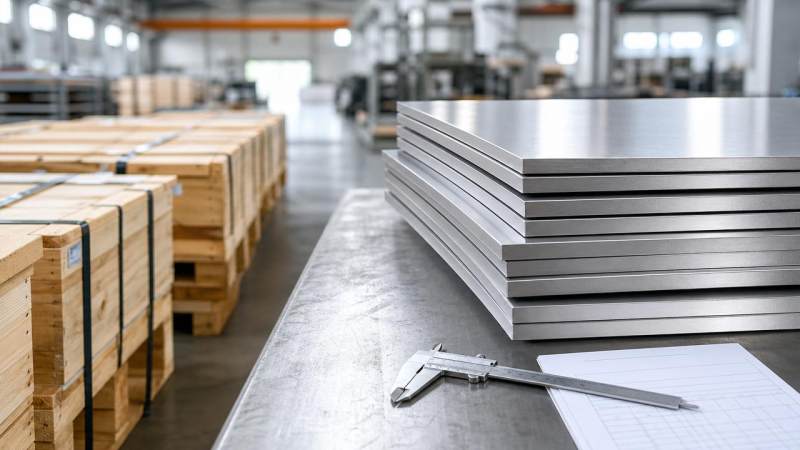
When buyers search for 304 stainless steel sheet price, they usually do not want a simple number only.
They want to understand whether a quotation is reasonable, stable, comparable, and suitable for their project requirements.
For business evaluators, the lowest unit price is not always the best purchasing decision.
A cheaper sheet may create higher total cost if quality deviation, delayed shipment, or documentation problems occur.
The practical question is whether the supplier can deliver the right material at the expected cost and timeline.
Therefore, price evaluation should combine material cost, processing requirements, standards, logistics, payment terms, and supplier credibility.
304 stainless steel sheet is widely used because it offers good corrosion resistance, formability, and general industrial performance.
However, the price is sensitive to nickel, chromium, market demand, mill availability, and international freight conditions.
A professional quotation should clearly state grade, thickness, width, length, finish, tolerance, standard, packaging, and delivery terms.
If these details are missing, two suppliers may appear comparable while actually offering very different products.
Raw Material Costs: The Main Driver Behind Price Changes
The largest cost component of 304 stainless steel sheet is the alloy content, especially nickel and chromium.
Nickel price fluctuations can quickly influence stainless steel costs because 304 stainless steel contains meaningful nickel content.
When nickel prices rise, mills and distributors usually adjust quotations to reflect increased production costs.
Chromium, iron ore, energy, and scrap stainless steel prices also contribute to the final sheet cost.
Business evaluators should pay attention to the timing of quotations, especially during volatile commodity market periods.
A quotation valid for seven days may become outdated if raw material prices move sharply.
For larger projects, buyers may request price validity periods, framework agreements, or phased purchasing plans.
These methods help reduce exposure to sudden market changes and support more predictable budgeting.
It is also important to distinguish mill-direct pricing, distributor pricing, and project-based negotiated pricing.
Each model has different advantages depending on volume, delivery urgency, customization needs, and inventory availability.
Thickness, Size, and Tolerance Affect the Final Quotation
Thickness is one of the most visible factors affecting the 304 stainless steel sheet price.
Thicker sheets require more raw material, higher processing capacity, and often stronger packaging for transportation.
However, price does not always increase in a simple linear way according to thickness.
Standard thicknesses are usually more economical because mills produce them frequently and distributors stock them regularly.
Non-standard thicknesses, special widths, or customized lengths may require additional cutting, slitting, or production planning.
These services add cost, especially when the order quantity is small or the tolerance requirement is tight.
Tolerance also matters because precise thickness, flatness, and dimensional control may require better production management.
For applications involving fabrication, assembly, or visible surfaces, poor tolerance can increase downstream processing cost.
Evaluators should not only compare price per ton, but also check whether the sheet specification matches actual usage.
Buying a slightly cheaper sheet with unsuitable tolerance may lead to waste, rework, or rejected components.
Surface Finish and Processing Requirements Can Change Cost Significantly
Surface finish is another important factor that can influence stainless steel sheet pricing.
Common finishes include 2B, BA, No.1, brushed, mirror, embossed, and other decorative or functional surfaces.
A standard 2B finish is usually more economical for general industrial and fabrication uses.
Decorative finishes require additional processing, surface protection, and stricter handling during packing and transportation.
If sheets are used for visible architectural panels, elevators, kitchens, or equipment covers, surface consistency becomes critical.
In such cases, minor scratches or color differences may create commercial disputes or replacement costs.
Cut-to-size service, film coating, edge trimming, punching, bending, or laser cutting can also affect the total price.
These value-added services may increase unit cost but reduce labor and processing time after delivery.
Business evaluators should calculate whether processed sheets lower overall project cost compared with buying raw sheets.
For many industrial buyers, predictable processing quality can be more valuable than a lower base material price.
Order Volume, MOQ, and Production Planning Influence Unit Cost
Order volume has a direct impact on the 304 stainless steel sheet price offered by suppliers.
Larger orders often allow better mill scheduling, lower handling cost, and more efficient container utilization.
Small orders may carry higher unit prices because fixed costs are spread across fewer sheets.
These fixed costs include documentation, quality inspection, packaging, export operation, and inland transportation.
Minimum order quantity also varies depending on whether the product is in stock or made to order.
Stock sheets may support smaller purchases, while customized sizes usually require higher MOQ.
Buyers should clarify whether the quoted price is based on available inventory or future production.
Inventory-based offers can be faster, but quantity, surface condition, and batch consistency should be confirmed.
For recurring demand, annual or quarterly purchasing forecasts can help suppliers plan production and offer better terms.
This approach is especially useful for manufacturers, contractors, and distributors managing repeated stainless steel consumption.
Standards, Certification, and Quality Control Add Real Business Value
For international purchasing, standards compliance is not a formality; it is a key part of risk control.
304 stainless steel sheet may be supplied according to ASTM, EN, JIS, GB, or project-specific requirements.
Each standard may define chemical composition, mechanical properties, tolerance, testing methods, and documentation expectations.
A low quotation without clear standard reference may create hidden risk for engineering or acceptance inspection.
Business evaluators should request mill test certificates, chemical composition reports, mechanical property records, and traceability information.
For critical applications, third-party inspection or pre-shipment quality verification may be worth the additional cost.
Quality control reduces the possibility of wrong grade, surface defects, dimensional deviations, or mixed batches.
Although certified materials may cost more upfront, they protect buyers from rejection, delay, and legal responsibility.
When comparing suppliers, documentation reliability should be treated as part of the total value, not an optional extra.
A dependable supplier should be able to explain standards clearly and provide consistent paperwork with each shipment.
Delivery Terms, Freight, and Import Costs Must Be Included
International buyers should evaluate stainless steel sheet costs beyond the factory or FOB price.
Delivery terms such as EXW, FOB, CFR, CIF, and DDP can create very different total landed costs.
A supplier may quote a lower product price but provide less support with logistics and export documentation.
Freight rates, container availability, port charges, insurance, customs duties, and inland delivery all affect final cost.
Stainless steel sheets are heavy products, so container loading efficiency has a meaningful impact on price per ton.
Proper packing also matters because surface damage during transportation can create losses and customer claims.
Export buyers should ask how sheets are protected, bundled, labeled, and secured inside containers.
Moisture protection, wooden pallets, edge protection, and anti-scratch film may be necessary for certain finishes.
Lead time stability is equally important because late delivery can disrupt project schedules and manufacturing plans.
For business evaluators, a reliable delivery plan may justify a moderate price premium over uncertain alternatives.
How to Compare Supplier Quotations More Accurately
To compare quotations fairly, buyers should first create a clear technical and commercial specification.
This specification should include grade, standard, thickness, size, finish, tolerance, quantity, packing, delivery term, and certificate requirements.
Without the same baseline, price comparison can easily become misleading and risky.
One supplier may include protective film, inspection, and export packing, while another may exclude them.
Buyers should ask whether the quoted price includes cutting, testing, documentation, bank fees, or inland freight.
Payment terms should also be considered because cash flow has financial value for business buyers.
A slightly higher price with safer payment terms may be preferable to an unusually low but risky offer.
Supplier communication speed is another practical signal because procurement problems often require fast coordination.
Professional suppliers respond with complete information, realistic lead times, and clear explanations when market prices change.
This transparency helps evaluators distinguish reliable partners from traders offering short-term low prices.
Why Total Cost Matters More Than the Lowest Unit Price
The true cost of stainless steel purchasing includes more than the visible sheet price.
Total cost may include inspection, processing waste, production delays, replacement risk, storage cost, and financing impact.
If material quality is inconsistent, downstream cutting, welding, polishing, or assembly may require extra labor.
If delivery is late, the buyer may face idle equipment, delayed installation, or contractual penalties.
If documentation is incomplete, customs clearance or customer acceptance may become slower and more expensive.
These costs are often not visible in the first quotation but can be significant in real projects.
Business evaluators should therefore assess supplier capability, not only supplier pricing.
Stable production capacity, export experience, quality control systems, and responsive service reduce procurement uncertainty.
For companies sourcing from overseas, the ability to manage risk is a measurable commercial advantage.
The best price is usually the one that balances competitiveness, reliability, compliance, and delivery performance.
Related Steel Procurement Considerations for Project Buyers
Many buyers evaluating stainless steel sheets also purchase structural steel, wire rope, beams, channels, or customized components.
In these cases, supplier integration can simplify procurement, reduce coordination cost, and improve shipment planning.
For example, projects involving lifting, marine work, mining, cranes, or construction may also require Galvanized Steel Wire Rope.
This product is available in steel or stainless steel materials, with common diameters from 1.0mm to 22mm.
Typical structures include 6X7+FC, 6X19+IWR, 6X9W+FC, and 8x19S+FC, supporting varied load requirements.
Normal tensile strength can range from 1470MPa to 1960MPa, depending on specification and application.
Surface options include plain, electro galvanized, and hot dipped galvanized finishes for different corrosion environments.
Zinc coating groups may suit mild, medium, or severe corrosion conditions, depending on operating requirements.
Relevant standards can include GB/T 20116-2008, DIN, EIPS, ISO 9001, and ABS requirements.
For project buyers, consolidating compatible steel products with one capable supplier may improve consistency and reduce sourcing complexity.
Practical Questions to Ask Before Confirming an Order
Before confirming an order, buyers should ask whether the material is from current stock or new production.
They should also confirm whether the chemical composition and mechanical properties match the required standard.
Surface finish samples or photos can be useful when appearance is important for the final application.
For customized sheets, buyers should confirm cutting tolerance, edge condition, protective film, and packing method.
It is also important to check whether the quotation includes certificate fees, inspection costs, and export documents.
Shipment schedule should be supported by realistic production lead time and port handling estimates.
Buyers should ask how the supplier handles quality claims, shortages, damaged packaging, or specification discrepancies.
A professional answer to these questions often reveals the supplier’s operational maturity and service attitude.
For high-value or time-sensitive projects, written confirmation of all key terms reduces misunderstanding.
Clear communication before payment is usually cheaper than solving problems after the cargo arrives.
How Hongteng Fengda Supports Global Steel Buyers
Hongteng Fengda is a structural steel manufacturer and exporter based in China, serving global construction and industrial markets.
The company supplies angle steel, channel steel, steel beams, cold formed profiles, and customized structural steel components.
Its products can comply with major international standards, including ASTM, EN, JIS, and GB requirements.
For business evaluators, this manufacturing and export experience is important when assessing sourcing reliability.
Stable production capacity, consistent quality control, and dependable lead times help reduce procurement uncertainty.
Global buyers often need suppliers who understand both technical specifications and commercial delivery expectations.
Hongteng Fengda supports customers across North America, Europe, the Middle East, and Southeast Asia.
This experience helps the company respond to documentation, packing, shipment, and project coordination needs.
For buyers comparing 304 stainless steel sheet price, supplier capability should be evaluated alongside the quoted number.
A long-term partner can help control cost not only through pricing, but also through reliability and risk reduction.
Conclusion: Build a Price Decision Around Value and Risk
The 304 stainless steel sheet price is shaped by raw materials, thickness, finish, order volume, standards, and logistics.
However, smart purchasing decisions should look beyond the visible unit price and evaluate total project cost.
Business evaluators should compare quotations using consistent specifications and clearly defined delivery terms.
They should also consider supplier quality control, documentation accuracy, communication efficiency, and lead time reliability.
A low price is useful only when it supports the required quality, schedule, and compliance expectations.
For international buyers, the safest decision is often a balanced choice between competitive cost and dependable execution.
By understanding the key pricing factors, procurement teams can negotiate more effectively and avoid hidden sourcing risks.
This approach helps companies protect budgets, maintain project schedules, and build stronger long-term supplier relationships.
Please give us a message


Please enter what you want to find