For procurement and evaluation teams, tracking 304 stainless coil price movements is essential to controlling budgets and reducing sourcing risk.
Price changes are rarely random. They usually reflect raw material costs, demand shifts, currencies, energy, freight, and mill supply conditions.
A clearer view of these drivers helps improve timing, supplier comparison, contract planning, and inventory decisions in the steel market.
Understanding 304 stainless coil and its price behavior
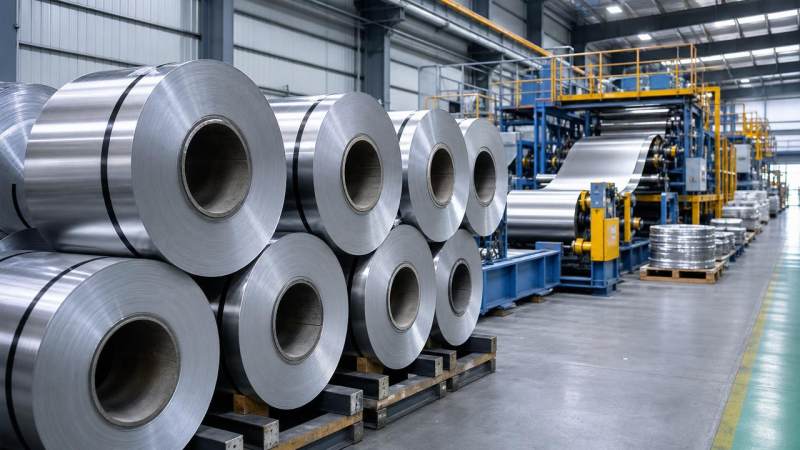
304 stainless coil is one of the most widely traded austenitic stainless steel products in global industry.
It is valued for corrosion resistance, formability, weldability, and broad usability across construction, fabrication, transport, and equipment manufacturing.
Because it serves many sectors, 304 stainless coil often reflects both industrial demand and wider economic expectations.
Its pricing does not move like a simple commodity with one input. Several upstream and downstream signals interact at the same time.
That is why two quotations received weeks apart can differ noticeably, even when specification, thickness, and origin stay unchanged.
In practical sourcing, the base price, alloy surcharge, processing cost, packaging, and freight may each move independently.
Understanding this layered structure is the first step toward reading 304 stainless coil price trends more accurately.
Main factors that usually drive 304 stainless coil price swings
The biggest price moves usually come from a combination of raw material shifts and changes in market balance.
1. Nickel and chromium costs
Nickel is the most watched input for 304 stainless coil. When nickel rises quickly, stainless prices usually follow.
Chromium, ferroalloys, and scrap also matter. Their movement affects melt cost and mill surcharge calculations.
2. Stainless steel scrap availability
Scrap supply can tighten when collection slows or demand from mills increases. That adds cost pressure in stainless production.
When scrap becomes more available, 304 stainless coil pricing can stabilize, especially in balanced demand periods.
3. Mill production and lead times
If mills reduce output, schedule maintenance, or prioritize high-margin orders, available coil supply may tighten.
Longer lead times often signal firm prices. Short lead times may suggest weaker order books or higher stock pressure.
4. Global demand conditions
Demand from food equipment, kitchenware, architectural fabrication, chemical processing, and industrial manufacturing affects buying momentum.
When these sectors slow together, 304 stainless coil buyers gain more room for negotiation.
5. Energy, freight, and currency movement
Power prices affect melting and rolling costs. Freight changes influence delivered cost, especially for export shipments.
Exchange rate movement can change import competitiveness quickly, even when mill pricing remains unchanged in local currency.
Current market signals that deserve closer attention
Short-term price direction often becomes clearer when several signals are reviewed together instead of in isolation.
These signals are more useful when checked regularly. One data point rarely explains the full stainless steel price picture.
It is also helpful to compare regional market sentiment, because stainless pricing can diverge between Asia, Europe, and North America.
Why these price movements matter in steel sourcing decisions
Price swings affect more than material cost. They influence quoting speed, bid validity, stock planning, and project profitability.
When 304 stainless coil is purchased without market timing awareness, even small changes can reduce margin or distort budget forecasts.
A disciplined review process can support better decisions in three areas:
- Choosing between spot purchases and forward bookings
- Comparing supplier offers beyond headline price alone
- Planning safety stock without overbuying at temporary highs
This is especially important when stainless products are only one part of a larger steel sourcing portfolio.
For example, some projects combine stainless items with galvanized materials for structural or enclosure applications.
In such cases, reviewing alternatives like Galv Sheeting can support broader cost and application planning.
That product range includes grades such as DX51D+Z, SGCC, and S350GD+Z, with thickness from 0.12mm to 6.00mm.
It also supports widths from 600mm to 1500mm, customized lengths, and compliance with ASTM, EN, JIS, and GB related standards.
Typical pricing situations across different buying scenarios
Not every 304 stainless coil purchase responds to the market in the same way. Buying context matters.
This approach makes 304 stainless coil quotations easier to compare across suppliers, regions, and delivery terms.
Practical methods for evaluating quotations more accurately
A low offer is not always the best offer. Stainless quotations should be broken into comparable cost elements.
Review the specification carefully
Thickness tolerance, width, finish, edge condition, and origin can all affect the final 304 stainless coil price.
Separate material cost from services
Slitting, PVC coating, special packing, testing, and documentation may add hidden cost if not listed clearly.
Confirm standards and traceability
Material test certificates, heat numbers, and standard compliance reduce risk when comparing 304 stainless coil supply options.
Check delivery realism
An attractive quote may become expensive if shipment delay affects production or project schedules.
Reliable steel exporters with stable production and quality systems can often reduce total sourcing risk over time.
Hongteng Fengda, based in China, supports global projects with structural steel products, OEM solutions, and international standard compliance.
Its experience across ASTM, EN, JIS, and GB requirements helps buyers compare materials within a broader steel procurement framework.
Practical steps to manage 304 stainless coil price risk
Risk cannot be removed completely, but it can be reduced with structured monitoring and better purchase discipline.
- Track nickel, scrap, and mill lead times every week.
- Build a quotation sheet with specification, surcharge, freight, and payment terms separated.
- Compare at least two origins when supply conditions are tight.
- Use partial bookings when the market is uncertain but demand is confirmed.
- Review stock turnover to avoid buying too much at short-term peaks.
- Keep communication open with suppliers on production schedules and replacement options.
These steps improve visibility and reduce the chance of reacting too late to meaningful 304 stainless coil market changes.
A steady framework for the next sourcing decision
304 stainless coil prices usually move for understandable reasons, even when the market feels unpredictable in the short term.
Raw materials, supply discipline, global demand, logistics, and currencies remain the main forces behind most changes.
By reviewing these signals consistently, quotations can be judged more accurately and purchase timing can become more deliberate.
For ongoing steel sourcing, it is useful to build a material plan that covers stainless, structural, and coated steel needs together.
A practical next step is to request updated specifications, lead times, and cost breakdowns before the next 304 stainless coil buying cycle begins.
Please give us a message


Please enter what you want to find