Lead times for 304 plate are becoming less predictable, creating new pressure for project managers responsible for schedules, budgets, and supply continuity. From raw material volatility and mill capacity constraints to export logistics and changing order patterns, several factors are driving these delays. Understanding what is behind the shift can help buyers plan procurement more accurately, reduce sourcing risks, and keep steel-dependent projects moving forward.
The market signal is clear: 304 plate delivery is no longer as stable as it was
For many engineering and industrial buyers, the most important change is not simply that 304 plate is available or unavailable. The real issue is that lead times have become more variable. In previous cycles, project teams could often rely on relatively consistent mill schedules, clearer stocking patterns, and more predictable shipping windows. Today, even when 304 plate supply exists, confirmed delivery dates may shift during production, inland transport, port handling, or international shipment.
This change matters because 304 plate is widely used in fabrication, equipment manufacturing, structural support systems, food and chemical environments, and applications where corrosion resistance and processing flexibility are required. When delivery becomes uncertain, downstream planning also becomes unstable. Fabrication slots may be missed, subcontractors may sit idle, and project milestones may need to be resequenced.
For project managers, this is not only a purchasing issue. It is now a schedule control issue, a cash flow issue, and in some cases a contract risk issue. That is why the recent shift in 304 plate lead times deserves closer attention.
What is driving delays in 304 plate supply today
Several forces are acting at the same time, and delays rarely come from one cause alone. The current pattern is better understood as a layered supply chain problem in which raw material movements, production decisions, and logistics constraints reinforce one another.
1. Raw material volatility is affecting mill planning
304 plate depends heavily on stainless inputs linked to nickel and chromium cost movements. When raw material prices change quickly, mills may adjust production timing, quotation validity, and order acceptance strategy. In practical terms, buyers may receive shorter quote windows, more cautious confirmations, or revised lead times after order placement. This does not always mean a shortage of 304 plate, but it does mean less confidence in planning.
2. Mill capacity is being allocated more selectively
Not all orders are treated equally in a tighter market. Mills may prioritize larger volume contracts, repeat buyers, standard thickness ranges, or higher-margin production. Orders for special dimensions, non-standard cut lengths, or tighter tolerances can face longer scheduling windows. For project teams that need mixed specifications, this can create hidden delays even when the headline market appears stable.
3. Export logistics remain uneven
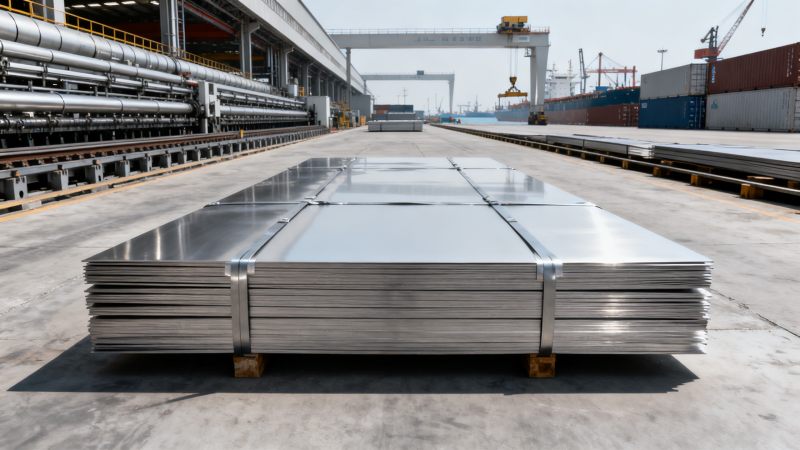
Ocean freight is more stable than during the most extreme disruption periods, but it is still not fully smooth. Port congestion can return quickly, vessel space can tighten without much notice, and transshipment routes can create extra uncertainty. Inland trucking, customs documentation, inspection timing, and destination port handling can also add days or weeks. As a result, the lead time of 304 plate should be viewed as an end-to-end chain rather than a simple mill production period.
4. Order patterns are changing across global projects
Buyers are no longer ordering in the same way. Some are placing smaller but more frequent orders to reduce inventory exposure. Others are bringing purchases forward to protect project schedules. Both behaviors can distort the normal planning rhythm for mills and traders. When too many buyers either delay commitment or rush at the same time, lead times for 304 plate become less predictable.
5. Specification complexity is increasing
In many sectors, procurement is moving beyond basic material availability. Buyers increasingly ask for tighter documentation, specific standards, additional processing, or custom packaging and traceability. These requests are often necessary, especially for regulated or export-driven projects, but they can lengthen production and inspection cycles. A standard 304 plate order and a highly documented project order may move through the same supply chain at very different speeds.
A practical view of the changing lead-time pattern
The shift is easier to understand when broken into stages. The table below highlights how the market environment around 304 plate has changed from a planning perspective.
Who is feeling the impact of 304 plate delays most directly
The effects are not evenly distributed. Some roles and project types are far more exposed to shifting 304 plate lead times than others.
Why supplier capability now matters more than simple price comparison
In a shifting market, the cheapest quote is not always the lowest-cost outcome. Buyers now need to evaluate whether a supplier can actually protect schedule certainty. That means looking beyond the basic offer and asking practical questions about production control, quality systems, export handling, and communication discipline.
For global buyers sourcing from China, supplier depth can make a major difference. Hongteng Fengda, as a professional structural steel manufacturer and exporter, supports customers with stable production capacity, strict quality control, and customized solutions for construction, industrial, and manufacturing projects. Its experience with international standards such as ASTM, EN, JIS, and GB is especially relevant when projects require reliable documentation and coordinated export execution.
This is also why many project teams are broadening their sourcing view. While 304 plate may be one part of a larger package, other steel products can influence total procurement efficiency. For example, on deep-water construction or cofferdam-related works, buyers may also evaluate Steel Sheet Piles with grades such as S275, S355, S390, S430, SY295, SY390, and ASTM A690. These products are supplied under standards including EN10248, EN10249, JIS5528, JIS5523, and ASTM, with advantages such as high strength, good waterproof performance, suitability for deep water, and reusability. For project leaders managing complex steel packages, working with suppliers that can support multiple categories under certified systems like ISO9001, ISO14001, ISO18001, and CE FPC can reduce coordination risk.
The most important signals project managers should monitor next
Because the delay pattern is dynamic, static assumptions are no longer enough. Buyers of 304 plate should monitor a set of practical signals instead of waiting for problems to appear at the shipment stage.
Watch quote validity and order acceptance behavior
When suppliers shorten quote validity or hesitate to lock production, it often suggests pressure upstream. This is one of the earliest signals that lead times could stretch.
Track standard versus non-standard specification gaps
If common sizes of 304 plate remain available while custom dimensions become difficult, the market may be entering a selective capacity phase rather than a full supply shortage. This distinction matters for procurement strategy.
Review documentation lead time separately from production lead time
Mill certificates, third-party inspection, packing details, and export paperwork can add meaningful delay. These steps should be treated as separate schedule items, not hidden inside a generic factory promise.
Stay alert to logistics route changes
Even if production is on time, shipment routes can change the effective delivery date of 304 plate. Destination-specific port conditions and carrier reliability deserve regular review, especially for milestone-sensitive jobs.
How buyers can respond without overreacting
The goal is not to build excessive inventory or accept every urgent quote. The better response is structured planning. In a more variable market, project teams need stronger timing discipline and better supplier coordination.
It is also wise to discuss schedule buffers in realistic terms. Not every order needs the same contingency, but critical 304 plate items tied to fabrication start dates or interface milestones should be given higher protection. In many cases, a modest buffer built early is less expensive than emergency adjustment later.
What this trend may mean for the months ahead
The market is unlikely to move in a straight line. Lead times for 304 plate may improve in one period and tighten again in another, depending on raw material pricing, industrial demand, export flows, and regional logistics conditions. What appears to be a short-term recovery can still hide structural volatility.
For project managers and sourcing leaders, the key judgment is no longer whether delays are temporary or permanent. The more useful question is whether procurement systems are prepared for ongoing variability. Companies that continue to plan around fixed assumptions may face repeated disruption. Those that build earlier visibility, more disciplined supplier review, and clearer milestone management will be better positioned to keep projects moving.
Final decision framework for managing 304 plate risk
If your business depends on 304 plate, the next step is to assess exposure rather than guess direction. Confirm which items are schedule-critical, how much flexibility exists in specification, whether your supplier can support international compliance and stable production, and how much transit uncertainty your project can absorb. These questions will do more to reduce risk than watching price alone.
In a shifting steel market, reliable execution comes from better judgment, not just faster purchasing. Buyers who understand why 304 plate lead times are changing will be in a stronger position to protect budgets, maintain supply continuity, and make procurement decisions with greater confidence.
Please give us a message


Please enter what you want to find