In 2026, lightweight structural steel is reshaping construction with better efficiency, faster installation, and lower total project costs. As buyers compare structural steel properties and evaluate high strength structural steel for modern applications, demand is also rising for related solutions such as rebar for retaining wall systems. This article explores the key trends, technical advantages, and sourcing considerations that matter most to engineers, contractors, and global procurement teams.
Why lightweight structural steel is gaining momentum in 2026
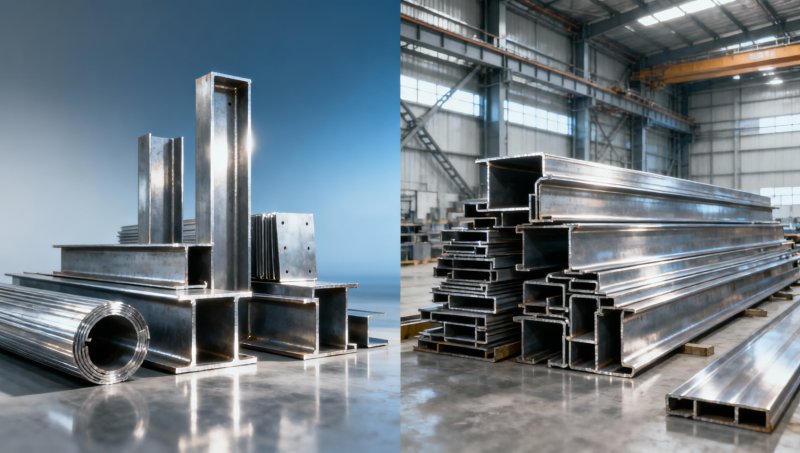
Lightweight structural steel is no longer a niche choice for special builds. In 2026, it is becoming a practical strategy for industrial buildings, modular systems, equipment platforms, warehouse frames, and transport-related structures where reducing dead load helps improve design efficiency. For project managers and technical evaluators, the key value is simple: lower structural weight can reduce foundation demand, ease lifting requirements, and shorten on-site assembly time.
This shift is also driven by procurement pressure. Buyers are expected to balance mechanical performance, compliance, cost control, and delivery reliability within 2–4 week planning windows or phased shipment schedules. Lightweight structural steel supports that balance when the design uses optimized sections, higher strength grades, cold formed profiles, or fabricated components that maintain load-bearing capacity while reducing unnecessary mass.
For operators and safety teams, the benefit is not only about tonnage. Lighter members can simplify handling, reduce crane occupancy time, and improve workflow in congested sites. In many fabrication and installation scenarios, dimensional tolerance such as ±2mm on width or tighter thickness control matters because fit-up quality affects both installation speed and long-term performance.
For business decision-makers and finance approvers, the real trend is total project efficiency rather than material weight alone. When steel selection lowers transport burden, reduces welding hours, and limits site rework across 3 major project stages—fabrication, delivery, and installation—the commercial value becomes easier to justify.
What is changing in buyer expectations
- More projects now require structural steel properties to be matched to specific load, span, and installation conditions instead of relying only on standard section availability.
- Global buyers increasingly compare ASTM, EN, JIS, and GB aligned production to reduce approval risk in cross-border procurement.
- Lead-time stability is becoming as important as price, especially for phased construction programs with 7–15 day shipment coordination targets.
- OEM and custom fabrication support matter more because many lightweight solutions depend on precise section optimization, not only raw steel supply.
Typical 2026 trend drivers by project role
The table below summarizes how different stakeholders view lightweight structural steel. This helps align engineering, purchasing, and commercial priorities before specification is finalized.
The trend is clear: lightweight structural steel is being judged not by weight reduction alone, but by how well it supports engineering certainty, procurement predictability, and lower execution risk across multiple teams.
Which technical properties matter most when reducing structural weight?
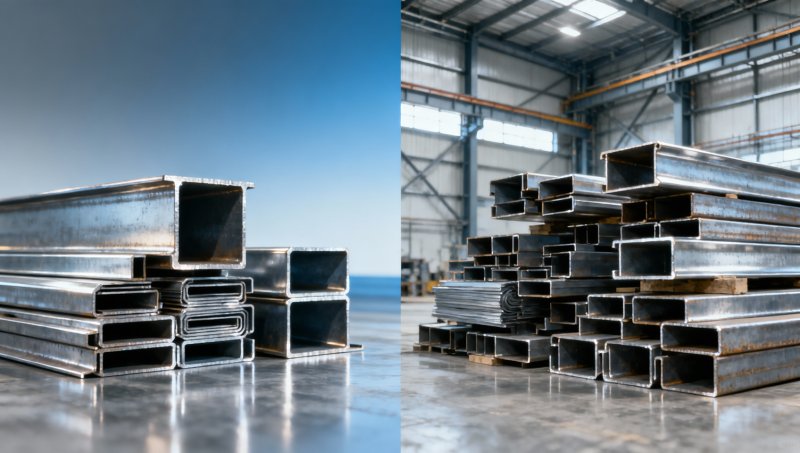
When buyers discuss lightweight structural steel, the most important question is not “How light can it be?” but “How much weight can be reduced without compromising structural function?” The answer depends on yield strength, toughness, section geometry, fabrication quality, dimensional control, and corrosion environment. High strength structural steel often enables thinner or more efficient sections, but the final choice must still match welding practice, connection design, and service conditions.
In practical procurement, three categories usually drive evaluation. First, mechanical performance: the steel must carry the required load with adequate safety margin. Second, manufacturability: it must support cutting, forming, drilling, and welding without causing production bottlenecks. Third, compliance: it must align with the applicable standard system, whether ASTM, EN, JIS, or GB, and fit the end market’s approval process.
For example, hot rolled materials and cold formed profiles are often combined in projects that seek both strength and weight reduction. Mid-project sourcing flexibility also matters. Some buyers use coils, plates, and finished structural sections in parallel to optimize fabrication routes. In that context, Hrc Coil can be relevant for industrial applications demanding high load-bearing capacity and weight reduction, especially where controlled thickness from 0.12–12mm and width from 100–2000mm support downstream forming or component manufacturing.
Material selection should also consider the expected environment. Low carbon plate is often preferred for forming and general fabrication, while special alloy plate, high carbon plate, or weather resistance options may suit more specific performance targets. Color appearance such as iron gray, brown, or partial ochre is not a structural criterion, but surface condition can influence inspection, storage planning, and coating preparation.
Key technical checkpoints before approval
- Verify section efficiency and load path, not only base material grade. A lighter member with weak connection detailing may create downstream risks.
- Check dimensional tolerance, such as thickness ±0.02mm and width ±2mm where applicable, because fabrication accuracy affects fit-up and waste.
- Confirm standard compatibility for destination markets, especially when project documents reference ASTM, EN, JIS, or GB/T frameworks.
- Review whether the steel grade supports the required processing route, including bending, punching, welding, or roll forming.
Reference specifications often considered in lightweight design
The following table shows a useful reference view for teams comparing materials intended for weight-sensitive fabrication and structural applications.
This kind of parameter review helps quality control teams, buyers, and engineering staff speak the same language. It reduces the risk of approving material that looks competitive on paper but does not fit the intended fabrication or installation route.
How should buyers compare lightweight steel options for different applications?
Comparison is where many sourcing decisions fail. Some teams compare only price per ton, while others focus only on nominal strength. In 2026, better decisions come from comparing weight efficiency, processing cost, compliance fit, and delivery practicality together. A lower tonnage design may still be expensive if it requires difficult fabrication, complex coatings, or limited availability in the target grade.
Application matters. A warehouse mezzanine, a factory platform, a cold formed purlin system, and a transport support frame do not use lightweight structural steel in the same way. For retaining wall support or associated reinforcement systems, buyers may also compare related products such as rebar for retaining wall applications. The engineering logic is different, but the procurement principle is similar: match the steel form to the load condition, environment, and assembly method.
For distributors and commercial teams, the most useful comparison model is a 4-part screen: specification fit, processing route, compliance needs, and supply continuity. If any one of these is weak, the risk of variation claims, schedule disruption, or field modification rises. This is especially true in export projects serving North America, Europe, the Middle East, and Southeast Asia, where end-user standards and inspection expectations differ.
Hongteng Fengda supports this decision process by supplying angle steel, channel steel, steel beams, cold formed steel profiles, and customized structural steel components, with both standard specifications and OEM solutions. For buyers managing mixed-material procurement, having one manufacturer that understands both standard sections and custom fabrication can reduce communication loss across 3–5 purchasing checkpoints.
Comparison table for common lightweight structural steel decision paths
Use the table below when comparing solution directions rather than assuming one steel option fits every project.
The practical lesson is that lightweight structural steel works best when engineering and sourcing are integrated early. A section that reduces 1 stage of site fabrication or 1 crane shift can sometimes deliver more value than a cheaper but heavier alternative.
A simple 5-point procurement checklist
- Confirm the required standard system and destination-market acceptance documents before requesting quotation.
- Ask whether the proposed steel supports the intended processing route, especially if bending, punching, or welding is extensive.
- Check whether custom lengths, OEM fabrication, or phased shipment are needed over 2–3 delivery batches.
- Review tolerance requirements and inspection hold points with the quality team before production starts.
- Compare total installed cost, not only ex-works ton price, because transport and site handling can change the decision.
What do global procurement teams need from a structural steel supplier?
In international sourcing, the best supplier is not simply the one offering the lowest initial number. Procurement teams usually need 4 things at the same time: stable production capacity, consistent quality, standards alignment, and dependable lead times. If one of these fails, lightweight structural steel can turn from an efficiency advantage into a schedule risk.
This is where manufacturer capability becomes important. Hongteng Fengda operates as a structural steel manufacturer and exporter from China, supporting global construction, industrial, and manufacturing projects. With modern manufacturing facilities and strict quality control, the company supplies standard specifications as well as customized structural steel solutions, helping buyers reduce sourcing risk while maintaining practical cost control.
For quality control personnel and safety managers, reliable sourcing means traceable specifications, inspection coordination, and practical communication during production and shipment. For project leaders, it means fewer surprises at the site. For dealers and distributors, it means supply that can support repeat business instead of one-off transactions. In many export programs, dependable lead times within standard production cycles are as valuable as a small price difference.
A supplier with experience across North America, Europe, the Middle East, and Southeast Asia is also better positioned to understand varying documentation expectations. That does not replace project-specific review, but it can simplify the discussion around ASTM, EN, JIS, and GB aligned supply routes, especially when multiple stakeholders need approval before a purchase order is released.
Common sourcing risks and how to reduce them
- Specification mismatch: avoid this by confirming grade, dimensions, tolerance, and standard references in one signed technical sheet.
- Lead-time drift: reduce this with milestone confirmation covering production, inspection, packing, and shipment over a defined 3-step schedule.
- Quality variation between batches: control this through pre-shipment checks and consistent document review for each lot.
- Communication gaps in custom orders: minimize them by sharing drawings, tolerances, and acceptance criteria before fabrication starts.
FAQ for buyers evaluating lightweight structural steel
How do I know if lightweight structural steel is suitable for my project?
Start with 3 checks: required load-bearing performance, service environment, and fabrication method. If reducing dead load can simplify the frame, foundation, transport, or installation plan without creating connection complexity, lightweight structural steel is often worth evaluating. Engineering review should always confirm the final design path.
What should procurement focus on besides price?
Focus on standard compliance, dimensional tolerance, processing suitability, and delivery stability. A lower-cost steel may increase total project cost if it causes additional cutting loss, coating work, slower installation, or delayed shipment. Compare at least 4 dimensions before approval: technical fit, fabrication impact, logistics, and documentation.
Are customized structural steel components better than standard sections?
Not always. Standard sections are often more efficient for conventional designs and shorter decision cycles. Customized components become more valuable when the project has tight space limits, repeated assemblies, OEM integration, or a strong need to cut site labor. The right choice depends on total installed efficiency, not only raw material format.
How long does a typical supply process take?
Timelines vary by grade, quantity, customization, and destination, but buyers usually plan around several stages rather than one single date: technical confirmation, production, inspection, and shipment. For smoother execution, teams should lock core specifications early and prepare approval comments within 3–7 working days where possible.
Why choose us for structural steel sourcing and project support?
If you are comparing suppliers for lightweight structural steel, the most useful partner is one that can support more than quoting. Hongteng Fengda helps global buyers evaluate standard sections, cold formed profiles, steel beams, angle steel, channel steel, and customized structural steel components based on application, compliance requirements, and delivery planning. This is especially important when technical, commercial, and project teams all need clear answers before approval.
You can contact us for practical discussions on parameters, section selection, material options, OEM customization, standard matching, sample support, and expected delivery arrangements. If your project involves multiple steel categories or phased procurement, we can also help organize the inquiry process so engineering details, quotation logic, and shipment expectations stay aligned from the start.
For buyers concerned about sourcing risk, we support communication on thickness and width ranges, tolerance expectations, applicable standards, and production feasibility before order release. For contractors and project managers, we can discuss how different structural steel properties affect fabrication and installation efficiency. For distributors, we can review repeat-order specifications and stable supply planning.
If you want to reduce uncertainty in 2026 steel procurement, send your drawings, required grades, dimensions, standards, quantity range, and target delivery schedule. We can help you confirm product selection, compare suitable structural steel options, review certification-related needs, and prepare a quotation approach that is clearer for both technical approval and commercial decision-making.
Please give us a message


Please enter what you want to find