As the Philippines accelerates its 2026 infrastructure pipeline—from expressways to transit hubs—specifications for structural steel are evolving rapidly. Procurement teams and project managers now face critical decisions: I beam vs H beam load capacity, Angle Steel price per ton Philippines, steel square rod vs stainless round durability, and 201 vs 304 stainless steel cost trade-offs. With tighter timelines, standard vs custom steel lead time and SMLS pipe compliance are under scrutiny—especially for safety-critical applications. As a certified ASTM/EN/GB structural steel manufacturer and exporter from China, Hongteng Fengda delivers precision-engineered angle steel, channel steel, flat plate stainless steel, and cold-formed profiles—ensuring quality, traceability, and on-time delivery across Southeast Asia.
How Philippine Infrastructure Projects Are Reshaping Structural Steel Requirements
The Philippines’ “Build Better More” program targets over USD 120 billion in infrastructure spending through 2026—including 14 new expressways, 8 urban rail lines, 3 airport expansions, and 200+ flood-resilient bridges. These projects demand higher performance thresholds: seismic resilience (up to Zone 4), corrosion resistance in coastal zones (salt spray exposure > 5 years), and accelerated construction schedules requiring prefabricated, dimensionally precise components.
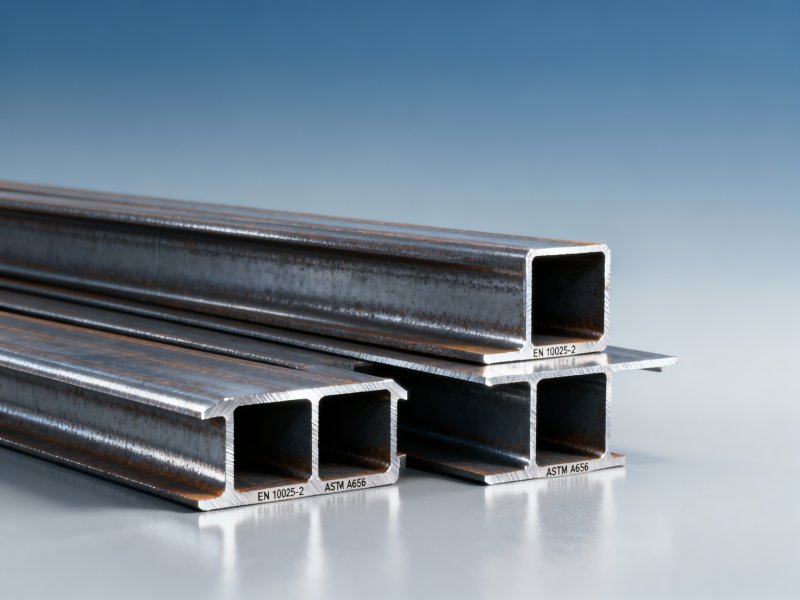
Local procurement specifications now explicitly reference EN 10025-2:2019 (S355JR/S460ML) and ASTM A656 Grade 80 for heavy-duty beams—replacing legacy GB/T 700 Q235 in high-risk segments. This shift directly impacts material selection, fabrication tolerances (±1% instead of ±1.5%), and mill certification requirements for traceability down to heat number level.
For contractors operating under fixed-price EPC contracts, even minor specification mismatches can trigger rework penalties averaging 12–18% of structural package value. That’s why forward-looking buyers are auditing supplier capabilities—not just product specs—across four pillars: real-time mill test report access, dimensional verification at origin, logistics coordination for staggered deliveries, and bilingual technical support during erection.
What to Prioritize When Selecting I-beams for Philippine Projects
Selecting the right I-beam is no longer about nominal size alone. Philippine engineers now require granular data on yield strength consistency (CV ≤ 4.2% across heats), Charpy V-notch impact energy at −20°C (≥27J), and surface defect limits per EN 10163-2 Class C. These parameters determine whether a beam qualifies for Category II (seismically critical) or Category III (non-load-bearing enclosure) use.
Hongteng Fengda’s universal rolling process ensures flange parallelism within 0.15mm/m and web straightness deviation < 0.2mm/m—critical for bolted connections in modular station platforms. Our mills routinely supply SS355JR and A36 variants with thicknesses from 4.5mm to 15.8mm, flange widths spanning 100–400mm, and lengths customized between 6–12 meters to match crane reach and transport axle limits.
Key Technical Parameters for Philippine-Specific I-beam Use
This level of control reduces field rejection risk by up to 65% compared to generic mill stock—particularly vital when working under Manila’s 120-day rainy season window or Davao’s tight port turnaround slots (average vessel dwell time: 3.2 days).
Why Standard Lead Times No Longer Apply to Philippine Deliveries
While global average lead time for structural steel remains 8–12 weeks, Philippine projects increasingly demand staged deliveries aligned with civil works progress—often compressing production windows to 4–6 weeks. This requires synchronized planning across raw material sourcing (scrap vs billet), rolling schedule allocation, and third-party inspection scheduling (SGS/BV/Intertek).
Hongteng Fengda maintains dedicated rolling lines for ASEAN orders, with priority slotting for Philippine clients confirmed 10 weeks pre-shipment. We offer three delivery tiers: Standard (6–8 weeks), Express (4–5 weeks, +7.5% surcharge), and Just-in-Sequence (JIS-mode, ±2 days tolerance, for large-scale rail projects). All include ISO 9001-certified packaging, RFID-tagged bundles, and digital B/L integration with Philippine customs brokers.
- Pre-shipment dimensional check reports issued 72h before loading
- ASTM/EN/GB compliance verified by independent lab (report included)
- Custom labeling per DPWH Form 202 (including heat number, grade, and mill ID)
How to Reduce Sourcing Risk Without Sacrificing Cost Control
Procurement leaders face conflicting KPIs: 15% annual cost reduction targets versus zero tolerance for non-conformance. The solution lies in shifting from transactional bidding to engineered partnership—where suppliers co-develop specifications, validate fabrication methods, and absorb variability risk through contractual SLAs.
Hongteng Fengda offers three risk-mitigation mechanisms: (1) Price lock-in for 90 days against LME iron ore futures; (2) Free engineering review of shop drawings for weld sequence and connection detailing; (3) On-site technical support during first-article inspection at Philippine project sites—with travel costs waived for orders ≥500 MT.
Our clients report 22% lower total cost of ownership (TCO) over 24 months—driven by reduced rework (−31%), fewer inspection delays (−44%), and extended service life in marine environments (verified 10-year salt fog testing per ASTM B117).
Get Your Philippine Infrastructure Project Ready—Now
Whether you’re evaluating I-beam alternatives for the Metro Manila Subway Phase 1, specifying corrosion-resistant channels for the Cebu Coastal Road, or sourcing cold-formed purlins for Clark Green City industrial parks—we help you align technical requirements with commercial realities.
Contact us today for:
- Free dimensional feasibility review (submit your drawing or spec sheet)
- Certified mill test reports matching DPWH/DOTr standards
- Lead time confirmation for your exact quantity, grade, and length mix
- Sample shipment (≤50kg) with full traceability documentation
Let’s ensure your 2026 infrastructure milestone isn’t delayed by material uncertainty—start the conversation with Hongteng Fengda’s Philippine project team within 24 business hours.
Please give us a message


Please enter what you want to find