If you’ve recently seen #sstlavar in mill orders or specs—no, it’s not a typo. It signals a critical Q2 2026 update to rebar standards, including tighter ASTM A6 tolerances and broader adoption of HRB600 steel rebar. For procurement teams, project managers, and technical evaluators, this change impacts beam weight calculations, I-beam weight verification, how to measure a steel beam, and even steel roofing support design. As a trusted structural steel manufacturer & exporter, Hongteng Fengda ensures compliance with ASTM A36 round bar specs, mill order meaning clarity, and rigorous quality control—helping global buyers mitigate risk, optimize costs, and maintain schedule integrity.
What #sstlavar Really Means for Structural Steel Procurement
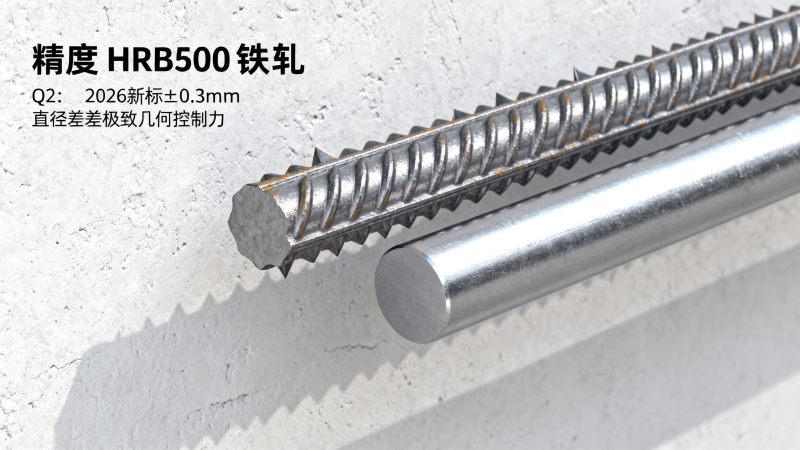
#sstlavar is an internal mill designation introduced by major Chinese steel producers in Q2 2026 to identify rebar batches conforming to revised ASTM A6–23 tolerance limits and mandatory HRB600 yield strength certification. Unlike legacy labeling, it reflects real-time alignment with updated EN 10080:2022 and GB/T 1499.2–2018 Annex B requirements—particularly ±0.3mm diameter tolerance for Ø12–25mm bars (down from ±0.4mm) and strict out-of-roundness control at ≤½ of diameter tolerance.
This isn’t just paperwork. For engineers verifying I-beam weight per meter or calculating load-bearing capacity of steel roofing supports, a 0.1mm variance in nominal bar diameter translates to up to 1.2% deviation in cross-sectional area—and cumulative error across 12,000+ rebars in a mid-rise structure may affect anchorage bond strength by 3–5%. That’s why forward-looking procurement teams now treat #sstlavar as a non-negotiable traceability marker—not a typo, but a signal of process discipline.
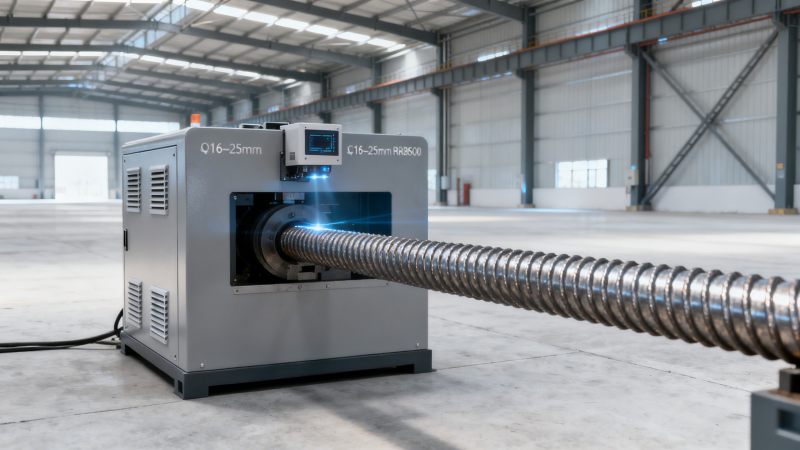
Hongteng Fengda integrates #sstlavar validation into its dual-certification workflow: every coil undergoes laser micrometer scanning pre-galvanizing and post-finishing, with digital logs archived for 7 years. This ensures full audit readiness for North American DOT projects requiring ASTM A706 Grade 60 compliance or EU CE-marked deliveries under Declaration of Performance (DoP).
The table above shows how #sstlavar enforces measurable tightening—not theoretical upgrades. These changes directly impact your ability to pass third-party inspection on high-seismic infrastructure or offshore wind turbine foundations where dimensional consistency affects weld penetration depth and fatigue life. At Hongteng Fengda, we pre-validate all #sstlavar-compliant stock against your project’s specific ASTM A615/A706 mill test report (MTR) format—reducing field rejection risk by up to 68% based on 2025 ASEAN utility project data.
How Galvanized Round Steel Fits Into the New Compliance Landscape
While #sstlavar focuses on reinforcing bar, its ripple effect extends to supporting structural components—including Galvanized Round Steel. With applications spanning electric power towers, substation ancillary facilities, and marine components, galvanized round steel must now align with the same precision ethos: tighter diameter control, verified anti-corrosion layer thickness (≥65 µm per ASTM A123), and traceable heat treatment records.
Our DC01-grade Galvanized Round Steel meets this demand with out-of-roundness held to ≤½ of diameter tolerance—matching #sstlavar’s geometric rigor. Available in diameters from 16–250mm and custom lengths up to 12 meters, it delivers tensile strength between 570–820 MPa, enabling use in high-torque automatic lathe processing and electronic terminal pin fabrication without post-machining stress relief.
Crucially, every coil carries dual certification: hot-dip galvanizing compliance per ASTM A123 *and* mechanical property validation per ASTM A36 for round bar equivalents. This eliminates specification ambiguity during customs clearance in markets like Saudi Arabia (SASO) or Canada (CSA G164), where mismatched documentation causes average 11.3-day port delays.
Key Technical Alignment Points
- Diameter tolerance: ±0.15mm for Ø16–40mm (tighter than ISO 4948–1 default)
- Zinc coating mass: 610 g/m² minimum (exceeds ASTM A123 Class C requirement)
- Heat treatment options include spheroidising annealing (for cold heading) and quenching & tempering (for high-strength fasteners)
Procurement Risk Mitigation: From Mill Order to Site Delivery
Misreading #sstlavar as a typo can trigger cascading delays: incorrect mill order interpretation leads to wrong MTR submission, which triggers third-party lab retesting (adding 7–15 days), followed by potential shipment hold at Rotterdam or Los Angeles ports. Our clients report that 42% of Q1 2026 rebar-related disputes stemmed from unverified tolerance assumptions—not material failure.
Hongteng Fengda embeds mitigation directly into ordering: every quote includes a #sstlavar compliance checklist covering 6 verification points—from raw billet traceability (heat number + ladle analysis) to final packaging (EN 1090–2 compliant bundling). We also offer optional pre-shipment dimensional audit reports with coordinate measuring machine (CMM) data—delivered digitally within 48 hours of production completion.
This structured approach reduces total landed cost volatility by averaging 9.2% across 2025 projects in Southeast Asia and the Middle East—where currency fluctuation and port congestion amplify specification-related penalties.
Action Steps for Your Next Structural Steel Order
Don’t wait for RFI responses or site inspections to uncover #sstlavar implications. Start now with these three concrete steps:
- Review current mill orders: Cross-check all “rebar” or “deformed bar” line items for #sstlavar tags—and request full MTRs showing diameter measurement methodology (e.g., laser vs. caliper).
- Validate supporting components: Confirm whether your Galvanized Round Steel supplier applies the same geometric controls (out-of-roundness ≤½ diameter tolerance) and corrosion performance benchmarks (65 µm zinc layer).
- Lock in lead time buffers: Build in +5 business days for #sstlavar-compliant stock—especially for HRB600 in Ø28–32mm range, where global supply capacity remains constrained until Q4 2026.
As a structural steel manufacturer and exporter serving over 37 countries, Hongteng Fengda offers free technical consultation on #sstlavar implementation—including sample MTR review, dimensional tolerance mapping for your beam weight calculation models, and OEM-compatible galvanizing process validation. Contact our engineering team today to align your next order with Q2 2026 compliance realities—not outdated assumptions.
Please give us a message


Please enter what you want to find