Galvanized steel sheet plays a vital role across diverse applications, from industrial production lines to construction frameworks. Understanding the technical differences between galvanized steel sheet for industrial use and those for construction is essential for selecting the right material and specifications. As a leading galvanized steel sheet manufacturer in China, Hongteng Fengda provides customized solutions covering galvanized steel sheet thickness options, specifications, and high-quality products for roofing, cold storage, and structural applications, serving as a trusted galvanized steel sheet exporter to Europe and global markets. The selection of proper galvanized steel sheet specifications is a fundamental decision influencing durability, performance, and cost-efficiency in projects. Industrial operators, procurement managers, and engineers need to differentiate between applications that demand mechanical toughness, corrosion resistance, or specific galvanized coatings. The understanding of this separation contributes to long-term reliability and sustainability in infrastructure and industrial equipment, particularly for environments such as cold storage construction and outdoor roofing systems that face varied corrosion factors.
Definition and Technical Overview of Galvanized Steel Sheet
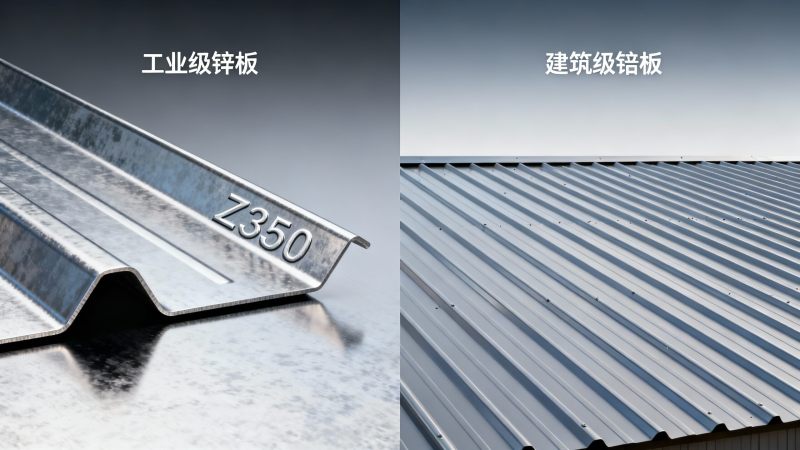
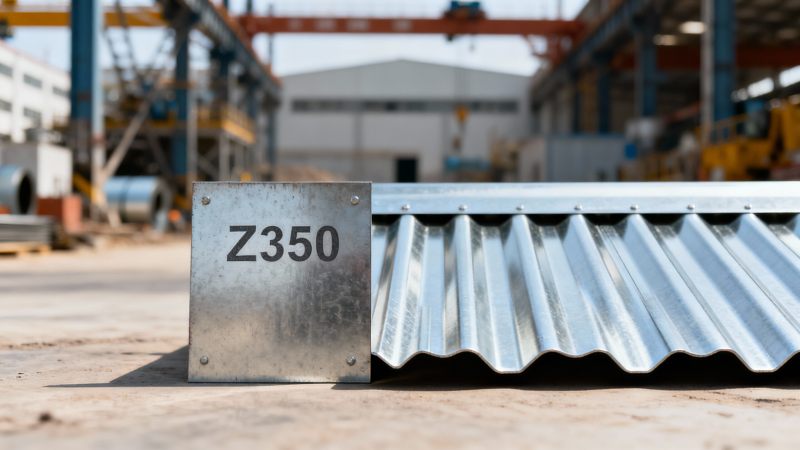
Galvanized steel sheet refers to carbon steel sheets coated with a layer of zinc, forming a protective barrier against oxidation. The primary types include hot-dip galvanized sheets and electro-galvanized sheets, each offering distinct surface properties and adherence levels. In industrial manufacturing, galvanized steel sheet for industrial use is often chosen for machinery components, ductwork, or shell protection, where operational temperature and exposure to chemicals are critical. Meanwhile, the galvanized steel sheet for construction is more commonly applied to roofing, wall panels, framing systems, or decorative cladding, favoring surface appearance, uniformity, and ease of installation. The technical differentiation largely lies in coating mass, surface finishing, and substrate hardness. Industrial varieties tend to have heavier zinc coating or alloy coating options (such as Z275, Z350, or G90 marking) for extended corrosion protection in aggressive atmospheres. The variation in galvanized steel sheet thickness options serves as a decisive parameter: thicker materials ensure higher load-bearing and impact resistance, while thinner gauges are ideal for lighter architectural uses. Advanced manufacturing facilities like those at Hongteng Fengda adhere to ASTM A653, EN 10346, JIS G3302, and GB standard frameworks to meet precise market expectations across Europe, North America, and Asia. Industrial technicians and quality control teams must evaluate mechanical parameters including yield strength, tensile strength, and elongation rates in line with specific application environments.
Market Overview and Industry Trends
The galvanized steel sheet sector continues to expand as industries move toward sustainable, long-life materials that combine mechanical stability with environmental compliance. Globally, demand from industrial projects like cold storage, chemical plants, and manufacturing facilities is increasing the consumption ratio of galvanized steel sheet for industrial use. Construction demand, conversely, remains dominant in roofing, pre-engineered buildings, and modular housing sectors. In Europe and North America, galvanized steel sheet exporter networks emphasize traceability and origin certification, with Hongteng Fengda maintaining competitive galvanized steel sheet price per ton through steady production capability. With European Union Green Building directives, the use of recyclable and low-emission coating processes becomes a central purchasing factor. Additionally, technological upgrades like continuous galvanizing lines (CGL) provide precise temperature and coating control, ensuring consistent quality at scale. Simultaneously, end-users are combining materials like galvanized steel with composite systems or integrating mesh-based reinforcements. For specific performance reinforcement in cooling and ventilation environments, some manufacturers use integrated products such as Stainless Steel Welded Mesh for enhanced corrosion and acid resistance in both the chemical industry and cold storage infrastructure. This synergy between galvanized sheet and stainless components forms a modern, hybrid construction trend that maximizes longevity.
Application Scenarios in Industrial and Construction Fields
In practice, galvanized steel sheet is widely used across two distinct domains. In industrial use, it serves as a protective envelope for machinery, piping, and ventilation ducts, and is frequently applied in cold storage enclosures where temperature cycles and humidity demand excellent anti-corrosive surfaces. The galvanized steel sheet for cold storage offers stable performance at low temperatures and prevents degradation caused by condensation. In structural manufacturing, the material is used for warehouse partitions, equipment housings, panels for control cabinets, and conveyor lines. In contrast, galvanized steel sheet for construction integrates architectural aesthetics with structural support roles, being applied in roofing sheets, exterior facades, fence walls, decking, and framing systems. The galvanized steel sheet thickness options and coating quality affect not only performance but also overall energy efficiency in buildings. Roofing systems rely on the sheet’s reflectivity, contributing to reduced thermal gain, while wall cladding applications leverage uniform coating for weather resistance. In projects like industrial parks or logistic warehouse development, project managers and safety inspectors assess galvanized steel sheet specifications in compliance with regional codes. Moreover, galvanized steel sheet manufacturer in China such as Hongteng Fengda plays a vital role in enabling smooth global supply with consistent coating standards and documentation. Comprehensive inspection before shipment assures purchasers and decision-makers of material authenticity and specification matching, reducing sourcing risks and logistics costs. Distribution teams and resellers benefit from flexible OEM packaging and clear markings that satisfy European and Middle Eastern buyers’ traceability requirements.
Technical Comparison: Industrial Use vs. Construction Use
While both categories rely on zinc protection, galvanized steel sheet for industrial use and for construction differ in mechanical composition, coating approach, and tolerance. Industrial-grade sheets favor enhanced hardness, higher yield strength, and deeper coating adherence to withstand friction, vibration, and chemical contact. Construction-grade sheets emphasize versatility, surface appearance, and formability, allowing easy bending, drilling, and cutting operations. The main comparison metrics include:
This distinction ensures users select precise grades suitable for operational conditions. Engineers looking into galvanized steel sheet specifications should also review coating adhesion test (90° bend test), uniformity test, and corrosion resistance under salt spray exposure. With technological upgrades in hot-dip galvanizing, specialized chromate-free post-treatment coatings are now widely adopted to meet environmental mandates. For high-moisture applications such as cold storage systems, additional sealing or combination with mesh structures becomes advantageous, ensuring integral performance under temperature cycling. Procurement specialists considering galvanized steel sheet exporter to Europe should pay attention to both dimensional tolerance and mechanical certification compliance, which guarantee cross-border acceptance.
Procurement Guidance and Cost Considerations
When sourcing galvanized steel sheet for construction or industrial use, several purchasing principles ensure optimized total cost of ownership. First, defining the intended environment is critical—industrial settings with solvents or refrigerants require thicker zinc layers, whereas residential construction may balance thickness against cost. Understanding localized market pricing factors also assists purchasers in evaluating galvanized steel sheet price per ton, often influenced by raw steel costs, zinc market fluctuations, and energy consumption of galvanizing lines. Buyers should verify supplier technical data sheets, surface inspection reports, and upstream mill certifications to ensure each batch aligns with ASTM, EN, or GB tolerance ranges. Reputable galvanized steel sheet manufacturer in China companies like Hongteng Fengda provide one-stop solutions encompassing both product customization and quality traceability. They also offer flexible MOQ terms to help global buyers manage inventory and avoid production delays. In modern project setups, integrating hybrid materials such as stainless reinforcement meshes can reduce maintenance cycles. For example, using Stainless Steel Welded Mesh as internal reinforcement layers in roofing or cladding assemblies improves corrosion resistance, ensuring the long-term strength and drainage efficiency of exterior facades. These meshes, made from SS 304 or 316 grade stainless steel wire, complement galvanized materials perfectly in corrosive and marine climates. As such, the combination of these products often provides the most balanced approach to lifecycle cost efficiency, reflecting total material sustainability and reliability benefits.
Standards, Certification, and Quality Control
Compliance with international standards underpins the credibility and performance of any galvanized steel sheet product. Qualified manufacturers follow the quality schemes set out in ASTM A653/A653M for standard specification of steel sheet zinc-coated (galvanized) by hot-dip process, EN 10346 for continuously hot-dip coated steel flat products, JIS G3302, and corresponding GB/T 2518 standards. Industrial buyers should confirm that coating mass, surface finish, and chemical composition meet these regulatory baselines. Hongteng Fengda enforces a complete inspection routine incorporating spectrometer analysis for steel composition, coating thickness measurement, adhesion testing, bending trials, and salt spray corrosion testing. The company’s strict quality management system ensures that galvanized steel sheet for roofing or industrial purposes remains within tolerance limits for flatness and mechanical strength. Furthermore, the exporter documentation includes mill test certificates with detailed batch numbers, fulfilling customs and end-user requirements, particularly for galvanized steel sheet exporter to Europe transactions where CE compliance and REACH requirements are mandatory. To ensure ongoing reliability, quality assurance teams track performance feedback from distributors and final users. A looped evaluation structure enables fast improvement of galvanized steel sheet specifications, coating consistency, and packaging protection to maintain integrity during ocean freight. Safety management professionals in client organizations can thus rely on verified data, ensuring minimal installation risk and maximal operational security.
FAQ and Misconceptions
Common misconceptions surrounding galvanized steel sheets often lead to suboptimal material choice. One frequent misunderstanding is that higher zinc coating always equals better performance; in reality, excessive coating thickness in certain construction contexts may reduce formability or welding ease. Another misconception involves interchangeability: galvanized steel sheet for construction and for industrial use are not universally substitutable—industrial types are engineered for heavier operational stresses, while construction sheets favor flexible shaping and visual appeal. Procurement staff also occasionally overlook local environmental exposure, focusing solely on cost. Yet, long-term ROI depends heavily on corrosion lifecycle, maintenance intervals, and environmental compliance status. Quality control inspectors should perform routine coating adhesion and visual appearance inspections, checking for uneven coating, white rust, and pinhole defects. Project managers should plan storage conditions carefully—galvanized sheets should be stored under non-condensing, ventilated environments to prevent early corrosion. Further confusion can occur when buyers conflate galvanized steel sheets with other coated products such as aluminum-zinc alloy (Galvalume) sheets. While both resist oxidation, each has distinct reflective and forming properties. Working directly with a professional galvanized steel sheet manufacturer in China like Hongteng Fengda ensures clear specification advice, verified documentation, and tailored recommendations for every industrial or construction requirement.
Trends and Future Insights
Looking ahead, galvanized steel production is evolving toward eco-friendly processes, highlighting chromate-free passivation, energy-efficient furnaces, and AI-supported quality control systems. These innovations enhance coating uniformity and reduce waste zinc discharge, aligning with sustainable manufacturing initiatives. Industrial buyers, especially those in food processing or refrigeration plants, are increasingly exploring synergy between traditional galvanized steel sheet for cold storage and high-performance sealing composites to minimize energy loss. Digital transformation also plays a key role: smart warehouses rely on digitally traceable galvanized steel sheet coils coded for logistics automation. Global infrastructure development continues to create consistent demand in both construction and manufacturing sectors, emphasizing modular design and prefabrication. With these market trends, Hongteng Fengda invests in continuous galvanizing lines and R&D to produce better galvanized steel sheet specifications tailored to evolving standards. The application of hybrid products combining galvanized and stainless features such as structural meshes or reinforcement lattices is projected to expand, particularly in the architectural sector. Such hybrid systems improve weatherproofing performance and aesthetic integration. In distribution chains, galvanized steel sheet exporter to Europe partnerships will focus more on digital documentation, sustainability certificates, and sustainability-based procurement models to cater to regulatory-driven clients in the EU and UK. Decision-makers and engineers can thus expect continued efficiency improvement, smaller tolerance variation, and stronger lifecycle assurance as technology advances.
Why Choose Hongteng Fengda
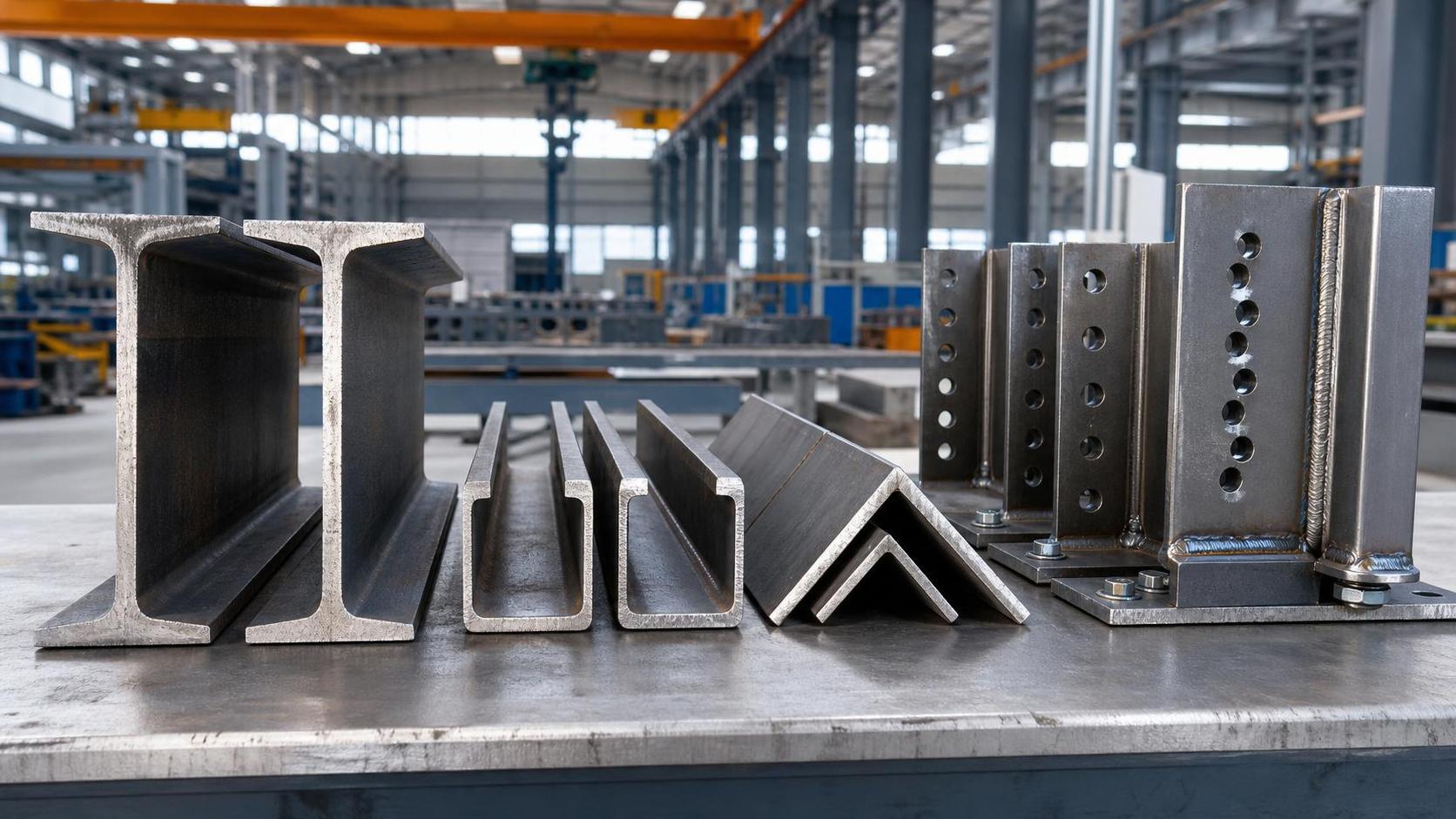
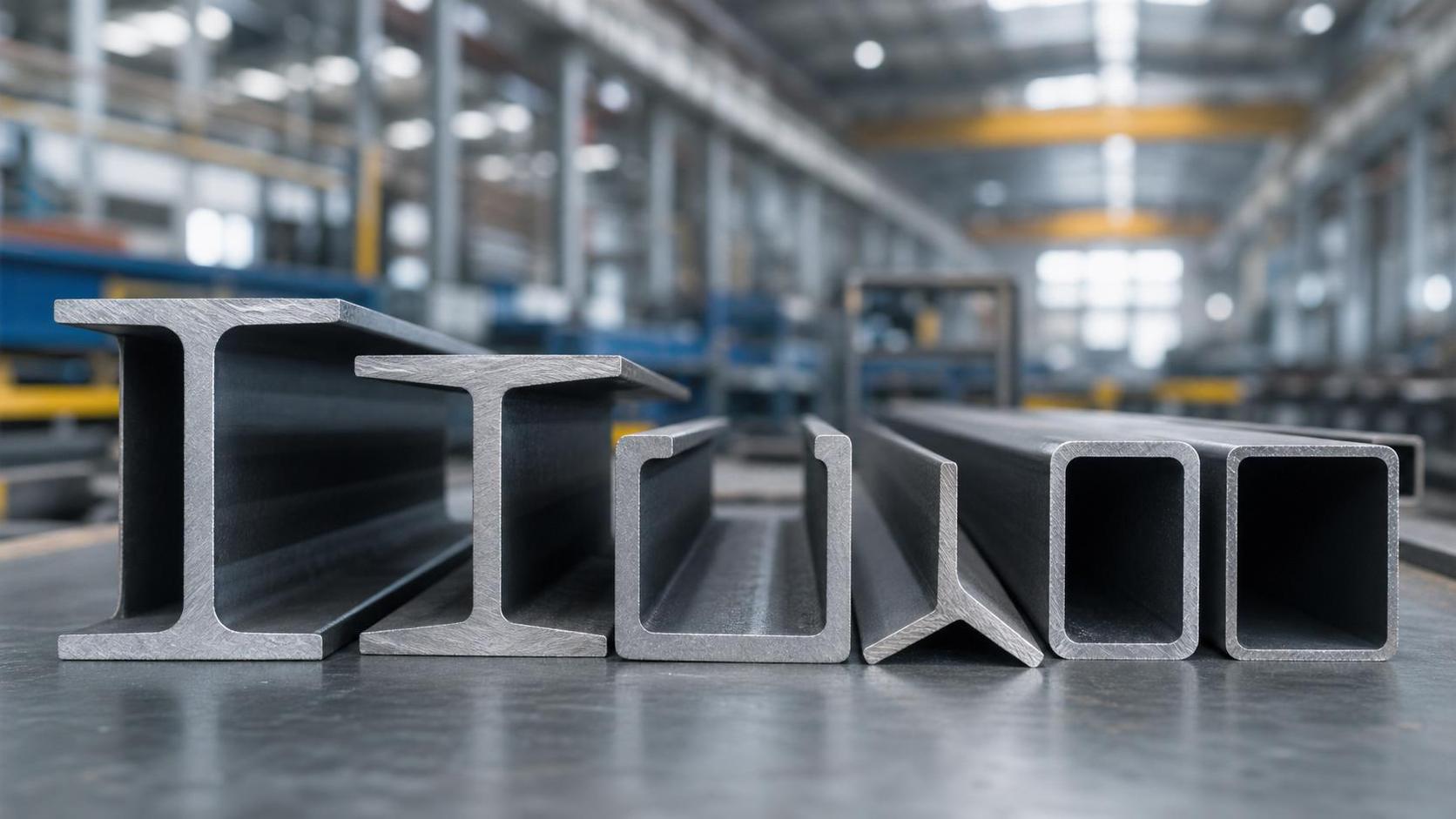
Selecting a reliable partner for galvanized steel sheet ensures continuity and high-quality project output. Hongteng Fengda, as an experienced structural steel manufacturer and exporter from China, specializes in producing galvanized steel sheet for industrial use and construction, adhering strictly to ASTM, EN, JIS, and GB standards. With rich expertise in angle steel, channel steel, beams, and cold formed sections, the company provides complete sourcing solutions and OEM customization. Its modern production lines, digital monitoring, and multilayer inspection guarantee stable coating and dimensional accuracy across every galvanized steel sheet specification. Serving customers throughout North America, Europe, the Middle East, and Southeast Asia, Hongteng Fengda offers dependable delivery, professional communication, and aftersales technical support. Buyers, distributors, and project supervisors benefit from rapid response time, technical documentation, and transparent cost control built into each contract. For any inquiries, product selection support, or tailored project consultancy regarding galvanized steel sheet for construction, roofing, or cold storage facilities, professionals can contact the Hongteng Fengda expert team. Together with innovative products and exceptional customer service, Hongteng Fengda commits to being your trusted long-term galvanized steel sheet manufacturer in China, helping you achieve quality, efficiency, and sustainability in all your engineering projects.
- channel steel
- angle steel
- galvanized steel sheet
- galvanized steel sheet manufacturer
- galvanized sheet
- galvanized steel sheet coil
- ss steel wire
- stainless steel wire
- hot-dip galvanized
- galvanized steel
- structural steel
- Structural Steel
- Stainless Steel Welded Mesh
- Galvanized
- Steel Wire
- galvanized steel sheet for construction
- galvanized steel sheet price per ton
- galvanized steel sheet for roofing
- galvanized steel sheet manufacturer in China
- galvanized steel sheet specifications
- galvanized steel sheet for industrial use
- galvanized steel sheet exporter to Europe
- galvanized steel sheet thickness options
- galvanized steel sheet for cold storage
Related recommendations
 How to Select a Steel Profile Based on Load, Span, and Fabrication NeedsProfile selection starts with load, span, and fabrication needs. Learn how to compare steel sections for strength, cost, workability, and sourcing efficiency.
 What Is a Steel Profile? Common Shapes, Uses, and Selection BasicsProfile selection starts with shape, but performance depends on load, fabrication, and standards. Learn common steel profile types, uses, and smart selection basics.
 Galvanized Pipe vs Black Pipe: Which One Fits Water, Gas, or Outdoor Lines?Galvanized pipe or black pipe? Compare the best choice for water, gas, and outdoor lines, with key insights on corrosion, codes, cost, and long-term performance.
 How to Choose Steel Roofing for Warehouses, Farms, and Residential BuildingsSteel Roofing selection depends on building type. Learn how warehouses, farms, and homes differ in corrosion, insulation, drainage, and cost for smarter roofing decisions.
Please give us a message


Please enter what you want to find