Choosing the right material for wet conditions can directly affect durability, maintenance costs, and safety. When comparing ss sheet plate and 304 plate for humid or water-exposed applications, users need to understand corrosion resistance, surface performance, and practical suitability. This guide explains the key differences to help operators and buyers select the most reliable stainless steel option for their working environment.
Why wet-environment material choices are changing faster
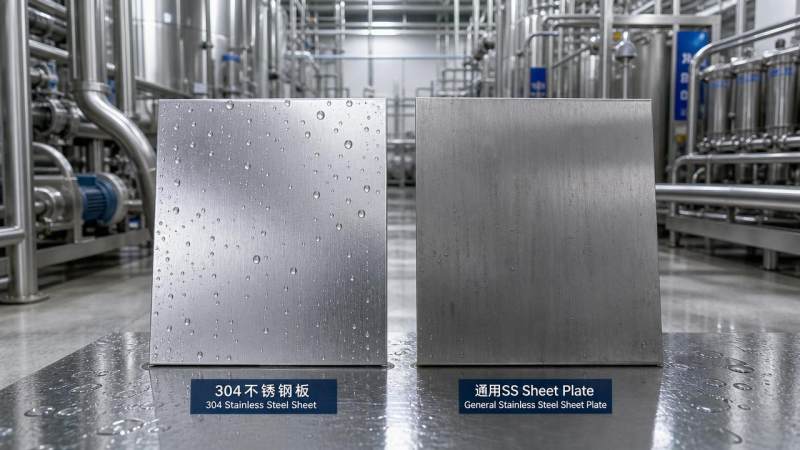
Wet environments are becoming more demanding for stainless steel selection. Higher hygiene standards, longer service expectations, and lower maintenance tolerance are changing buying decisions.
In many projects, ss sheet plate is no longer judged only by initial price. It is now evaluated by corrosion risk, cleaning frequency, and lifecycle performance.
This shift matters in food areas, marine facilities, wastewater systems, and outdoor structures. Water exposure is not always equal, and material failure often starts from overlooked details.
When users ask whether ss sheet plate or 304 plate is better, the real issue is environment severity. Humidity, chlorides, stagnant water, and surface finish all influence results.
The market signal behind the ss sheet plate comparison
The comparison between general ss sheet plate and 304 plate appears more often because application conditions are becoming more specialized.
Projects now separate indoor moisture from outdoor rainfall, and fresh water from salt exposure. That change pushes closer material review before fabrication starts.
At the same time, supply chains are global. Buyers compare ASTM, EN, JIS, and GB compliant materials, looking for stable quality and predictable corrosion behavior.
What is driving this trend
- Longer service life targets in construction and industrial assets
- Higher penalties for shutdowns caused by corrosion damage
- Greater awareness of hidden maintenance costs
- Improved specification control in export projects
- Rising demand for cleaner, more stable surface performance
Understanding ss sheet plate versus 304 plate in real use
The term ss sheet plate can describe stainless steel sheet or plate in many grades. It is a broad category, not a single corrosion-resistance level.
By contrast, 304 plate refers to a specific austenitic stainless steel grade. It is widely used because it balances formability, corrosion resistance, and availability.
That distinction is important. One ss sheet plate may be 201, another may be 304, and another may be 316. Wet performance changes significantly across those grades.
If the ss sheet plate grade is not clearly defined, wet-environment decisions become risky. Surface rust, tea staining, and localized corrosion can appear sooner than expected.
Why 304 plate is often preferred for humid and water-exposed areas
304 plate contains chromium and nickel levels that support a stable passive layer. That protective film helps resist corrosion in many indoor and outdoor wet conditions.
For frequent washing, condensation, and intermittent water contact, 304 plate usually performs better than lower-alloy stainless options sold under the ss sheet plate label.
It also offers good fabrication performance. Cutting, bending, and welding can be controlled well when processing follows the correct procedure and finishing standard.
Where 304 plate fits best
- Food processing rooms with regular washdown
- Commercial kitchens and sink surrounds
- Equipment covers in humid factories
- Architectural trim in rainy outdoor areas
- Tanks and panels exposed to fresh water
However, 304 plate is not the best answer for every wet environment. Chloride-rich marine atmospheres and aggressive chemicals may require higher grades.
The hidden risk when ss sheet plate means lower stainless grades
A common issue in global sourcing is that ss sheet plate may refer to lower-cost grades like 201. These can look similar at first but behave differently in service.
For example, some projects also compare bars and fabricated components with sheet materials. A related option is 304 Stainless Square steel rod.
In supplied data, the model includes 201 stainless steel with tensile strength at or above 520 MPa and yield strength at or above 275 MPa.
It is used in kitchenware, outdoor decoration, automotive parts, shipbuilding, textiles, and manufacturing. It also offers strong formability and cold-working hardening capability.
Yet in wet environments, mechanical strength alone is not enough. Corrosion resistance must match the actual exposure level, especially where water remains on the surface.
This is why the grade behind the ss sheet plate description should always be checked. Material naming shortcuts can lead to wrong expectations and avoidable replacement costs.
How wet conditions affect different business stages
The choice between ss sheet plate and 304 plate influences more than corrosion. It affects fabrication efficiency, finishing quality, maintenance scheduling, and total lifecycle cost.
Design and specification stage
Unclear grade descriptions create downstream problems. Drawings should define grade, thickness, finish, standard, and the expected water exposure level.
Manufacturing and fabrication stage
Surface contamination from carbon steel tools can weaken performance. Even high-quality 304 plate can show staining if fabrication hygiene is not controlled.
Installation and service stage
Poor drainage, trapped moisture, and rough finishes accelerate localized attack. Material choice works best only when installation details support water shedding and cleaning.
What deserves closer attention before selecting ss sheet plate
- Confirm whether ss sheet plate means 201, 304, 316, or another grade
- Match the grade to fresh water, humidity, chemical splash, or salt exposure
- Review surface finish because smoother finishes usually clean better
- Check welding, pickling, and passivation requirements
- Evaluate lifecycle cost instead of comparing only purchase price
- Request compliance with ASTM, EN, JIS, or GB when needed
A practical judgment path for humid and wet applications
In short, 304 plate is usually the safer answer when ss sheet plate is unspecified and the environment involves regular moisture or water exposure.
The next move for reliable stainless steel sourcing
Material selection for wet environments is moving toward clearer grade control and stronger lifecycle thinking. That makes the ss sheet plate question more important, not less.
For many humid or fresh-water applications, 304 plate offers a dependable balance of corrosion resistance, fabrication performance, and service stability.
Hongteng Fengda, a structural steel manufacturer and exporter from China, supplies steel products and customized solutions for global construction and industrial projects.
With modern facilities, strict quality control, and support for ASTM, EN, JIS, and GB standards, stable sourcing becomes easier and more predictable.
If a project involves wet service conditions, define the exact grade first. Then compare environment severity, finish, fabrication method, and maintenance expectations before ordering.
That approach helps ensure the selected ss sheet plate delivers the durability, cleanliness, and long-term value expected in real operating conditions.
Please give us a message


Please enter what you want to find