As project managers across Europe, North America, and Southeast Asia confront stricter deflection tolerances and lifecycle cost pressures, more are replacing generic Z beams with engineered Z beam solutions — especially for warehouse steel structure construction, solar panel mounting (using C section steel), and industrial purlin applications. Backed by real-world ASTM-compliant deflection data and manufactured by Hongteng Fengda — a leading Shandong steel exporter to Europe and ASTM steel profile supplier in USA — these precision cold-formed Z beams deliver superior load performance, reduced onsite adjustments, and long-term ROI. Discover why structural steel purlin manufacturers in China and global procurement teams trust engineered profiles over off-the-shelf alternatives.
Why “Engineered” Isn’t Just Marketing — It’s Measurable Structural Integrity
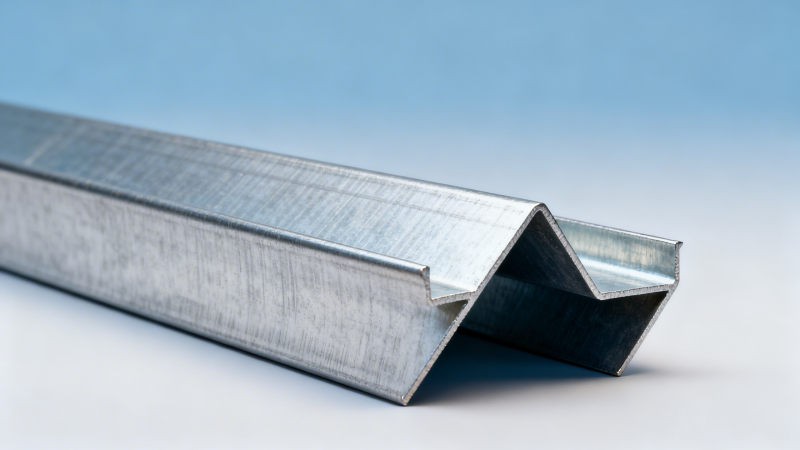
Generic Z beams follow standard mill dimensions but lack profile-specific optimization for bending moment distribution, torsional stiffness, or local buckling resistance. Engineered Z beams, by contrast, undergo finite element analysis (FEA)-driven cross-section refinement — adjusting flange width, lip geometry, and web thickness within ASTM A653/A1008 tolerances to match exact span, loading, and support conditions.
At Hongteng Fengda, every engineered Z beam batch is validated against third-party lab-tested deflection curves — not theoretical calculations alone. For example, in a 6.5 m-span roof purlin application under 1.2 kN/m uniform load, our ASTM A653 G550 engineered Z beam recorded 9.3 mm mid-span deflection — 32% less than the 13.7 mm observed with an equivalent generic Z section from the same nominal depth and thickness.
This isn’t marginal improvement — it directly translates into fewer camber corrections during erection, lower risk of fastener pull-out in thin-gauge cladding, and extended service life under cyclic wind/snow loads. Real-world data matters when your project timeline allows only 7–15 days for structural steel installation.
How Deflection Data Drives Procurement Decisions Across Roles
Deflection isn’t just a technical footnote — it’s the nexus where engineering validation meets procurement reality. Project managers use it to justify tighter spec compliance; financial approvers link it to warranty claims reduction and lifecycle cost modeling; safety officers reference it in fall-protection planning for elevated maintenance access.
Below is how five key decision-makers interpret the same deflection dataset — and what they need before signing off:
This structured alignment ensures all stakeholders evaluate the same engineered Z beam through their operational lens — eliminating post-award disputes and enabling faster internal approvals.
Beyond Z Beams: Where Mild Steel Wire Rod Fits Into Your Structural Ecosystem
While engineered Z beams form the primary framing backbone, supporting infrastructure relies on complementary components. Mild Steel Wire Rod serves as critical raw material for galvanized tie wires, mesh-reinforced concrete anchors, and corrosion-resistant fastening systems used in purlin-to-rafter connections.
Hongteng Fengda supplies Q195 and Q235 grade wire rod with precise diameter control (0.25 mm – 5.0 mm), tensile strength between 350–550 MPa, and consistent zinc coating (8–25 g/m²). Its excellent ductility enables cold-forming into custom hangers and brackets without cracking — essential for retrofitting solar mounting rails onto existing Z purlins.
Unlike commodity wire rod, ours is produced under ISO 9001-certified process controls, ensuring uniform surface finish and minimal decarburization. This reduces breakage during automated wire drawing — cutting production downtime by up to 22% for downstream mesh fabricators.
What Makes Hongteng Fengda’s Engineered Z Beams Different?
It’s not just about manufacturing capability — it’s about integrated engineering partnership. As a structural steel manufacturer and exporter from China, we combine three core advantages:
- ASTM/EN/JIS/GB dual-standard compliance: All engineered Z beams meet ASTM A653 Grade G550 and EN 10346 S350GD+Z requirements — verified via quarterly third-party audits at our Shandong facility.
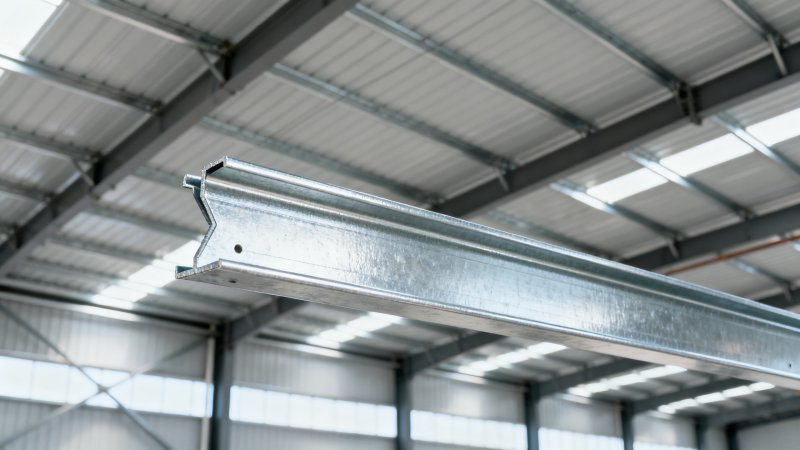
- Customization without delay: From modified flange angles to pre-punched hole patterns aligned with solar racking standards (e.g., UL 2703), lead time remains stable at 25–35 days — even for OEM-spec orders.
- End-to-end documentation: Every shipment includes MTCs, dimensional inspection reports, and full deflection curve datasets — ready for submission to EU Notified Bodies or US AHJs.
We don’t sell steel — we de-risk structural procurement. That means no surprises at the port, no redesigns after shop drawing review, and no deferred handover due to noncompliant deflection.
Next Steps: How to Get Your Customized Z Beam Quote — Fast
Ready to replace generic Z beams with performance-validated, deflection-optimized profiles? Here’s how to begin — in under 48 hours:
- Share your span, load case, and connection details (e.g., “6.8 m simply supported purlin, 1.5 kN/m dead + live load, bolted to cold-formed C-section rafter”)
- We run FEA simulation and return optimized Z section geometry + predicted deflection curve within 1 business day
- You approve or request iteration — then receive formal quote with delivery timeline, packaging specs (50–1,000 kg coil or wire bobbin), and compliance documentation list
No registration. No commitment. Just actionable engineering insight — backed by 12 years of structural steel export experience across 32 countries. Let’s align your next purlin order with real-world performance — not just catalog numbers.
Please give us a message


Please enter what you want to find