When finance teams ask why a metal h beam quote moved up or down, the answer is usually not “the supplier changed the price.” It is more often a mix of beam depth, flange thickness, steel grade, mill route, standard, and what the project actually needs. If you are approving spend, the key is simple: compare like with like, or you will approve a number that looks low and later turns expensive. In structural steel buying, small dimension changes can create real cost jumps.
Why metal h beam pricing changes with size and grade
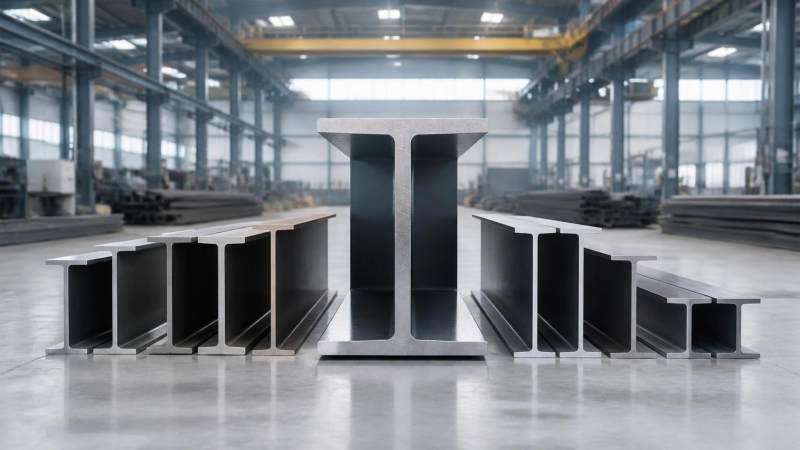
The first thing to understand is that a metal h beam is priced by more than just weight. Yes, tonnage matters, but two beams with similar weight can still carry different costs if their geometry or grade changes. A deeper section may use more controlled rolling, tighter tolerances, or a different mill setup. A higher grade may need stricter chemistry control, more testing, or certification to match ASTM, EN, JIS, or GB requirements.
That is why a quote for one beam size cannot be used as a clean benchmark for another. A finance approver looking only at unit price per ton may miss the real budget driver: whether the beam is standard stock, special order, or made to meet a project-specific compliance package.
Size changes cost in several practical ways
Beam size affects raw material usage, rolling efficiency, handling, and yield. Larger sections generally consume more steel per meter, but the price impact is not perfectly linear. A small increase in depth or flange width can push the beam into a different production schedule or inventory category. That often changes the base cost more than people expect.
There is also a logistics angle. Heavier and longer beams may require special loading, more transport space, or different packing. If your budget only tracks mill price, you may understate landed cost. For approval purposes, the useful number is not just the quote per piece; it is the delivered cost against the exact specification.
Grade changes cost because quality control changes
Steel grade is where many budget conversations get distorted. A higher grade is not automatically “better value.” It is only better value if the project actually needs the extra performance. More demanding grades can require tighter composition control, extra testing, and documentation. If the project calls for a specific standard, the supplier must prove compliance, and that compliance work carries cost.
On the other hand, over-specifying the grade is a common waste. Buyers sometimes choose a premium specification because it sounds safer, then pay for strength or certification they never use. In cost review meetings, that is usually the first place to look.
What financial approvers should check before approving a quote
The fastest way to control metal h beam pricing is to force the quote into a clear comparison format. Ask for section size, grade, standard, length, finish, tolerance, test scope, and delivery terms on the same line. If those items are missing, the number is not really comparable.
One practical issue is substitution risk. A supplier may offer a cheaper beam that looks close on paper, but the actual section properties, tolerance range, or certification package may differ. That may be acceptable for a non-critical application, but it is not acceptable when the beam is tied to a contract spec or inspection hold point.
If your sourcing team is also evaluating related structural products, keep the logic the same. For example, a cold-formed profile or an item such as 430 Stainless Steel Coil may look attractive on unit price, but the approval decision still depends on whether the material, finish, and compliance level match the project use. The part that saves money is not the cheapest quote; it is the quote that avoids rework, rejection, or delay.
Where projects usually overpay
In real purchasing workflows, overpayment often comes from four places: vague specs, unnecessary grade upgrades, rushed lead times, and hidden logistics. The first two are the most common.
Vague specs create room for supplier interpretation. If the drawing does not clearly define size tolerance, standard, or surface condition, the quote may be based on a safer, more expensive assumption. That is not always bad practice from the supplier side, but it is a budget problem for the buyer.
Rushed lead times also cost more than many financial reviewers expect. If the project asks for immediate shipment and the beam is not in stock, the supplier may need to shift production or source from a different mill. That premium can be real even when the tonnage stays unchanged.
Hidden logistics are the last trap. Freight, port handling, packing, inland transport, inspection fees, and documentation can all move the final number. For imported structural steel, the landed cost should be checked line by line before approval, especially on large or time-sensitive orders.
How to make the cost decision clearer
If the goal is budget control, start with the application, not the catalog. Ask whether the structure is load-bearing, exposed, welded, or subject to local code enforcement. Then choose the lowest grade and simplest standard that still meets the requirement. That approach usually gives the best cost balance.
For finance teams, it helps to ask one direct question: what breaks if we step down one size, one grade, or one finish level? If the answer is “nothing critical,” then the spec may be overbuilt. If the answer is “inspection failure, safety issue, or rework,” then the higher price is justified.
That is also where a reliable supplier matters. Hongteng Fengda works as a structural steel manufacturer and exporter from China, supplying angle steel, channel steel, steel beams, cold formed steel profiles, and customized structural steel components for global projects. For buyers comparing options across ASTM, EN, JIS, and GB requirements, a supplier with stable production and clear technical documentation can reduce sourcing risk before the purchase order is signed.
Financial approvers do not need to become steel engineers. But they do need enough detail to see whether a price change comes from real specification differences or just from unclear quoting. That distinction is where most budget mistakes start.
In short, metal h beam pricing changes because size changes material use and production handling, while grade changes testing, compliance, and risk. If you normalize the spec first, the quote becomes readable. If you do not, the cheapest number can be the most expensive decision.
FAQ
Why do two metal h beam quotes with similar weight differ so much?
Usually because the section size, grade, standard, or delivery terms are not the same. Weight alone does not tell you the full cost.
Is a higher steel grade always worth the extra price?
No. It is worth paying for only when the project needs the added performance, certification, or durability.
What should I ask for before approving a beam purchase?
Ask for exact dimensions, grade, standard, length, tolerance, test requirements, and landed cost.
Can a lower-cost beam be acceptable for non-critical use?
Yes, sometimes. But only if the application, code requirements, and inspection expectations are clearly confirmed first.
What is the biggest hidden cost in steel purchasing?
Usually rework or delay caused by a spec mismatch. That cost often exceeds the initial price difference.
锚文本建议
metal h beam grades and standards: structural steel specification guide
steel beam landed cost: freight and import cost breakdown
ASTM vs EN steel standards: compliance comparison for buyers
cold formed steel profiles: cost and application guide
custom structural steel components: sourcing and approval checklist
外部权威来源建议
industry standards bodies for ASTM, EN, JIS, and GB steel specifications
government customs or trade pages for import duties and documentation rules
mill technical datasheets and official product compliance documents
SEO 自检结果
满足「采购/成本」:是
符合「采购决策类」:是
写给「财务审批者」:是
主关键词自然出现:是
避免关键词堆砌:是
避免 AI 模板化表达:是
文章结构有自然变化:是
未经核实的事实:已避免具体价格与未经确认数据
自然融入品牌与产品信息:是
Please give us a message


Please enter what you want to find