When sourcing i beam i beam products for steel frame projects, even small size changes can affect steel weight, fabrication cost, freight cost, and installation efficiency.
Accurate beam selection helps control budgets, compare suppliers, and avoid structural overdesign. Hongteng Fengda supports standard and customized structural steel solutions from China.
Why i beam i beam Size Decisions Need a Cost Checklist
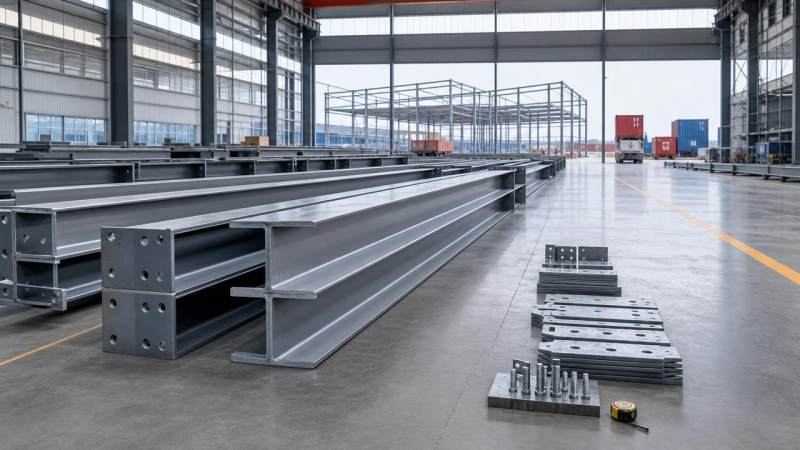
An i beam i beam is priced by more than unit steel weight. Size affects machining, welding, surface treatment, container loading, and site handling.
A larger section may reduce column spacing, but it may increase crane demand, connection plates, and coating area.
A smaller i beam i beam may look cheaper per meter, yet require more members, more bolts, and longer erection time.
A checklist keeps the comparison focused on total installed cost, not only the first quotation.
Core i beam i beam Cost Checklist
- Verify design load before selecting an i beam i beam size, because span, live load, wind load, and seismic conditions change required section modulus.
- Compare theoretical weight per meter, since every i beam i beam size change directly changes steel tonnage, quotation value, and shipping weight.
- Check flange width and web thickness, as these dimensions influence buckling resistance, drilling accuracy, weld preparation, and connection plate design.
- Confirm whether a standard i beam i beam section is available, because nonstandard rolling or cutting increases lead time and minimum order pressure.
- Review fabrication complexity before approval, including end cutting, hole punching, cambering, stiffeners, splice plates, and fit-up tolerances.
- Calculate coating area, not only weight, because galvanizing, primer, or painting costs may rise when beam depth and flange surface increase.
- Match i beam i beam length with container loading limits, so unnecessary splicing, oversize freight, or port handling charges can be avoided.
- Review erection access at the jobsite, because heavier beams need larger lifting equipment, stronger temporary support, and longer installation cycles.
- Compare equivalent sections under ASTM, EN, JIS, and GB standards to avoid paying more for a size that can be substituted safely.
- Request mill certificates and inspection records, because verified yield strength and dimensional tolerance reduce approval delays and rework risk.
How Size Changes Affect Material and Fabrication Cost
The first cost driver is weight. A deeper i beam i beam often carries higher loads, but it also adds kilograms per meter.
Weight increase affects steel price, cutting time, handling equipment, and surface treatment consumption across the whole steel frame.
The second driver is fabrication detail. A heavy i beam i beam may need thicker end plates and larger bolts.
More complex joints can offset the benefit of wider spacing. Always review connections together with beam section changes.
The third driver is tolerance control. Oversized members can create fit-up issues when columns, purlins, and bracing are already fixed.
Quick Cost Comparison Points
- Compare cost per ton and cost per meter, because each method reveals different effects of i beam i beam size changes.
- Check whether thicker sections reduce the total number of beams, columns, or secondary support members.
- Review shop drawing revisions early, because late changes can increase nesting waste and delay fabrication slots.
Freight, Packing, and Export Considerations
Export cost is sensitive to beam length and bundle size. A long i beam i beam may exceed common container loading efficiency.
Shorter pieces can load better, but require splice plates and additional site bolting. The economical option depends on total assembly cost.
Hongteng Fengda evaluates packing, loading, and export documentation together with production planning. This helps stabilize delivery schedules for international projects.
For mixed structural packages, secondary steel materials also matter. Roof, wall, or enclosure systems may need corrosion-resistant sheets.
For those package requirements, Galv Sheeting can be supplied in galvanized steel or carbon steel options.
Available grades include DX51D+Z, SGCC, S350GD+Z, and S550GD+Z, with thickness from 0.12mm to 6.00mm.
Widths range from 600mm to 1500mm, and lengths from 1m to 12m. Customization supports industrial, construction, energy, and transportation applications.
Application Scenarios for i beam i beam Selection
Industrial Workshops
Industrial workshops often require long spans and high roof loads. A larger i beam i beam can reduce intermediate columns.
However, crane beams, roof purlins, and bracing must be checked together. Oversizing one member may shift cost elsewhere.
Warehouses and Logistics Buildings
Warehouses usually emphasize repeatable layouts. Standard i beam i beam sizes help shorten fabrication time and simplify future expansion.
When building height is limited, beam depth may affect clearance. Cost analysis should include usable internal space.
Equipment Platforms
Equipment platforms require vibration and deflection checks. A cheaper i beam i beam may pass strength but fail serviceability requirements.
Stiffness, bearing plates, anchor details, and maintenance access should be reviewed before confirming the final beam size.
Common Overlooked Risks
Ignoring deflection: Strength approval is not enough. Excessive deflection can damage roofing, wall panels, suspended pipes, or precision equipment.
Comparing only unit price: A low i beam i beam price may hide higher drilling, coating, freight, or erection costs.
Missing standard differences: Similar section names under ASTM, EN, JIS, and GB may have different tolerances, weights, and steel grades.
Changing sizes too late: Late revisions can affect shop drawings, nesting plans, container booking, and site installation sequence.
Underestimating corrosion exposure: Surface protection must match the environment. Coastal, chemical, and agricultural sites need stronger coating plans.
Practical Execution Checklist Before Ordering
- Prepare span, load, drawing, steel grade, and coating requirements before requesting an i beam i beam quotation.
- Ask for both standard and optimized size options to compare weight, fabrication cost, and delivery time.
- Confirm whether beam cutting, drilling, welding, marking, painting, or galvanizing should be completed before shipment.
- Check container loading drawings when beam length is close to shipping limits or requires special packing.
- Review certificates, inspection records, and applicable standards before releasing deposit or production approval.
- Align the i beam i beam delivery schedule with foundation readiness, crane availability, and erection sequence.
Supplier Evaluation Points
A reliable structural steel supplier should provide clear section data, grade options, processing capability, and export experience.
Hongteng Fengda manufactures and exports angle steel, channel steel, steel beams, cold formed profiles, and customized structural components.
Products can comply with ASTM, EN, JIS, and GB standards. Quality control covers material verification, dimensional inspection, and production consistency.
Stable manufacturing capacity also reduces schedule uncertainty. This is important when i beam i beam materials are part of a larger frame package.
Summary and Next Steps
The cost impact of i beam i beam size changes is never limited to steel weight. It extends into fabrication, freight, coating, and installation.
A practical checklist helps compare options on a total cost basis. It also reduces redesign, delivery delay, and site coordination risk.
Before confirming the order, review load data, standards, dimensions, processing scope, certificates, packing, and delivery requirements together.
For steel frame projects requiring standard or customized i beam i beam solutions, Hongteng Fengda can support specification review and export supply planning.
Please give us a message


Please enter what you want to find