When comparing stainless steel square tube prices, buyers often find that ss square tube price quotes vary widely from one supplier to another. The difference is not only about raw material cost, but also grade selection, ASTM stainless steel compliance, surface finish, size tolerance, and manufacturing quality. For procurement teams, engineers, and project managers, understanding these factors is essential to control budget, reduce sourcing risk, and choose the right supplier with confidence.
Why do stainless steel square tube quotes differ so much at the first inquiry stage?
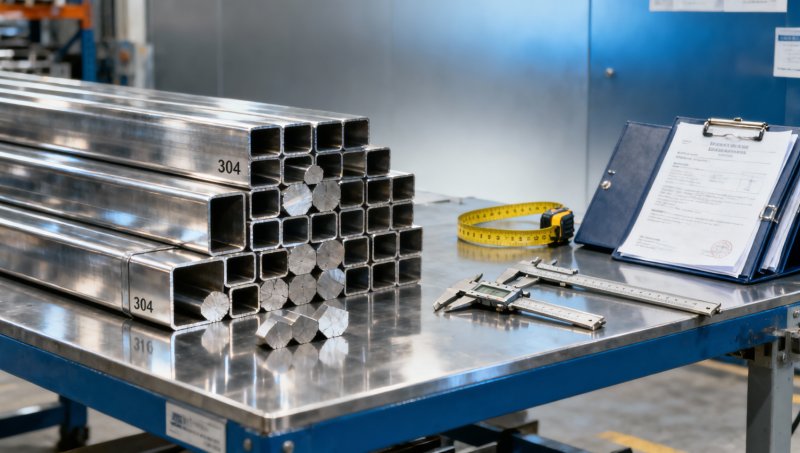
Many buyers assume stainless steel square tube is a standard commodity, so every supplier should offer a similar price. In practice, a quotation can change noticeably because suppliers may not be pricing the same product definition. A 304 tube with tighter tolerance, cleaner weld seam, and better surface finish is not equivalent to a lower-control alternative, even when the outer size looks identical on paper.
For procurement personnel, the first 24–72 hours after RFQ submission are often where confusion begins. One supplier may quote by theoretical weight, another by actual weight. One may include mill test certificate support, export packing, and third-party inspection preparation, while another only lists base material cost. That is why ss square tube price comparison requires specification alignment before commercial comparison.
Technical evaluators and quality teams usually focus on 3 core questions: which grade is offered, which standard applies, and what tolerance level is guaranteed. Finance approvers, however, often see only the unit price. If these two views are not connected, buyers can approve a low quote that later creates project delays, welding problems, corrosion risks, or replacement cost.
In structural steel and industrial supply chains, price variation is therefore not random. It usually reflects a combination of raw material basis, manufacturing route, compliance level, production batch size, and service scope. For importers, distributors, and project managers, the right question is not only “who is cheaper,” but “what exactly is included in this stainless steel square tube quotation.”
The 5 quotation elements that most often cause price gaps
- Material grade difference, such as 201, 304, 316, or other project-specified stainless steel grades with different nickel and molybdenum cost structures.
- Tube dimension and tolerance requirements, including wall thickness consistency, squareness, straightness, and length tolerance such as ±1mm to ±3mm depending on supply agreement.
- Surface condition, for example mill finish, brushed finish, pickled surface, or decorative finish, each requiring different process control and labor input.
- Testing and compliance scope, including ASTM, EN, JIS, or GB related documentation, PMI requests, and inspection points before shipment.
- Commercial terms such as MOQ, delivery term, export packing, container loading plan, and typical lead time of 2–6 weeks depending on size and quantity.
Which technical factors have the biggest impact on ss square tube price?
The largest pricing driver is usually stainless steel grade. If a project only needs indoor decorative or light structural use, one grade may be acceptable. If the application involves marine air, chemical exposure, washdown environments, or higher corrosion demand, buyers may need a higher alloy option. The grade decision alone can move stainless steel square tube pricing significantly, especially in volatile alloy markets.
Wall thickness is another major factor. A small change from 1.5mm to 2.0mm or from 2.0mm to 3.0mm increases actual material weight across the full order. For projects ordering medium batch or large batch quantities, even a 0.2mm to 0.5mm difference can materially change total procurement value. Engineers should therefore confirm whether design thickness reflects real load needs or conservative overspecification.
Manufacturing quality also matters. Stainless steel square tube can be formed and welded efficiently, but weld quality, heat input control, edge preparation, and post-processing consistency affect appearance and service life. For visible fabrication, furniture frames, equipment guards, or architectural elements, poor seam treatment can raise downstream polishing time and installation cost, offsetting any initial low price.
Tolerances create another hidden gap. Some suppliers quote a lower number because they work with broader production deviation. Yet installers and machine operators often need stable fit-up across 20, 50, or 100 pieces. If the tube varies too much in outer dimension or straightness, field rework can exceed the original savings. This is why technical quality and usable consistency should be priced together.
Typical factors buyers should compare line by line
The table below helps procurement teams compare stainless steel square tube quotations on a like-for-like basis instead of focusing only on headline unit price.
For project purchasing, this comparison method often saves more money than simply selecting the lowest number. It helps quality managers reduce claims risk, helps engineers avoid mismatch, and helps business teams prevent late-stage price revisions caused by missing technical details.
How standards and compliance influence price
ASTM stainless steel requirements, as well as EN, JIS, or GB references, can affect both processing and documentation cost. A supplier offering clear standard compliance usually invests more in material traceability, inspection control, and record management. This may not always create a large unit difference, but on regulated projects it can prevent expensive non-conformance issues later.
For distributors and overseas buyers, documentation is part of the product value. Heat number traceability, packing list accuracy, and test certificate readiness can speed customs handling and customer acceptance. In international trade, 1 incomplete document set can delay a container, while 1 clear document package can support smooth receiving and internal approval.
How should procurement teams compare suppliers beyond the unit price?
A strong sourcing decision usually combines 4 dimensions: technical fit, total landed cost, lead time reliability, and supplier communication quality. If a supplier is 3%–8% lower but cannot maintain stable dimensions or shipment timing, the final project cost may rise through fabrication loss, schedule interruption, or emergency replenishment. This is especially important in construction, industrial manufacturing, and OEM supply chains.
Buyers should also review production capability. A manufacturer with modern processing facilities and routine quality control is typically better positioned to maintain batch consistency across repeat orders. For global projects, consistent supply matters just as much as the first order price. That is one reason many importers prefer working with structural steel manufacturers that understand both standard products and customized project requirements.
In some projects, stainless steel square tube is only one part of a larger procurement package. A supplier that can coordinate with angle steel, channel steel, steel beams, cold formed sections, or customized fabrication support may reduce administrative workload and freight complexity. This broader supply perspective often creates savings that are not visible in the single-item quote.
For example, some buyers balancing structural load, weight reduction, and budget also compare stainless products with hot rolled materials for adjacent applications. In industrial applications demanding high load-bearing capacity and weight reduction, Hrc Coil may be reviewed as part of a broader sourcing strategy, especially where ASTM, AISI, BS, DIN, EN, JIS, or GB/T aligned materials are considered for downstream forming or component manufacturing.
A practical supplier evaluation checklist
- Confirm whether the quote is based on actual order specifications, including grade, size, length, finish, tolerance, and quantity range.
- Ask for standard compliance details, such as ASTM-related supply basis and what inspection documents are available before shipment.
- Review lead time by order type. Common ranges may be 7–15 days for available stock items and 3–6 weeks for production orders, depending on dimensions and finishing requirements.
- Check export packing method, container loading practice, and whether the supplier supports mark identification and batch traceability.
- Evaluate response speed and engineering coordination. A supplier that resolves drawing, tolerance, and packing questions early reduces hidden risk later.
The next table is useful for procurement, finance, and technical teams who need one shared framework to evaluate a stainless steel square tube supplier in a B2B setting.
When teams use a structured review like this, supplier choice becomes easier to justify internally. Procurement gains clearer comparison logic, finance sees cost transparency, and project leaders reduce the risk of selecting a quote that looks attractive but performs poorly in execution.
What cost traps and sourcing misconceptions should buyers avoid?
One common misconception is that lower ss square tube price always means better negotiation. In reality, a low quote can reflect lighter actual thickness, inconsistent finish, looser tolerance, or reduced inspection support. If the material needs re-polishing, sorting, or replacement at the job site, the total cost increases quickly. Project teams should compare total ownership cost, not only purchase price per ton or per piece.
Another mistake is underestimating lead time risk. If a supplier offers an aggressive price but needs 5–8 weeks when the project window allows only 2–4 weeks, the business impact can be larger than the material savings. This matters to fabricators, contractors, and distributors who must keep installation, resale, or production schedules on track.
Buyers also sometimes overlook packaging and logistics. Stainless steel surfaces can be damaged during loading or ocean transit if protection is insufficient. The cost difference between basic packing and stronger export packing may appear small at quotation stage, but scratches, edge damage, or mixed bundles can create receiving claims and downstream sorting labor.
Finally, some teams send incomplete RFQs and then expect consistent pricing. If size, grade, finish, length, quantity, and destination are not clearly defined, quote variation is inevitable. A complete RFQ can reduce clarification rounds from 5–6 emails to 2–3 focused exchanges, helping buyers secure more comparable offers in less time.
Three practical ways to reduce sourcing risk
- Standardize your RFQ sheet. Include grade, outer size, wall thickness, length, finish, tolerance expectation, standard reference, quantity, and required shipment window.
- Request sample, photo confirmation, or inspection arrangement for visible or tolerance-sensitive applications, especially before volume orders.
- Review the supplier as a long-term partner. Stable production, consistent quality control, and dependable lead time often create more value over 6–12 months than a one-time low quote.
How broader steel sourcing can support better decisions
In many industrial and construction projects, stainless steel square tube is purchased alongside other structural materials. Working with a manufacturer and exporter that understands multiple steel categories helps buyers compare specification, performance, and cost more effectively. Hongteng Fengda supports global buyers with structural steel products, customized solutions, and quality control aligned with common international standards such as ASTM, EN, JIS, and GB.
This broader capability is useful when a project includes standard sections, OEM components, and schedule-sensitive deliveries across different markets. Instead of managing multiple disconnected suppliers, buyers can streamline communication on specification review, production planning, packing, and lead time. That directly helps reduce sourcing risk and improve execution efficiency.
FAQ and next-step guidance for buyers comparing stainless steel square tube suppliers
Before final approval, many teams still have practical questions about price, standards, and delivery. The answers below are designed for information researchers, engineers, procurement managers, distributors, and decision-makers who need a clearer basis for supplier selection.
How can I compare ss square tube price fairly between two suppliers?
Use a same-specification comparison. Confirm 5 items first: grade, size, wall thickness, finish, and compliance scope. Then check whether both quotes use the same weight basis, same packing level, and same delivery term. If one supplier includes MTC support, export packing, and tighter tolerance while the other does not, the lower quote is not directly comparable.
What should I ask if my project has strict quality or safety requirements?
Ask for the applicable standard reference, certificate availability, tolerance control method, and inspection arrangement before shipment. Quality and safety teams often review 4 points: material traceability, dimensional consistency, surface condition, and packing integrity. For critical applications, clarify these points before PO issuance rather than after production starts.
What is a typical lead time for stainless steel square tube orders?
It depends on stock availability, size range, finish requirement, and order volume. Common supply windows may range from 7–15 days for ready specifications to 3–6 weeks for customized production or export arrangements. Buyers should also consider documentation time, packing preparation, and shipment booking when planning project schedules.
Why choose us for structural steel and related sourcing support?
Hongteng Fengda is a China-based structural steel manufacturer and exporter serving global construction, industrial, and manufacturing projects. We support buyers with standard products and customized solutions across angle steel, channel steel, steel beams, cold formed steel profiles, and customized structural steel components. Our focus is practical: stable production capacity, consistent quality control, and dependable lead times for international supply.
If you are comparing stainless steel square tube suppliers or reviewing a broader steel package, you can contact us for specification confirmation, product selection support, delivery cycle discussion, OEM or custom solution review, standards and certification communication, sample arrangement, and quotation coordination. This helps your team evaluate not just price, but fit, compliance, and execution reliability before making a final sourcing decision.
Please give us a message


Please enter what you want to find