For export buyers, structural steel standards are not just technical references. They shape compliance, fabrication fit, inspection scope, and total sourcing risk across different markets.
ASTM, EN, JIS, and GB each serve different project environments. Knowing which structural steel standards matter helps reduce approval delays, quality disputes, and costly replacement issues.
For global steel supply, compatibility matters as much as price. A reliable exporter should match standard requirements with stable production, traceable testing, and practical documentation.
Why export orders depend on the right structural steel standards
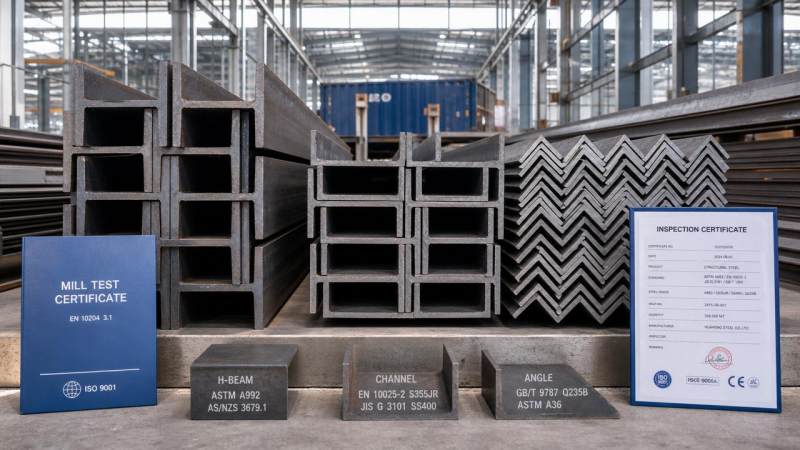
Different export destinations use different engineering systems. That means the same beam, channel, or angle may need different chemistry, tolerances, or mechanical properties.
Structural steel standards also affect welding behavior, coating acceptance, certificate format, and third-party inspection expectations. These factors directly influence customs clearance and on-site acceptance.
When standards are misunderstood, problems often appear late. Material may arrive on time, yet fail review because grade naming, section dimensions, or testing references differ.
That is why export evaluation should start with standard alignment, not just product size. Correct structural steel standards support faster quoting and fewer technical revisions.
Which market scenarios require different standard priorities
Export projects rarely share identical compliance logic. The required structural steel standards depend on where the steel will be fabricated, installed, inspected, and certified.
North America: ASTM usually leads the technical review
In North America, ASTM standards commonly guide material grade selection. Section properties, yield strength, tensile performance, and mill test reports are expected in familiar ASTM language.
For structural applications, buyers often verify not only grade equivalency, but also traceability, heat number control, and supplementary testing where contract documents require them.
Europe: EN standards focus strongly on harmonized compliance
European projects often require EN-based material references. Here, dimensional tolerance, execution class expectations, and documentation consistency are especially important.
A grade that seems equivalent on strength may still fail approval if the referenced EN standard, declaration format, or testing route does not fully match project requirements.
Japan and nearby supply chains: JIS matters for fit and acceptance
JIS standards are widely recognized in Japan and many regional supply chains. Buyers often pay close attention to dimensional precision, surface condition, and consistent processing performance.
This is especially relevant for cold formed sections, light structural members, and fabrication-oriented orders where forming and welding behavior must remain predictable.
Domestic China sourcing with export conversion: GB may be the starting point
Many Chinese mills produce primarily under GB standards. For export, this can work well if the supplier clearly explains equivalency, testing gaps, and any dimensional differences.
The key point is simple. GB material is not automatically unsuitable, but conversion claims must be technically supported rather than stated loosely in quotations.
How application scenarios change the standard selection logic
Not every steel order faces the same risk. Structural steel standards should be judged according to actual use, fabrication path, and project approval pressure.
Heavy building frames and industrial structures
These projects usually prioritize load-bearing performance, section tolerances, weldability, and consistent mechanical results. Main sections often need stricter documentation and inspection support.
If the project includes seismic design or special connection details, the exact standard reference becomes even more important during engineering review.
Fabricated components and OEM structural parts
For customized steel parts, structural steel standards must work together with drawing tolerances, hole positioning, welding procedures, and surface treatment requirements.
A material grade may be acceptable, yet the order can still fail if fabrication tolerances or coating references are not aligned early.
Cold formed profiles and corrosion-sensitive applications
In these scenarios, corrosion resistance and formability often matter as much as structural strength. Coating standards, zinc mass, and surface quality become critical review points.
A practical example is Gi Sheet Coil used in building processing and construction. Common grades include DX52D and SGCD1.
Its thickness range can be 0.12mm to 3.5mm, with widths from 600mm to 1500mm. Zinc coating options support corrosion control and stable processing performance.
Because such material may reference ASTM, EN, JIS, DIN, AISI, or GB, buyers should confirm not only grade names, but also coating class and forming suitability.
Key differences among major structural steel standards
The following comparison helps clarify where structural steel standards differ most in export practice.
Practical checks before confirming structural steel standards
Before placing an order, several checks can prevent avoidable technical disputes.
- Confirm the exact material standard, not only the commercial grade name.
- Ask whether section dimensions follow the same standard family.
- Review mechanical properties, chemistry, and coating requirements together.
- Check if third-party inspection is required before shipment.
- Verify mill test certificate format and traceability details.
- Clarify equivalency evidence if GB material is offered for ASTM, EN, or JIS use.
Common mistakes when comparing export steel offers
One frequent mistake is treating “equivalent” as “identical.” Structural steel standards may look similar in strength, yet differ in tolerances, testing methods, or coating references.
Another mistake is reviewing only the base steel. For fabricated or galvanized orders, welding performance, surface finish, and corrosion protection standards also matter.
Some offers appear competitive because they omit documentation, inspection, or packaging details. That often creates higher downstream cost than a higher initial unit price.
It is also risky to assume that all mills interpret export requirements equally. Actual capability depends on production experience, process control, and familiarity with destination standards.
How to choose a supplier that understands global standard matching
A strong export supplier should explain structural steel standards in practical terms, not vague promises. The best support combines manufacturing ability with documentation discipline.
Hongteng Fengda, as a structural steel manufacturer and exporter from China, supplies angle steel, channel steel, steel beams, cold formed profiles, and customized components.
Its production and quality control system supports major international references, including ASTM, EN, JIS, and GB. That helps reduce sourcing risk across construction and industrial projects.
When assessing any supplier, ask for past export experience by market, standard-specific documentation samples, and realistic lead times for testing and approval.
The next step for lower-risk export decisions
The right structural steel standards depend on the real application scenario, not just the product description. Market destination, fabrication path, and approval rules must be reviewed together.
A clear technical checklist can save weeks of revision and avoid material mismatch after shipment. That is especially important for structural sections, coated steel, and custom components.
If an export order involves ASTM, EN, JIS, or GB comparison, prepare drawings, grade targets, coating needs, and certificate expectations before requesting the final quotation.
With better standard matching, export steel sourcing becomes more predictable, more compliant, and more cost-efficient from production to project delivery.
Please give us a message


Please enter what you want to find