Choosing the right metal wire for fencing depends on durability, corrosion resistance, strength, and cost. From farms to industrial sites, selecting the best metal wire for fencing can improve safety, service life, and maintenance efficiency. This guide compares common wire materials, coatings, and applications while helping buyers, engineers, and project teams make practical decisions based on performance and long-term value.
In steel-related projects, fencing is rarely a minor detail. It affects perimeter security, livestock control, worker safety, asset protection, and maintenance budgets over 5, 10, or even 20 years. For procurement teams and technical evaluators, the best fencing wire is not simply the cheapest option per roll. It is the wire type that matches the environment, load condition, expected lifespan, and installation method.
For B2B buyers, the decision often involves more than the wire itself. Post spacing, corner reinforcement, coating thickness, wire gauge, and compliance with common standards all affect field performance. A fence that performs well in a dry inland warehouse may fail quickly in coastal humidity, chemical exposure, or high-tension agricultural use.
The sections below break down common metal wire options for fencing, where each type works best, what technical points matter most, and how to align wire selection with structural support, project risk, and long-term sourcing value.
Key Types of Metal Wire Used in Fencing
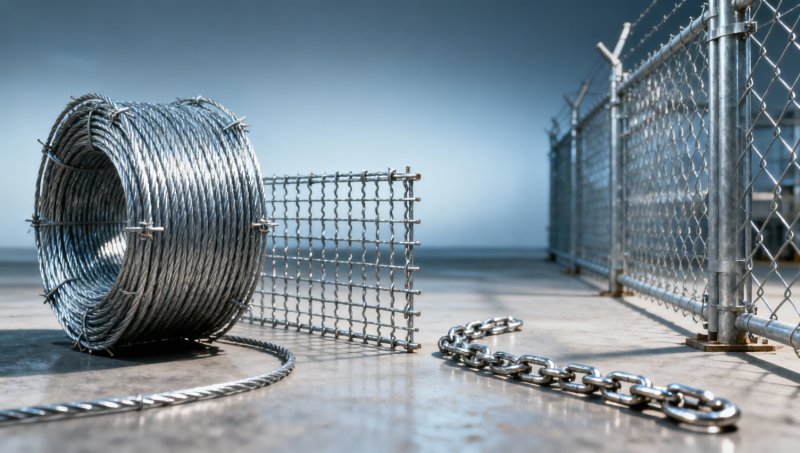
Most fencing systems use one of 4 main wire categories: low carbon steel wire, high tensile steel wire, galvanized steel wire, and stainless steel wire. In practice, many products combine these characteristics. For example, a fence wire may be high tensile and also hot-dip galvanized. Understanding the base metal and the protective finish is the first step in choosing the best metal wire for fencing.
Low carbon steel wire is easier to bend, tie, and fabricate. It is commonly used for general mesh panels, temporary barriers, and light-duty enclosures. However, without proper coating, it can rust quickly in outdoor use. High tensile steel wire offers greater strength and reduced sagging over longer spans, which is especially useful for agricultural fencing and perimeter systems with 3 m to 5 m post spacing.
Galvanized steel wire remains the most widely used choice in many fencing applications because it balances cost and corrosion protection. A zinc layer helps resist weathering, and hot-dip galvanized products generally provide better outdoor durability than electro-galvanized options. Stainless steel wire is more resistant to corrosion, but its cost can be 2 to 4 times higher depending on grade, diameter, and market conditions.
For buyers comparing materials, it helps to assess tensile demand, environmental exposure, and maintenance expectations together rather than separately. The table below outlines typical differences.
For most commercial and industrial fencing, galvanized high tensile steel wire is often the most practical option. It combines strength with weather resistance and can reduce re-tensioning frequency over the first 3 to 7 years compared with softer, lightly coated alternatives.
Common wire formats
Metal wire for fencing is not limited to a single product form. Buyers usually encounter plain wire, barbed wire, welded wire mesh, chain link wire, hexagonal wire mesh, and fixed-knot or hinge-joint field fencing. Each format changes the required wire characteristics.
Typical selection logic
- Use plain or high tensile line wire when the design depends on tensioned strands and strong end assemblies.
- Use welded mesh when dimensional stability, appearance, and smaller openings matter more than field adjustability.
- Use chain link for security zones, warehouses, schools, and industrial compounds where visibility is required.
- Use barbed wire where deterrence is needed and regulations permit it.
How Coating and Environment Change Wire Performance
The same steel wire can perform very differently depending on its coating. In fencing, the coating is often the difference between a 2-year maintenance problem and a 10-year reliable perimeter solution. Zinc coating, zinc-aluminum coating, and PVC-coated options each serve different risk profiles.
Electro-galvanized wire typically has a thinner zinc layer and is often better suited to indoor use, short-term projects, or low-corrosion environments. Hot-dip galvanized wire usually provides stronger outdoor protection because the coating is thicker and more robust. In coastal zones, fertilizer storage areas, and livestock environments, a heavier coating can noticeably extend service life.
PVC-coated wire adds an outer polymer barrier over a metallic core, improving appearance and providing a second layer of protection. However, the base wire quality still matters. If the steel core or zinc layer is weak, the outer coating alone will not compensate for long-term damage caused by cuts, UV exposure, or abrasion at contact points.
Project teams should also evaluate environmental factors using a simple 3-level risk approach: mild, moderate, and severe exposure. This makes it easier to choose the right coating system before comparing suppliers on price.
A common mistake is to compare wire only by diameter. A 3.0 mm wire with inadequate coating may underperform a properly protected 2.5 mm wire in corrosive conditions. For quality control and safety teams, coating integrity, surface condition, and storage handling are just as important as nominal size.
Inspection points before acceptance
- Check surface uniformity and look for flaking, scratches, or exposed steel.
- Verify wire diameter tolerance and coil consistency across at least 3 sample points.
- Confirm whether the finish is electro-galvanized, hot-dip galvanized, or polymer coated.
- Review packaging and storage conditions, especially for projects with 30 to 90 days of site inventory.
Choosing Wire by Application, Load, and Support Structure
The best metal wire for fencing depends heavily on what the fence must do. A residential boundary fence, a cattle enclosure, and an industrial security fence may all use steel wire, but their load paths and service priorities differ. The correct specification should match impact level, required visibility, height, span, and support frame design.
Agricultural fencing often favors high tensile galvanized wire because it can maintain line tension across long field distances with fewer intermediate supports. Industrial chain link systems usually prioritize uniform mesh, secure attachment, and resistance to tampering. For warehousing or utility areas, welded wire mesh may be preferred where rigid panel geometry and fast installation matter.
Support components should never be overlooked. Strong wire attached to weak corners or undersized steel posts often creates premature failure. In many fence systems, end posts, brace assemblies, and corner supports take higher loads than the wire field itself. This is where structural steel components add value to long-term stability.
For reinforcement at corners, gate frames, equipment barriers, or fabricated fence structures, buyers may also require steel profiles that provide reliable support and dimensional consistency. In such cases, Carbon Steel Angle can be used in construction, manufacturing, framework, bracing, corner reinforcement, steel structure, shipbuilding, bridging, and automobile chassis applications where strength, stability, and support are needed.
This type of angle steel is available in equal and unequal shapes, with thickness from 0.8 mm to 25 mm, length from 1 m to 12 m, and processing methods such as hot rolled, cold drawn, bending, and welding. Common standards include ASTM, EN, JIS, and GB, which is useful for project teams managing cross-border sourcing and specification alignment.
Application-based selection guide
The table below links typical fencing use cases with practical wire recommendations and structural notes.
In procurement terms, wire and support steel should be evaluated as one system. A well-selected support profile can improve fence rigidity, reduce deformation at corners, and simplify fabrication. That is especially useful when custom project drawings call for unequal angles, welded brackets, or lengths cut to 6 m, 9 m, or 12 m.
Practical selection checklist
- Define the fence purpose: containment, security, access control, or separation.
- Estimate the load: light contact, animal pressure, wind exposure, or tampering risk.
- Match wire type and coating to the environment for at least the target service window.
- Review posts, rails, and reinforcement steel so the system performs as a whole.
What Buyers Should Check Before Ordering Fencing Wire
Purchasing fencing wire involves more than asking for a price per ton or per coil. Technical teams, sourcing managers, and business evaluators should compare at least 6 points: base material, tensile level, wire diameter, coating type, roll or panel format, and delivery consistency. Missing one of these can lead to field complaints, excessive waste, or rework during installation.
Diameter and tensile strength should be matched to the fence design. Thicker wire does not always mean better value if the application would benefit more from higher tensile performance and better coating. For example, in long agricultural lines, a properly tensioned high tensile wire may reduce sag and maintenance more effectively than a softer thicker wire.
Lead time is another practical issue. Standard galvanized wire products may move faster through production and export than heavily customized formats. For project managers working on phased installation, a lead time difference of 2 to 4 weeks can affect subcontractor scheduling, site security handover, and final commissioning.
Supplier capability also matters. A manufacturer with stable production capacity, quality inspection procedures, and export experience can help reduce sourcing risk. This is important when the order includes structural support products together with fencing-related steel items, because combined shipments can simplify coordination and control overall project cost.
Core procurement questions
- Is the wire intended for short-term fencing, medium-term use, or a service life target above 10 years?
- Will the project site face coastal moisture, chemicals, livestock waste, or frequent mechanical contact?
- Are post systems and corner braces already specified, or must the supplier support a complete steel solution?
- What quality documents, dimensional checks, and standard references are needed before shipment?
Common purchasing mistakes
One common mistake is buying wire only by unit price without considering replacement frequency. Another is specifying corrosion protection too late, after the fence design is fixed. A third is ignoring compatibility between wire, fasteners, posts, and reinforcement members. These issues often increase total cost more than the initial wire price difference.
For distributors and contractors, it is also useful to standardize 2 to 3 fencing wire specifications for recurring project types. This reduces stock complexity, simplifies quality checks, and shortens quotation time for future tenders.
Maintenance, Service Life, and Frequently Asked Questions
Even the best metal wire for fencing will underperform if installation and maintenance are ignored. Most outdoor fences benefit from periodic inspection every 6 to 12 months, especially at corners, tie points, gate openings, and areas where vegetation or equipment may rub against the wire. Small corrosion spots, loose ties, and line sag are cheaper to fix early than after system-wide deterioration starts.
Maintenance planning should include cleaning debris, checking coating damage, verifying tension, and replacing damaged clips or connectors. In industrial sites, wire condition should also be reviewed after any impact event, nearby welding activity, or chemical spill. These steps help extend service life and improve fence reliability without major replacement work.
For end users and maintenance teams, a fence is part of operational safety. For decision-makers, it is also an asset protection system. Choosing the correct wire at the beginning usually reduces emergency repairs, labor interruptions, and repeated material purchases over the long term.
FAQ 1: Is galvanized steel wire the best choice for most fencing?
For many agricultural, commercial, and industrial applications, yes. Galvanized steel wire offers a practical balance of strength, corrosion resistance, and cost. It is often the preferred option when the site is outdoors but not extremely corrosive. In severe marine or chemical exposure, heavier coatings or stainless steel may be more suitable.
FAQ 2: When should stainless steel wire be considered?
Stainless steel wire is worth considering when corrosion risk is consistently high and replacement access is difficult or expensive. Typical cases include coastal infrastructure, chemical plants, and specialized hygienic environments. However, for standard warehouse, farm, or perimeter fencing, it may not offer the best cost-performance ratio.
FAQ 3: How often should fencing wire be inspected?
A routine visual check every 6 to 12 months is common. In high-use industrial areas, or after storms, vehicle impact, or seasonal tension change, more frequent inspection may be needed. Sites with livestock pressure or corrosive exposure should also adopt a shorter maintenance cycle.
FAQ 4: Does thicker wire always last longer?
Not necessarily. Durability depends on the full combination of steel quality, tensile properties, coating type, installation quality, and environmental exposure. A better-coated wire with the right tensile performance may outlast a thicker but poorly protected alternative.
Selecting the best metal wire for fencing means matching the material to the real job: environment, load, service life, maintenance level, and support structure. In many projects, galvanized high tensile steel wire delivers the strongest overall value, while specialized sites may require heavier coatings or stainless steel. Just as important, the fence should be supported by properly specified structural steel components for corners, frames, and bracing.
Hongteng Fengda supports global buyers with reliable structural steel products, customized solutions, and production aligned with ASTM, EN, JIS, and GB standards. If you are comparing fencing wire options, support steel, or reinforcement components for your next project, contact us to get a tailored solution, review specifications, or learn more about compatible steel products for efficient sourcing and long-term performance.
Please give us a message


Please enter what you want to find