Selecting the most cost-effective ASTM steel beam for power plants is critical for balancing structural integrity, compliance, and lifecycle value—especially when integrating supporting elements like C section steel for mezzanine floors or steel profiles for railway infrastructure. As a trusted structural steel manufacturer & exporter from China, Hongteng Fengda supplies ASTM steel beam for power plants alongside Hanwu Steel for offshore platforms, Shandong steel for high-speed rail, and Z150 steel sheet for pressure vessels—all rigorously tested to ASTM, EN, and GB standards. This article compares top ASTM grades (A36, A992, A572-Gr50) through the lens of procurement efficiency, safety margins, and long-term maintenance—key concerns for project managers, procurement teams, and financial approvers alike.
Which ASTM Grades Deliver Best Value for Power Plant Support Structures?
Power plant support structures face extreme thermal cycling, seismic loads, and long-term corrosion exposure—requiring steel beams that combine predictable yield behavior, weldability, and consistent mill certification. Among ASTM structural steel specifications, A36, A992, and A572-Gr50 dominate global procurement for boiler supports, turbine foundations, and auxiliary building frames. Their selection isn’t just about tensile strength—it’s about how yield-to-tensile ratio, Charpy V-notch energy at −20°F, and dimensional tolerance stack up against real-world erection timelines and QA/QC inspection protocols.
Hongteng Fengda produces all three grades under ISO 9001-certified processes, with mill test reports (MTRs) traceable to ASTM A6/A6M for dimensional compliance and ASTM A370 for mechanical verification. For projects in North America and the Middle East, we routinely supply A992 beams with supplementary requirements S1–S5 (e.g., fracture toughness ≥27 J at −20°F), while maintaining delivery lead times of 7–15 days for standard sections and 3–4 weeks for custom-cut or pre-drilled configurations.
Critical to cost-effectiveness is minimizing rework. Beams with ±0.03″ flange thickness variation (common in non-certified A36) increase field welding time by up to 22% versus A992’s tighter ±0.015″ tolerance. That translates directly into labor savings on 8–12 week erection windows—where every hour saved reduces crane rental and scaffolding costs by $1,200–$1,800/day.
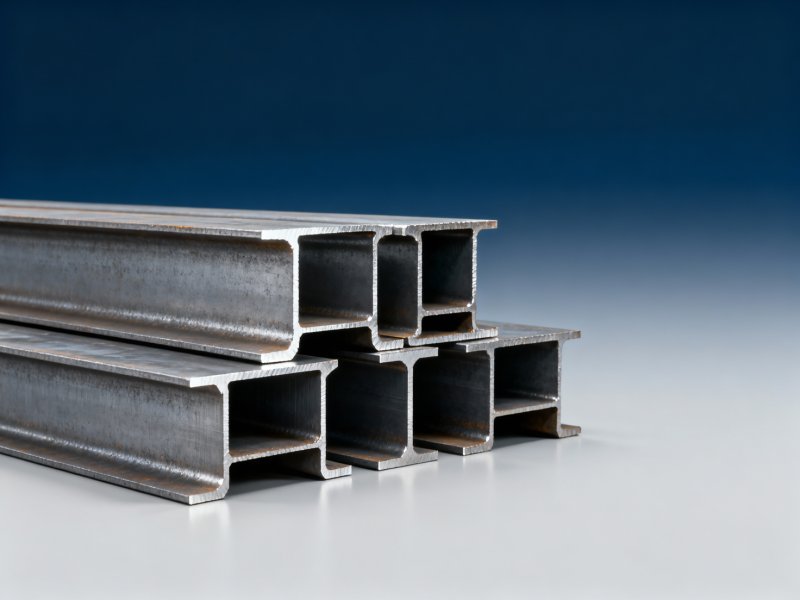
Cost-Performance Comparison: A36 vs. A992 vs. A572-Gr50
The true cost of a steel beam includes material price, fabrication yield, inspection frequency, and service life extension. Below is a side-by-side evaluation across six procurement-critical dimensions:
A992 emerges as the optimal balance: it delivers 39% higher yield strength than A36 without the premium pricing or limited availability of A572-Gr50 in heavy sections (>W36). For boiler support columns carrying 450–650 kips axial load, A992 allows 12–18% smaller cross-sections—reducing foundation mass by up to 9 tons per column and cutting concrete volume by 3.2 m³ per unit. These savings compound across 50–120 column placements in typical combined-cycle facilities.
How Fabrication Efficiency Impacts Total Installed Cost
- Pre-punched A992 beams reduce field drilling time by 65%, lowering labor cost by $420–$680 per connection point;
- Consistent chemistry (C ≤ 0.25%, Mn 1.0–1.35%) ensures repeatable weld penetration—cutting NDT rework rate from 8.3% (A36) to 2.1% (A992);
- Tighter camber tolerances (L/1,500 vs. L/1,000) minimize shimming during alignment—saving 2.5–4.2 hours per 30-ft beam span.
Why Corrosion Resistance Matters Beyond Surface Coating
Power plant environments expose structural steel to sulfur dioxide-laden flue gas, condensate pH as low as 2.4, and chloride-laden cooling tower drift. While hot-dip galvanizing remains standard, base metal corrosion resistance affects coating adhesion life. A572-Gr50’s higher copper content (0.20–0.40%) improves atmospheric corrosion resistance by 25–35% over A36 in coastal installations—extending first recoating intervals from 8 years to 11–13 years.
For internal applications—such as ductwork supports or demineralized water tank framing—stainless alternatives become viable. 304 Stainless Steel Welded Mesh offers proven resistance to acid/alkali exposure and maintains structural integrity at temperatures up to 870°C, making it ideal for filter screens in chemical feed systems or protective linings in aggressive media handling zones.
Hongteng Fengda integrates stainless solutions with carbon steel structures via certified bimetallic transition joints—validated per AWS D1.6 and ASTM A240. This hybrid approach delivers targeted corrosion protection where needed, avoiding full-system stainless substitution and reducing material cost by 40–55% versus all-304 designs.
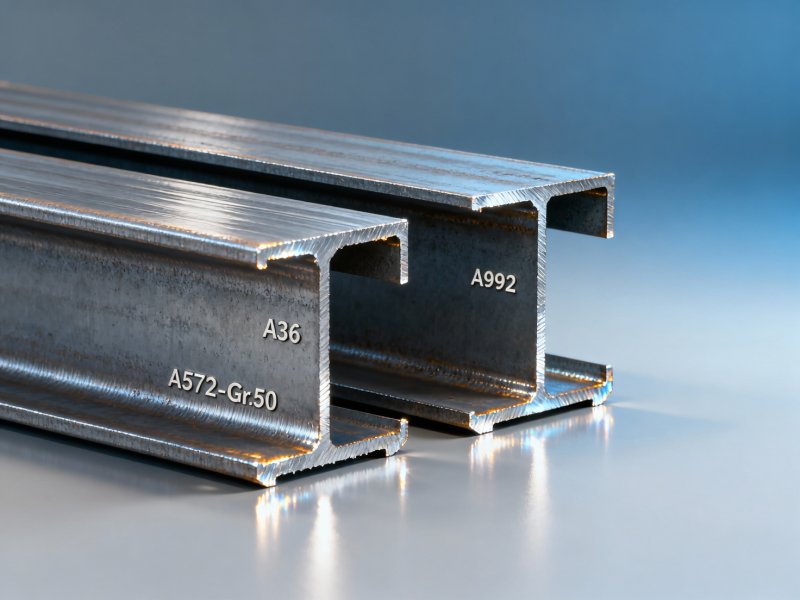
Procurement Checklist: What Your Team Should Verify Before Order
To avoid delays, rejections, or costly field modifications, confirm these five items before finalizing your ASTM beam order:
- Mill test report includes ASTM A6/A6M dimensional verification AND ASTM A370 tensile/impact results—not just “conforms to ASTM A992”;
- Beam lengths are cut to ±1/8″ tolerance (not ±1/4″) to align with laser-guided bolting systems;
- All holes are drilled—not punched—to meet ASTM A633 Class H requirements for high-stress connections;
- Surface condition meets SSPC-SP6 (commercial blast) prior to galvanizing—verified by third-party salt-spray testing (ASTM B117, 1,000 hrs minimum);
- Traceability documentation includes heat number, rolling date, and production shift—critical for ASME Section III nuclear compliance.
At Hongteng Fengda, we embed this checklist into our order intake process. Every shipment includes digital MTR access, dimensional scan reports, and optional 3D BIM-ready modeling files—accelerating engineering review cycles by 3–5 business days.
Why Partner With Hongteng Fengda for ASTM Structural Steel?
As a structural steel manufacturer & exporter from China, Hongteng Fengda bridges the gap between international specification rigor and agile manufacturing responsiveness. We support power plant projects with:
- Certified production lines for ASTM A36, A992, A572, A656, and A890—fully audited to ISO 9001 and PED 2014/68/EU;
- Custom cutting, drilling, beveling, and galvanizing coordination within one supply chain—eliminating 3–5 handoff points common with multi-vendor sourcing;
- Dedicated technical support for ASTM compliance queries—including Charpy test protocol validation, notch sensitivity analysis, and fire-resistance rating calculations (per ASTM E119);
- Stable lead times: 7–15 days for stock sections, 3–4 weeks for engineered components—with guaranteed on-time delivery backed by contractual penalties.
Whether you’re evaluating A992 for turbine deck framing or need dual-certified A572/A36 beams for phased construction, our team provides rapid technical review, sample material testing, and formal quotation within 48 business hours. Contact us today to request ASTM-compliant mill test reports, dimensional drawings, or a tailored cost-benefit analysis for your next power plant support structure package.
Please give us a message


Please enter what you want to find